Ask Ayurvedic doctor a question and get a consultation online on the problem of your concern in a free or paid mode. More than 2,000 experienced doctors work and wait for your questions on our site and help users to solve their health problems every day.


Body DetoxEar, Nose, and Throat DisordersGeriatrics & RejuvenationImmunodeficiencyInfertility TreatmentNutritionOrthopedic DisordersPediatricsRespiratory DisordersSexually Transmitted Diseases (STDs)Surgery RecoveryUrological DisordersVascular DisordersDental DisordersEndocrinological DisordersGastrointestinal DisordersYoga TherapyGeneral MedicineAllergic DisordersCardio DisordersGynecology and ObstetricsCosmetologySkin and Hair DisordersEye DisordersInfectious DiseasesMental DisordersNeurological DisordersOncologyPanchakarmaSexual Health & DisordersSports Medicine
Published on 12/18/24
(Updated on 08/16/26)
3,156
Guggulu Marichadi Thailam: Benefits & Scientific Insights
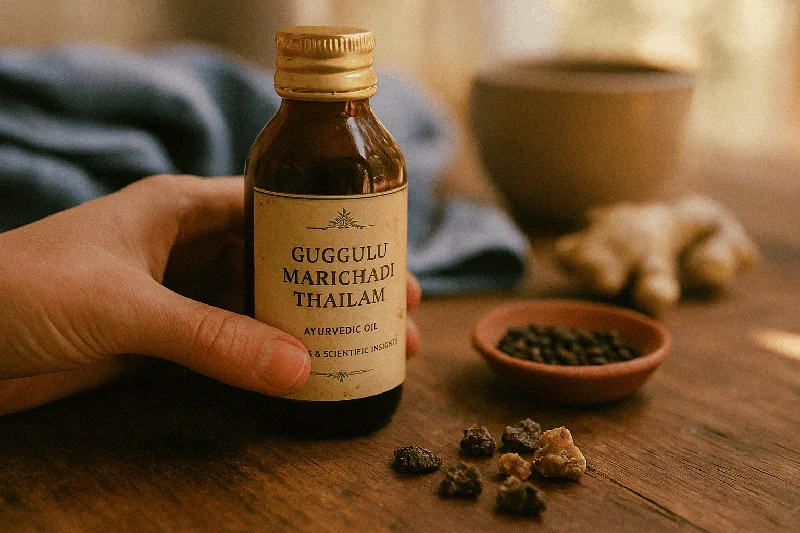
Guggulu Marichadi Thailam is a classical Ayurvedic medicated oil formulated primarily for chronic and stubborn skin diseases — including eczema, psoriasis, scabies, dermatitis, and various forms of kushta (skin disorders described in ancient texts). Rooted in the Ashtanga Hridayam, one of the most authoritative Ayurvedic treatises, this oil combines the resin of Guggulu (Commiphora mukul) with the pungency of Maricha (Piper nigrum) in a sesame oil base to create a potent external remedy that detoxifies the skin, reduces inflammation, and combats microbial infections simultaneously.
If you've been searching for a natural, time-tested solution for persistent skin issues — or if you're a practitioner looking for a deep dive into this formulation — this guide covers everything: from the precise classical recipe and the pharmacological rationale behind every ingredient, to practical treatment protocols, storage tips, and how Guggulu Marichadi Thailam compares to other Ayurvedic skin oils.
What Is Guggulu Marichadi Thailam?
- Guggulu Marichadi Thailam (also known as Gulgulumarichadi Thailam or Gulgulmarichadi Tailam) is a polyherbal medicated oil (Taila) prepared by cooking a carefully measured combination of herbs and minerals in sesame oil (Tila Thaila).
- It belongs to the category of Kushtaghna formulations — medicines specifically designed to manage skin diseases in Ayurveda.
Unlike simple herbal infusions, this thailam undergoes a rigorous classical preparation process (Taila Paka Vidhi) that ensures the fat-soluble active compounds from each ingredient are fully extracted into the oil base. The result is a dark, aromatic oil with a characteristically bitter (Tikta) and pungent (Katu) profile.
Classical Reference: Ashtanga Hridayam
The original formula is documented in the Ashtanga Hridayam, Kushta Chikitsa Adhyaya, Chapter 19, Shloka 71–74. This section deals specifically with the treatment of obstinate skin diseases (Kushta Roga), and the formulation is attributed to Vagbhata, the renowned Ayurvedic scholar.
The classical text prescribes the oil for conditions involving:
- Chronic, non-healing skin lesions
- Itching and discoloration
- Skin infections with microbial involvement
- Conditions aggravated by all three doshas, particularly Kapha and Vata
Alternative Names and Spellings
One thing that confuses many people — this oil goes by several names depending on the manufacturer, region, and transliteration style.
They all refer to the same formulation:
| Variation | Context |
|---|---|
| Guggulu Marichadi Thailam | Most common English spelling (South Indian convention) |
| Gulgulumarichadi Thailam | Single-word spelling, common in Kerala Ayurveda |
| Gulgulmarichadi Tailam | North Indian convention (Tailam vs. Thailam) |
| Guggulu Marichyadi Taila | Sanskrit-adjacent spelling in some pharmacopoeias |
| Guggulumarichadi Kera Thailam | Variant prepared with coconut oil base (rare) |
If you see any of these on a product label, you're looking at essentially the same classical formulation. The key identifiers are "Guggulu" (the primary ingredient) and "Marichadi" (indicating Maricha/black pepper as the lead herb in the group).
Ayurvedic Properties (Rasa, Guna, Veerya, Vipaka)
Most resources only describe the properties of individual ingredients, but understanding the composite pharmacodynamic profile of the whole oil is crucial for correct clinical application.
| Property (Dravyaguna) | Guggulu Marichadi Thailam |
|---|---|
| Rasa (Taste) | Tikta (Bitter), Katu (Pungent), with minor Kashaya (Astringent) |
| Guna (Quality) | Ushna (Hot), Tikshna (Penetrating), Sukshma (Subtle), Snigdha (Unctuous due to oil base) |
| Veerya (Potency) | Ushna (Heating) |
| Vipaka (Post-digestive effect) | Katu (Pungent) |
| Prabhava (Special action) | Kusthahara (Destroys skin diseases), Krimighna (Anti-parasitic) |
| Dosha Karma | Primarily Kapha-Vata Shamaka; may mildly increase Pitta in sensitive individuals |
The heating and penetrating nature of this oil is what makes it so effective for chronic, deep-seated skin conditions — where Kapha and Vata create stagnation, toxin accumulation (Ama), and impaired tissue nutrition. However, this also means it should be used cautiously in acutely inflamed Pitta-predominant conditions.
Why Sesame Oil (Tila Thaila) as the Base?
- Sesame oil isn't just a convenient carrier.
- In Ayurveda, it holds a unique status as Yogavahi — a substance that enhances and carries the properties of whatever is processed with it, without losing its own therapeutic value.
Key properties of Tila Thaila relevant to this formulation:
- Vata Shamaka: Sesame oil is considered the best oil for pacifying Vata dosha
- Tvachya: Specifically nourishing for the skin (Tvak dhatu)
- Sukshma: Its subtle nature allows deep penetration through skin layers
- Krimighna: Inherent antimicrobial properties
- Rich in natural antioxidants: Contains sesamol and sesaminol, which enhance shelf stability and provide additional skin-protective effects
A 2014 study published in the Journal of Ayurveda and Integrative Medicine confirmed that sesame oil-based preparations show significantly better transdermal absorption compared to other oil bases, validating the classical Ayurvedic preference.
Complete Ingredients List with Benefits
The classical formula contains approximately 15–17 key ingredients, each serving a specific therapeutic role. Below is the complete ingredient list with botanical names, classical quantities, and their individual contributions.
Classical Formula Quantities (Per Batch)
According to the Ashtanga Hridayam reference, the standard batch uses:
- Kalka Dravyas (paste herbs): 48 grams each
- Sesame Oil (Tila Thaila): 10 kg (base oil)
- Water for decoction: approximately 150 liters
For commercially available products (e.g., 200 ml bottles), the proportional quantities are significantly smaller — typically around 0.033 g of each kalka ingredient per unit.
Detailed Ingredient Breakdown
| # | Ingredient | Botanical Name | Primary Role in This Formula |
|---|---|---|---|
| 1 | Guggulu | Commiphora mukul | Anti-inflammatory resin; contains guggulsterones (Z and E) that modulate inflammation and support detoxification |
| 2 | Maricha (Black Pepper) | Piper nigrum | Contains piperine; enhances bioavailability of other compounds; antimicrobial; stimulates local circulation |
| 3 | Haridra (Turmeric) | Curcuma longa | Curcumin provides potent anti-inflammatory, antioxidant, and wound-healing action |
| 4 | Daruharidra | Berberis aristata | Contains berberine; strong antibacterial and antifungal; specifically indicated for weeping skin lesions |
| 5 | Kushta | Saussurea lappa | Classical anti-dermatosis herb; antiparasitic; addresses deep-seated skin toxins |
| 6 | Ela (Cardamom) | Elettaria cardamomum | Aromatic; mild anti-inflammatory; improves the sensory profile of the oil |
| 7 | Nakha | Capparis sepiaria (or shellfish operculum in some traditions) | Traditional ingredient for skin diseases; anti-itching |
| 8 | Sarshapa (Mustard) | Brassica juncea | Heating; stimulates blood flow to the skin surface; antifungal |
| 9 | Nata (Valeriana) | Valeriana wallichii | Calming; may reduce stress-related skin flare-ups; mild analgesic |
| 10 | Choraka | Angelica glauca | Aromatic; used in kushta formulas for its detoxifying and antimicrobial action |
| 11 | Sarala (Pine resin) | Pinus roxburghii | Provides anti-inflammatory terpenes; supports wound healing |
| 12 | Turushka (Styrax) | Liquidambar orientalis | Balsamic resin with antimicrobial properties; used traditionally in infectious skin conditions |
| 13 | Agaru (Agarwood) | Aquilaria agallocha | Anti-inflammatory; improves skin complexion; traditionally used for discolored patches |
| 14 | Devadaru (Himalayan Cedar) | Cedrus deodara | Anti-inflammatory and analgesic; supports resolution of chronic swelling |
| 15 | Sarja Rasa (Sal resin) | Shorea robusta | Wound-healing resin; astringent; helps seal damaged skin |
> Note: Some manufacturers may include minor variations depending on regional traditions or substitutions (Pratinidhi Dravya) permitted by the classical texts. Always check the product label for the exact list.
Key Benefits and Therapeutic Uses
Skin Diseases: The Primary Indication
This is where Guggulu Marichadi Thailam truly excels. The formulation directly targets the Ayurvedic pathology of Kushta Roga, which encompasses a broader range of conditions than any single modern dermatological diagnosis.
Conditions where this oil is clinically indicated:
- Eczema (Vicharchika): Reduces itching, scaling, and weeping; the antimicrobial herbs prevent secondary infection
- Psoriasis (Ekakushta/Kitibha): Helps soften plaques, reduce scaling, and calm inflammation
- Scabies (Kacchu/Pama): Anti-parasitic ingredients like Kushta and Sarshapa address the root cause
- Dermatitis (contact and atopic): Soothes irritation and supports skin barrier repair
- Fungal infections (Dadru): Daruharidra's berberine and Maricha's piperine provide antifungal action
- Non-healing wounds and ulcers: Resins like Sarja Rasa and Sarala promote granulation tissue formation
A 2018 study in the Journal of Ethnopharmacology confirmed that guggulsterones — the primary bioactive compounds in Guggulu — exhibit significant anti-inflammatory activity by inhibiting NF-κB signaling, which is directly involved in chronic inflammatory skin conditions. Piperine from Maricha, meanwhile, was shown in a 2017 study (International Immunopharmacology) to enhance the absorption and efficacy of co-administered compounds by up to 2,000%.
Joint Pain and Musculoskeletal Benefits
- While primarily a dermatological oil, Guggulu Marichadi Thailam also provides meaningful relief for joint and musculoskeletal conditions.
- This makes sense pharmacologically — many of the same inflammatory pathways involved in skin disease also drive joint inflammation.
The oil can be applied to:
- Arthritic joints (both osteoarthritis and rheumatoid arthritis)
- Stiff, painful muscles
- Areas of localized swelling or edema
Guggulu's anti-inflammatory action, combined with the deep-penetrating quality of the sesame oil base, allows the active compounds to reach joint tissues when applied topically.
Improved Blood Circulation
The heating and penetrating herbs in the formula — particularly Maricha, Sarshapa, and Guggulu — stimulate local blood flow when massaged into the skin.
This is beneficial for:
- Cold extremities
- Varicose veins (as a supportive external therapy)
- Areas of poor tissue perfusion and healing
Detoxification (Ama Pachana through Skin)
- In Ayurveda, the skin is considered one of the major routes of toxin elimination.
- Guggulu Marichadi Thailam supports this process by:
- Stimulating local metabolism (Dhatvagni)
- Loosening and mobilizing accumulated toxins (Ama) in the skin layers
- Supporting lymphatic drainage through massage
How to Use Guggulu Marichadi Thailam (Dosage & Application)
This oil is strictly for external use only. It should never be ingested.
Standard Application Method
- 1.Clean the area: Wash the affected skin with lukewarm water and pat dry
- 2.Warm the oil slightly: Pour the required amount into a small bowl and warm gently (not hot — just above body temperature)
- 3.Apply evenly: Using clean fingertips, apply a thin layer of oil over the affected area
- 4.Massage gently: Use light circular motions for 5–10 minutes to encourage absorption. Do not massage aggressively over broken skin or active lesions
- 5.Leave on: Allow the oil to remain on the skin for at least 30–45 minutes. For chronic conditions, leaving it overnight (with a light cotton cloth covering) provides better results
- 6.Wash off: Use a mild, soap-free cleanser or traditional ubtan (herbal wash) to remove
Frequency and Duration
| Condition | Recommended Frequency | Typical Duration |
|---|---|---|
| Mild eczema/dermatitis | Once daily | 2–4 weeks |
| Chronic psoriasis | Twice daily | 4–8 weeks (minimum) |
| Scabies | Twice daily | 2–3 weeks |
| Joint pain/arthritis | Once daily (before bed) | 3–6 weeks |
| General skin maintenance | 3 times per week | Ongoing as needed |
> Always consult a qualified Ayurvedic practitioner before starting any therapeutic regimen, especially for chronic conditions.
Application for Children and the Elderly
- Children (above 5 years): Use a smaller quantity (roughly half the adult amount). Perform a patch test on a small area of skin first and wait 24 hours to check for sensitivity. The heating nature of this oil may be too intense for very young children (under 5)
- Elderly patients: The oil is generally well-suited for elderly individuals, particularly those with Vata-dominant skin conditions. Use gentle massage pressure, and be cautious around fragile or thinned skin
Don't wait or self medicate. Start chat with Doctor NOW
Integration into Comprehensive Treatment Protocols
One area no other resource covers adequately — how to actually combine Guggulu Marichadi Thailam with other therapies for maximum effect. Here's what a complete Ayurvedic treatment protocol might look like.
Panchakarma Applications
Guggulu Marichadi Thailam is used in several Panchakarma procedures:
- Abhyanga (therapeutic massage): Applied as the primary oil for full-body or localized massage in Kushta patients
- Lepa (medicated paste application): Sometimes mixed with herbal powders to create a paste for targeted application on plaques or lesions
- Parisheka (pouring/streaming): Warmed oil is continuously poured over affected areas, a technique particularly effective for extensive psoriasis
Complementary Internal Medicines
- For chronic or severe conditions, external application alone is often insufficient.
- A qualified practitioner may combine this thailam with:
- Khadirarishta (internal liquid medicine for blood purification)
- Gandhaka Rasayana (sulfur-based formulation for skin detox)
- Mahatiktaka Kashayam (bitter decoction for Pitta-Kapha skin conditions)
- Arogyavardhini Vati (hepato-protective tablet that supports skin health through liver function)
Dietary Recommendations During Use
Ayurvedic treatment for skin diseases always includes dietary modification (Pathya-Apathya):
Foods to favor: Bitter gourd, neem leaves, turmeric milk, green leafy vegetables, old rice, moong dal Foods to avoid: Dairy products (especially curd), fish, sour foods, fermented items, excessive salt, jaggery, and incompatible food combinations (Viruddha Ahara)
Guggulu Marichadi Thailam vs. Other Ayurvedic Skin Oils
Choosing the right Ayurvedic oil for skin problems can be overwhelming. Here's a practical comparison to help you decide.
| Feature | Guggulu Marichadi Thailam | Nalpamaradi Thailam | Eladi Thailam | Gandhaka Malahara |
|---|---|---|---|---|
| Primary Action | Anti-inflammatory, antimicrobial, detox | Skin brightening, tan removal | Cooling, complexion-enhancing | Antifungal, antibacterial |
| Best For | Eczema, psoriasis, scabies, chronic skin diseases | Pigmentation, dull skin, mild acne | Burning sensation, Pitta skin issues | Fungal infections, ringworm |
| Dosha Affinity | Kapha-Vata | Pitta-Kapha | Pitta | Kapha |
| Nature | Heating (Ushna) | Mildly cooling | Cooling (Sheeta) | Heating |
| Form | Oil | Oil | Oil | Ointment/paste |
| Suitable for sensitive skin? | No — too heating | Yes, generally | Yes | Use with caution |
Bottom line: If your condition involves chronic inflammation, infection, or deep-seated toxins, Guggulu Marichadi Thailam is the stronger choice. For cosmetic concerns or Pitta-related skin irritation, gentler options like Nalpamaradi or Eladi may be more appropriate.
Method of Preparation (Taila Paka Vidhi)
Understanding how this oil is traditionally made helps you appreciate why quality varies between manufacturers — and why price alone isn't a reliable indicator.
Classical Step-by-Step Process
- 1.Preparation of Kalka (herbal paste): All the herbs listed above are individually cleaned, dried, and ground into a fine paste using water. Each herb is measured at 48 g per batch.
- 2.Preparation of Kashaya (decoction): Separate coarse powders of specific herbs are boiled in approximately 150 liters of water and reduced to one-quarter volume through slow evaporation.
- 3.Combining with oil: 10 kg of pure sesame oil is placed in a heavy-bottomed vessel. The herbal paste (Kalka) is added first, followed by the herbal decoction (Kashaya).
- 4.Slow cooking (Taila Paka): The mixture is cooked over a controlled, low flame with continuous stirring.
- This process can take several hours — sometimes an entire day.
- 5.Testing for completion: The oil is considered ready when:
- The moisture has completely evaporated (no crackling sound when a drop of water is added)
- The Kalka rolls into a clean wick shape (Varti) without sticking
- The oil develops its characteristic aroma and color
- 6.Filtration: The finished oil is filtered through clean muslin cloth while still warm to remove all herbal residue.
Side Effects, Contraindications & Drug Interactions
Side Effects
- No significant adverse effects have been reported in classical texts or modern pharmacovigilance databases for this formulation when used as directed (external application only).
- However:
- Mild skin warming or redness is normal and expected, given the Ushna (heating) nature of the oil
- Allergic contact dermatitis is possible in individuals sensitive to any of the ingredients — always perform a patch test first
- Stinging on open wounds: Avoid applying directly to deep cuts, raw wounds, or severely excoriated skin
Contraindications
- Pregnancy and lactation: Use only under medical supervision. Several ingredients have Ushna Veerya that may not be appropriate during pregnancy
- Infants and children under 5: Not recommended without specific practitioner guidance
- Acutely inflamed, oozing Pitta-type skin conditions: The heating nature may aggravate these initially — a cooling oil may be needed first
- Known allergy to sesame oil: Use a coconut oil-based variant if available
Interaction with Other Medications
- This is an area completely overlooked by other sources.
- Here's what you should know:
- Topical corticosteroids: Can be used alongside, but not simultaneously on the same skin area. Apply corticosteroid first, wait 2–3 hours, then apply the thailam — or alternate morning/evening
- Topical antifungals: Generally compatible; the thailam may enhance efficacy due to improved penetration
- Oral immunosuppressants (for severe psoriasis/eczema): No known interactions, but inform your dermatologist that you're using an herbal oil externally
- Other Ayurvedic external preparations: Avoid layering multiple medicated oils without practitioner guidance — competing formulations can cause unpredictable effects
Storage Conditions and Shelf Life
Proper storage significantly impacts the oil's potency. Surprisingly, no competing resource provides this information.
- - Store in a cool, dark place away from direct sunlight.
- UV exposure degrades the active compounds — especially the terpenes and curcuminoids
- Temperature: Below 30°C is ideal. Do not refrigerate (the oil may solidify and its consistency will be affected)
- Container: Keep in the original glass or food-grade plastic container. Transfer to a dark glass bottle if the original packaging is transparent
- Shelf life (unopened): Typically 3 years from date of manufacture (as per most Ayurvedic pharmacopeia standards)
- Shelf life (after opening): Use within 12–18 months. Once opened, the oil is exposed to air and potential microbial contamination
- Signs of spoilage: Rancid smell, significant color change, visible mold or sediment (beyond normal herbal residue)
How to Choose a Quality Product
- Not all commercially available Guggulu Marichadi Thailam is created equal.
- Here's what to look for:
- GMP certification: The manufacturer should follow Good Manufacturing Practices as mandated by the AYUSH Ministry
- Classical reference on label: Reputable brands mention the source text (Ashtanga Hridayam)
- Full ingredient list with botanical names: Vague labels with just "proprietary blend" are a red flag
- Batch number and expiry date: Non-negotiable for quality assurance
- Organic or sustainably sourced ingredients: Particularly important for Guggulu, which is an endangered species (Commiphora mukul is listed as "Critically Endangered" by IUCN)
- Sesame oil base (not refined): Cold-pressed, unrefined sesame oil retains its Yogavahi properties; refined versions lose much of the therapeutic value
Frequently Asked Questions
Is Guggulu Marichadi Thailam for internal or external use only?
External use only. This oil is formulated exclusively for topical application. It should never be consumed orally. The classical texts describe it strictly as a Bahya Prayoga (external medicine).
Which Thailam is best for nerve pain?
For nerve pain specifically, Dhanwantharam Thailam or Ksheerabala Thailam are more appropriate choices as they have specific Vatahara (nerve-calming) action. Guggulu Marichadi Thailam is primarily for skin diseases, though it can help with nerve-related skin symptoms like tingling or burning.
Which Guggulu preparation is best for rheumatoid arthritis?
For rheumatoid arthritis, Yogaraja Guggulu (internal) combined with Dhanwantharam Thailam (external) is the more traditional protocol. Guggulu Marichadi Thailam can be used as a supplementary external application for joint inflammation, but it is not the first-line choice for arthritis.
Can I use Guggulu Marichadi Thailam on my face?
Yes, but with caution. The oil is heating and penetrating, which may be too intense for delicate facial skin, especially around the eyes. If treating facial eczema or psoriasis, apply a very thin layer and monitor for irritation. Discontinue if you experience excessive redness or burning.
How many times a day can I use it?
For most conditions, once or twice daily is sufficient. Three times a day may be considered in severe cases, but only under practitioner supervision. Overuse does not accelerate healing and may cause unnecessary skin irritation.
Can I mix it with other oils to reduce intensity?
- Yes.
- For sensitive individuals, mixing with plain coconut oil (1:1 ratio) can reduce the heating effect while retaining some therapeutic benefits. However, this dilution may reduce efficacy for stubborn conditions.
What is the difference between Guggulu Marichadi Thailam and Durvadi Thailam?
Durvadi Thailam is a cooling oil primarily used for burn wounds and bleeding conditions (Pitta-Rakta disorders). Guggulu Marichadi Thailam is a heating oil for chronic infectious and inflammatory skin diseases. They have almost opposite thermal properties and are used for completely different conditions.
Final Thoughts
Guggulu Marichadi Thailam represents one of Ayurveda's most sophisticated external formulations for stubborn skin diseases. Its combination of anti-inflammatory resins, antimicrobial spices, and aromatic herbs in a penetrating sesame oil base creates a multi-layered therapeutic action that few single-ingredient remedies can match.
That said, chronic skin conditions rarley resolve with external application alone. For lasting results, combine this thailam with appropriate internal medicines, dietary modifications, and — where possible — supervised Panchakarma therapy. The best outcomes come from working with a qualified Ayurvedic practitioner who can tailor the treatment to your specific constitution and condition.
If you're dealing with persistent eczema, psoriasis, or other chronic skin issues, Guggulu Marichadi Thailam is worth discussing with your healthcare provider as part of a comprehensive treatment plan. Start with a patch test, follow the application guidelines above, and give it adequate time — most chronic conditions require at least 4–6 weeks of consistent use before significant improvement becomes visible.
Scientific Sources
- Development of Ayurveda - Tradition to trend — Mukherjee PK et al., 2017, Journal of ethnopharmacology
- Editorial: complementary and Alternative Medicine (CAM), Ayurvedic medicine, and research into behavioral and mind/body interventions in headache — Tepper SJ, 2014, Headache
- Withaferin A: From Ancient Remedy to Potential Drug Candidate — Sultana T et al., 2021, Molecules (Basel, Switzerland)
- The scientific value of Ayurveda — Hankey A, 2005, Journal of alternative and complementary medicine (New York, N.Y.)
- Ayurvedic and Chinese Herbs against Coronaviruses — Gasmi A et al., 2024, Current pharmaceutical design
- Aging research in India — Ashok BT et al., 2003, Experimental gerontology
- Dentistry and Ayurveda - IV: classification and management of common oral diseases — Amruthesh S, 2008, Indian journal of dental research : official publication of Indian Society for Dental Research
- Ayurveda for diabetes mellitus: a review of the biomedical literature — Elder C, 2004, Alternative therapies in health and medicine
- Why the "sugars" in traditional Unani formulations are a pivotal component: A viewpoint perspective — Fazil M et al., 2022, Journal of integrative medicine
- Insights on personalized medicine from Ayurveda — Sumantran VN et al., 2013, Journal of alternative and complementary medicine (New York, N.Y.)
- Management of Parkinson's disease in Ayurveda: Medicinal plants and adjuvant measures — Pathak-Gandhi N et al., 2017, Journal of ethnopharmacology
- Changing scenario for promotion and development of Ayurveda--way forward — Mukherjee PK et al., 2012, Journal of ethnopharmacology
- Ayurveda and botanical drugs for epilepsy: Current evidence and future prospects — Sriranjini SJ et al., 2015, Epilepsy & behavior : E&B
- Brahmi (Bacopa monnieri): An ayurvedic herb against the Alzheimer's disease — Dubey T et al., 2019, Archives of biochemistry and biophysics
- Ayurveda in changing scenario of diabetes management for developing safe and effective treatment choices for the future — Banerjee S et al., 2015, Journal of complementary & integrative medicine
- "Confessions of an Ayurveda professor" - A wake up call — Lakhotia SC, 2023, Indian journal of medical ethics
- The COVID-19 Pandemic and the Relevance of Ayurveda's Whole Systems Approach to Health and Disease Management — Payyappallimana U et al., 2020, Journal of alternative and complementary medicine (New York, N.Y.)
- Ayurvedic Therapies to Target the Microbiome: Evidence and Possibilities — Vijayanna ST et al., 2024, Alternative therapies in health and medicine
- Biotechnological production of bacosides from cell and organ cultures of Bacopa monnieri — Murthy HN, 2022, Applied microbiology and biotechnology
- Murraya koenigii (L.) Spreng. as a Natural Intervention for Diabesity: A Review — Jachak SM et al., 2024, Current pharmaceutical design
Questions from users
How often should I apply Guggulu Marichadi Thailam for optimal results?
Client_25f69b
21 days ago
For optimal results, you should apply Guggulu Marichadi Thailam once or twice daily, depending on the severity of the condition being treated. Begin with a thin layer to the affected area and adjust as needed based on skin sensitivity and the response observed. Improvements can typically be noticed within a few weeks, but persistent issues may require several weeks or months of regular application. Discontinue use if skin irritation occurs, and consult a healthcare professional if no improvement is observed. Always use it externally and follow precise instructions from an Ayurvedic practitioner for tailored advice.
How to choose the right Ayurvedic oil for my skin type?
Client_4a6c4c
31 days ago
To choose the right Ayurvedic oil for your skin type, first identify your skin's needs: is it dry, oily, or sensitive? For dry skin, look for oils like sesame or almond, which are nourishing. Oily skin types benefit from lighter oils such as grapeseed or jojoba. If your skin is sensitive, consider mixing a more intense oil with coconut oil to minimize irritation. While Ayurvedic oils have unique properties, they may not substitute for clinical treatment. If a skin condition persists or worsens, consult a dermatologist.
What are the specific instructions for storing Guggulu Marichadi Thailam?
Client_178352
40 days ago
Store Guggulu Marichadi Thailam in a cool, dry place away from direct sunlight to maintain its potency. Ensure the cap is tightly secured to prevent contamination and oxidation. Generally, these oils should be used within a year of opening, though checking the product label for specific expiration dates is crucial. If you notice any change in color, consistency, or smell, discontinue use and consult a healthcare professional. For any persistent skin issues despite using the oil, seek advice from a dermatologist.
Is Guggulu Marichadi Thailam beneficial for post-surgery skin healing?
Client_acb99f
50 days ago
Guggulu Marichadi Thailam may offer some skin healing benefits due to its anti-inflammatory and antimicrobial properties, but there is limited evidence specifically addressing its efficacy for post-surgery skin healing. Typically, post-surgical skin care focuses on gentle wound cleaning, moisture, and avoiding infection. For optimal healing, products containing silicone gels, petroleum jelly, or medically recommended creams are commonly advised. If considering Guggulu Marichadi Thailam, use it cautiously and monitor for irritation. Always consult a healthcare professional if you notice any adverse reactions or have doubts about its suitability post-surgery.
What is the recommended dosage for Guggulu Marichadi Thailam in skin treatment?
Client_506f1e
60 days ago
The recommended dosage for Guggulu Marichadi Thailam is typically user-specific, depending on the skin condition severity and individual needs. It is generally applied topically to the affected area, often using a small amount once or twice daily. A patch test should be performed first to ensure no adverse skin reactions. If irritation or worsening of the skin condition occurs, discontinue use and consult a healthcare professional. For persistent or severe skin conditions like eczema or psoriasis, it is advisable to consult an Ayurvedic practitioner or dermatologist for personalized guidance.
What are the benefits of using Guggulu Marichadi Thailam for nerve-related skin symptoms?
Client_b5d653
69 days ago
Guggulu Marichadi Thailam is good for nerve-related skin symptoms because it has warming properties that help relieve sensations like tingling and burning. It soothes the skin and enhances circulation to the nerves. But remember, it’s potent, so better to use it under guidance, especially if symptoms are persistent.
Can I use Guggulu Marichadi Thailam for headaches or migraines?
Client_fd662d
79 days ago
Guggulu Marichyadi Thailam isn't typically used for headaches or migraines directly. It's more for skin issues and deep detoxifying. Or if your headaches are due to stress or sinus issues, maybe its calming & anti-inflammatory properties might help indirectly. You can consult with an Ayurvedic practitioner for a personalized recommendation. Be sure to check your dosha balance too!
What is the traditional process for making Guggulu Marichadi Thailam?
Client_5aea9f
87 days ago
The traditional process for making Guggulu Marichadi Thailam starts with preparing a Kalka (herbal paste) by cleaning, drying, and grinding the required herbs into a fine paste using water. This paste is then mixed with oil, like sesame oil, and simmered. It involves gentle heating and stirring until the mixture thickens. The detailed steps can vary a bit.
How does Guggulu Marichadi Thailam help in managing chronic joint pain effectively?
Client_763b86
101 days ago
Guggulu Marichadi Thailam combines the powers of Guggulu and Maricha to soothe chronic joint pain by easing swelling and improving blood flow. It harnesses anti-inflammatory effects through guggulsterones and boosts bioavailability with piperine. These help address discomfort, though chatting with an ayurvedic expert for personal advice is best!
What is the main ingredient in Guggulu Marichadi Thailam and its benefits for skin health?
Client_a23a6c
111 days ago
The main ingredient in Guggulu Marichadi Thailam is guggulu, it's great for its anti-inflammatory qualities. It helps to soothe skin conditions like eczema and psoriasis by calming the Vata and Kapha doshas. It promotes skin healing & detoxification. Try it twice daily and see how feels for your skin!
Related articles

Body Detox
Maha Manjishtadi Kashayam – Benefits, Dose, Side Effects, Ingredients, Reference
Exploration of Maha Manjishtadi Kashayam – Benefits, Dose, Side Effects, Ingredients, Reference
4,356

Body Detox
Jeera Ajwain Saunf Water Benefits: Ayurvedic Detox and Weight Loss
Discover the powerful benefits of jeera ajwain saunf water for weight loss, digestion, and detox. Learn how and when to drink this Ayurvedic remedy
43,923

Body Detox
Liv 52 Drops
Exploration of Liv 52 Drops
5,770

Body Detox
Rakthamokshana – Ayurvedic Blood Purification for Detox and Healing
Discover the benefits and uses of Rakthamokshana, a traditional Ayurvedic treatment known for blood purification, detoxification, and balancing doshas to promote overall wellness.
3,634

Body Detox
Amrutottara Kashayam Benefits, Dose, Side Effects, And Ingredients
Exploration of Amrutottara Kashayam Benefits, Dose, Side Effects, And Ingredients
2,370

Body Detox
What Is Vetiver? Ayurvedic Guide to Vetiver Roots, Oil, and Healing Benefits
What is vetiver? Learn about vetiver roots, grass, oil, and water benefits. Discover how this plant is used in Ayurveda for skin, cooling, and healing
12,289

Body Detox
Ayurvedic Liver Detox: Facts & Insights
Liver detoxification is vital for maintaining overall health as the liver filters toxins; a cleanse can improve its function.
3,591

Body Detox
Mahasudarshan Ghanbati Tablet
Exploration of Mahasudarshan Ghanbati Tablet
2,709

Body Detox
Divya Mukta Vati Uses, Dose, Ingredients, Side Effects
Exploration of Divya Mukta Vati Uses, Dose, Ingredients, Side Effects
8,311

Body Detox
Pushkaramoolasava Uses, Ingredients, Dose, Side Effects
Exploration of Pushkaramoolasava Uses, Ingredients, Dose, Side Effects
2,521
Related consultations on the topic
Legal
Additional Documents
© 2024 Ask Ayurveda. All rights reserved.