आयुर्वेदिक डॉक्टर से प्रश्न पूछें और निःशुल्क या भुगतान मोड में अपनी चिंता की समस्या पर ऑनलाइन परामर्श प्राप्त करें। 2,000 से अधिक अनुभवी डॉक्टर हमारी साइट पर काम करते हैं और आपके प्रश्नों का इंतजार करते हैं और उपयोगकर्ताओं को उनकी स्वास्थ्य समस्याओं को हल करने में प्रतिदिन मदद करते हैं।


Body DetoxEar, Nose, and Throat DisordersGeriatrics & RejuvenationImmunodeficiencyInfertility TreatmentNutritionOrthopedic DisordersPediatricsRespiratory DisordersSexually Transmitted Diseases (STDs)Surgery RecoveryUrological DisordersVascular DisordersDental DisordersEndocrinological DisordersGastrointestinal DisordersYoga TherapyGeneral MedicineAllergic DisordersCardio DisordersGynecology and ObstetricsCosmetologySkin and Hair DisordersEye DisordersInfectious DiseasesMental DisordersNeurological DisordersOncologyPanchakarmaSexual Health & DisordersSports Medicine
पर प्रकाशित 11/06/24
(को अपडेट 08/07/26)
4,397
Ayurvedic Sugar Alternatives Guide
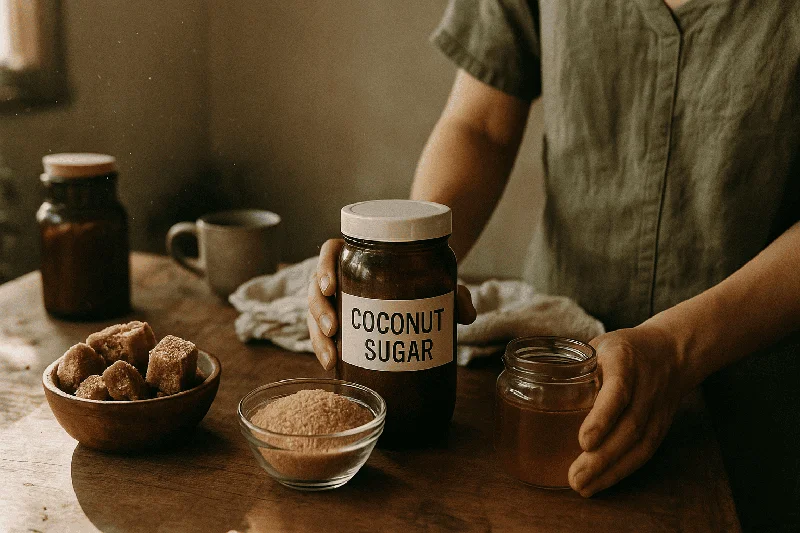
The simplest answer to "what is the alternative to sugar in Ayurveda?" is this: Ayurveda never asked you to eliminate sweetness. It asked you to choose the right sweetness. Classical texts like Charaka Samhita classify the sweet taste (madhura rasa) as the most nourishing of all six tastes — it builds ojas (vital energy), calms the mind, and supports tissue regeneration. The problem isn't sugar itself. The problem is refined white sugar, a modern invention stripped of every nutrient that made sugarcane beneficial in the first place.
In this guide, we go beyond a basic list of substitutes. You'll find a dosha-specific breakdown for each sweetener, seasonal guidelines rooted in ritucharya (Ayurvedic seasonal regimen), safe daily dosages, incompatible food combinations to avoid, and a dual-lens analysis that pairs classical Ayurvedic wisdom with modern nutritional science. Whether you're managing blood sugar levels, following an Ayurvedic lifestyle, or simply looking for healthier options for your morning chai — this is the most comprehensive resource you'll need.
Why Ayurveda Values the Sweet Taste (Madhura Rasa) — And Why Refined Sugar Fails
Ayurveda recognizes six tastes (shad rasa): sweet, sour, salty, pungent, bitter, and astringent. Among these, madhura rasa holds a special place. The Charaka Samhita (Sutra Sthana, Chapter 26) describes it as "sattvic" — promoting clarity, contentment, and strength. It nourishes all seven dhatus (body tissues), increases ojas, and is recommended as the first taste to consume in a meal.
So why does Ayurveda have a problem with modern sugar?
Because refined white sugar is what Ayurveda would call "prajnaparadha" — an error of intellect. The refining process removes molasses, minerals, and the natural fiber matrix that slows absorption. What remains is a concentrated substance that spikes blood glucose, aggravates Kapha dosha, produces ama (metabolic toxins), and disrupts agni (digestive fire). A 2014 study published in JAMA Internal Medicine found that people who consumed 17–21% of calories from added sugar had a 38% higher risk of cardiovascular mortality compared to those consuming 8% or less.
How Excess Sugar Impacts Immunity, Energy, and Dosha Balance
- In Ayurvedic pathology, excessive sweet taste consumption leads to a condition chain: weakened agni → increased ama → blocked srotas (channels) → depleted ojas.
- This manifests as:
- Kapha aggravation: weight gain, lethargy, congestion, excessive mucus
- Reduced agni: sluggish digestion, bloating, heaviness after meals
- Ama accumulation: brain fog, coated tongue, joint stiffness
- Compromised immunity: frequent colds, slow wound healing
Modern science mirrors this. A 2018 review in Nutrients journal confirmed that high sugar intake suppresses phagocytic activity of white blood cells for up to 5 hours after ingestion. The Ayurvedic concept of Madhumeha (literally "honey urine," the classical term for diabetes) describes precisely this mechanism — excess sweetness overwhelming the body's metabolic capacity.
What Does Sugar-Free Living Actually Mean in Ayurveda?
Here's what many people get wrong: Ayurvedic sugar-free living doesn't mean zero sweetness. It means choosing sweeteners that are closer to their natural state, consumed in appropriate quantities for your constitution (prakriti), and aligned with the current season. The goal is to satisfy madhura rasa without creating ama.
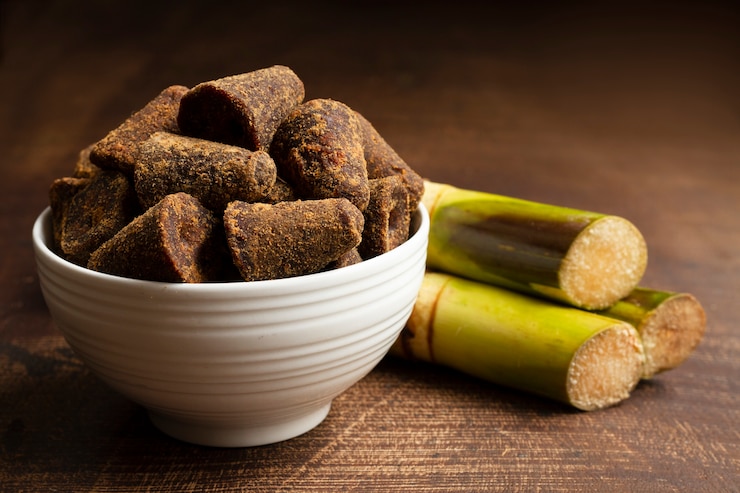
The 9 Best Ayurvedic Sugar Alternatives — With Dosha Analysis and Modern Science
Sharkara (Mishri / Rock Sugar) — The Supreme Sweetener in Classical Texts
If you ask "which sugar is best in Ayurveda?" — classical texts give a clear answer. Sharkara holds the highest position among sweeteners in Ayurvedic pharmacology. Sushruta Samhita (Sutra Sthana, Chapter 45) lists a hierarchy of sugarcane products: sugarcane juice → jaggery → khand → sharkara — with each successive stage considered more refined, lighter, and more therapeutic.
- What is authentic sharkara? Traditional sharkara is made through a slow recrystallization process from sugarcane juice, without chemical bleaching. The thread-like crystal formation retains trace minerals and undergoes a natural purification.
- Important: the "mishri" found in most stores today is often just refined sugar reshaped into crystals. Authentic sharkara looks slightly yellowish, has uneven crystals, and dissolves slowly.
- Dosha impact: Tridoshic (balances all three doshas).
- Especially cooling — excellent for Pitta pacification.
Modern data: GI of approximately 65–70. Caloric content similar to sugar (~4 kcal/g), but traditionally consumed in much smaller quantities. Ayurvedic use as anupana: Sharkara is classically prescribed as an anupana (vehicle/carrier) for many Ayurvedic formulations. It enhances drug absorption and reduces the harshness of bitter or pungent herbs. Medicines like Sitopaladi Churna literally contain "sita" (sharkara) as a primary ingredient.
Jaggery (Gur / Gud) — India's Traditional Powerhouse
Jaggery is arguably the most widely used Ayurvedic sugar alternative in Indian households, and for good reason. Made from unrefined sugarcane juice (or sometimes date palm or coconut sap), it retains iron, magnesium, potassium, and B vitamins that white sugar completely lacks.
- Dosha impact: Increases Kapha in excess.
- Mildly aggravates Pitta.
- Excellent for Vata — its heavy, warming, and unctuous qualities directly counter Vata's cold, dry nature.
Ayurvedic properties (rasa-virya-vipaka): Sweet taste, heating potency, sweet post-digestive effect. Acts as a mild laxative and blood purifier. Modern data: Contains approximately 11 mg of iron per 100g (compared to zero in white sugar). GI ranges from 60–85 depending on processing. A 2020 study in Journal of Food Science and Technology confirmed that jaggery retains 60–85% of the mineral content of original sugarcane juice. Best for: Winter consumption, post-meal digestive support, iron supplementation (especially for women), and recipes requiring caramelization.
Is Jaggery a Good Alternative to Sugar for Diabetics?
- This is where nuance matters. Jaggery's glycemic index is only marginally lower than white sugar (GI 65–85 vs. 65 for white sugar). For diabetics, simply swapping sugar for jaggery won't significantly improve blood glucose control. However, from an Ayurvedic perspective, jaggery's trace minerals and the presence of natural fiber slow absorption slightly compared to refined sugar.
- The recommendation: use small amounts (5–10g/day) rather than treating it as an unlimited substitute.
- Honey (Madhu) — Ancient Medicine with Strict Rules
Honey is perhaps the most therapeutically complex sweetener in Ayurveda. The Charaka Samhita dedicates extensive passages to its properties, and it's one of the few substances considered simultaneously a food, medicine, and anupana.
- The critical rule: never heat honey. This isn't folk wisdom — it's one of Ayurveda's most emphatic dietary warnings. Ashtanga Hridaya states that heated honey becomes a form of poison (ama-visha) in the body.
- Modern research offers partial support: a 2010 study in AYU journal found that heating honey above 60°C produces hydroxymethylfurfural (HMF), a potentially harmful compound.
Dosha impact: Kapha-reducing (one of the few sweet substances that decreases Kapha). Mildly aggravates Pitta and Vata in excess. Modern data: GI of approximately 58. Contains hydrogen peroxide and methylglyoxal (in Manuka varieties), providing antibacterial properties. Contains trace enzymes including diastase and invertase. Best uses: Raw in lukewarm water (never boiling), as an anupana for herbal medicines, topically for wound healing, in room-temperature preparations.
Honey as Anupana: The Carrier for Medicines
Ayurvedic practitioners have used honey as a drug vehicle for millennia. Its hygroscopic nature and enzymatic profile enhance bioavailability of herbs like Sitopaladi, Trikatu, and Chyawanprash. When prescribed as anupana, the typical dose is 1–2 teaspoons, taken before the medicine to prepare the digestive tract.
- Coconut Sugar — Low-GI Tropical Alternative
Derived from the sap of coconut palm flower buds, coconut sugar has gained popularity worldwide as a lower-GI alternative. It retains inulin fiber, iron, zinc, and potassium.
Dosha impact: Mildly cooling. Suitable for Pitta and Vata. Can increase Kapha if consumed in large quantities due to its heavy quality. Modern data: GI of approximately 35–54 (significantly lower than white sugar's 65). Contains about 16 calories per teaspoon. The Philippine Food and Nutrition Research Institute measured its GI at 35, though subsequent studies have found higher values depending on processing. Best for: Baking, coffee sweetening, people monitoring glycemic response.
- Dates (Khajoor) — The Sattvic Energy Source
Dates are classified as a sattvic food in Ayurveda — promoting mental clarity, spiritual awareness, and emotional balance. They are one of the best natural sources of ojas-building nutrition.
Dosha impact: Excellent for Vata (grounding, sweet, heavy). Good for Pitta in moderation. Can aggravate Kapha due to heaviness and high sugar content. Modern data: Medjool dates contain approximately 66 calories each, with 16g of sugar but also 1.6g of fiber. GI of 42–55 depending on variety. Rich in potassium (696 mg/100g), magnesium, and vitamin B6. Recommended intake: 2–3 dates per day for Vata types, 1–2 for Pitta, minimize for Kapha types.
- Stevia — The Zero-Calorie Herbal Sweetener
Stevia (Stevia rebaudiana) is 200–400 times sweeter than sugar with zero calories. While not a traditional Ayurvedic ingredient, its herbal origin and zero glycemic impact make it compatible with Ayurvedic principles for specific uses.
Dosha impact: Cold, light, dry qualities. Best for Kapha constitutions. Can aggravate Vata if used excessively (due to drying effect). Neutral to mildly cooling for Pitta. Modern data: GI of 0. A 2019 meta-analysis in the Journal of Dietary Supplements found that stevioside may help reduce blood pressure in hypertensive individuals. FDA-approved as GRAS (Generally Recognized as Safe). Limitations: Does not caramelize, may have a bitter aftertaste in high concentrations, and doesn't provide the tissue-nourishing qualities that Ayurveda values in madhura rasa.
- Molasses (Raab) — The Mineral-Dense Byproduct
Blackstrap molasses, the thick dark liquid remaining after sugar refining, is ironically the most nutrient-dense part of sugarcane. It's essentially everything that white sugar throws away.
Dosha impact: Heavy, warming, moist. Strong Kapha-increasing potential. Excellent for Vata in small amounts. Can aggravate Pitta due to heating nature. Modern data: Contains 4.7 mg of iron per tablespoon (26% DV), 176 mg of potassium, 41 mg of calcium, and 43 mg of magnesium. GI of approximately 55.
- Maple Syrup — The Cooling Western Alternative
While not native to Indian Ayurvedic tradition, maple syrup's properties align well with Ayurvedic principles. It's made from the concentrated sap of sugar maple trees.
Dosha impact: Cooling, moderately heavy. Good for Pitta. Acceptable for Vata. Can increase Kapha in excess. Modern data: Contains manganese (33% DV per tablespoon), riboflavin, zinc, and over 67 polyphenolic compounds. GI of approximately 54. A 2011 study at the University of Rhode Island identified quebecol, a compound unique to maple syrup with anti-inflammatory properties.
9. Monk Fruit Extract and Other Emerging Alternatives
Monk fruit (luo han guo) provides sweetness 150–200 times that of sugar with zero calories and zero glycemic impact. Its active compounds, mogrosides, also show anti-inflammatory and antioxidant properties in preliminary studies. Yacon syrup, derived from a South American root, contains fructooligosaccharides (FOS) that act as prebiotics — feeding beneficial gut bacteria without spiking blood sugar. Allulose, a rare sugar found naturally in figs and raisins, provides only 0.2–0.4 kcal/g compared to sugar's 4 kcal/g.
These aren't classical Ayurvedic ingredients, but for those seeking modern low-calorie options with minimal metabolic impact, they offer interesting possibilities.
Complete Comparison Table: Ayurvedic Sugar Alternatives at a Glance
| Sweetener | GI | Cal/tsp | Vata | Pitta | Kapha | Best Season | Key Benefit | Caution |
|---|---|---|---|---|---|---|---|---|
| Sharkara (Mishri) | 65–70 | 15 | ✅ Balances | ✅ Cools | ✅ Neutral | Summer (Grishma) | Tridoshic, anupana | Ensure authentic sourcing |
| Jaggery (Gur) | 60–85 | 16 | ✅ Excellent | ⚠️ Mild increase | ❌ Increases | Winter (Shishira) | Iron, minerals | Not ideal for diabetics |
| Honey (Madhu) | 58 | 21 | ⚠️ Mild increase | ⚠️ Mild increase | ✅ Reduces | Late winter/spring | Antibacterial, anupana | NEVER heat above 40°C |
| Coconut Sugar | 35–54 | 15 | ✅ Good | ✅ Good | ⚠️ Moderate | Year-round | Low GI, minerals | Higher calorie awareness |
| Dates (Khajoor) | 42–55 | 18* | ✅ Excellent | ✅ Moderate | ❌ Increases | Autumn/winter | Ojas-building, sattvic | Limit to 2–3/day |
| Stevia | 0 | 0 | ⚠️ Drying | ✅ Cooling | ✅ Best choice | Year-round | Zero calorie | No tissue nourishment |
| Molasses | 55 | 19 | ✅ Good | ⚠️ Heating | ❌ Increases | Winter | Iron-rich (4.7mg/tbsp) | Very heavy quality |
| Maple Syrup | 54 | 17 | ✅ Good | ✅ Cooling | ⚠️ Moderate | Spring/summer | 67+ polyphenols | Not traditional Ayurvedic |
| Monk Fruit | 0 | 0 | Neutral | Neutral | ✅ Good | Year-round | Anti-inflammatory | Limited long-term data |
*Per date (approximately)
How to Choose the Right Sweetener for Your Dosha (Prakriti-Based Guide)
This is where most guides fall short. They list alternatives but don't tell you which one is best for your body. In Ayurveda, your prakriti (constitutional type) determines everything — including which sweetener serves you best.
Vata Constitution (Air + Ether)
Vata types need grounding, warming, heavy, and moist sweeteners. Your digestive fire tends to be irregular, and you benefit from sweeteners that provide sustained energy without overstimulation.
Top choices: Jaggery (first choice), dates, molasses, maple syrup Acceptable: Coconut sugar, sharkara Use sparingly: Stevia (too drying), honey in large amounts (scraping action can be depleting) Daily sweet allowance: 2–3 teaspoons of jaggery OR 2–3 dates OR 1 tablespoon maple syrup
Pitta Constitution (Fire + Water)
Pitta types need cooling, moderately sweet options that don't create excess heat. Your strong agni can handle sweeteners well, but overindulgence leads to skin issues and acidity.
Top choices: Sharkara/mishri (first choice), maple syrup, coconut sugar Acceptable: Dates in moderation, stevia Use sparingly: Jaggery (too heating), molasses (very heating), honey (mild Pitta increase) Daily sweet allowance: 2–3 teaspoons of sharkara OR 1 tablespoon coconut sugar
Kapha Constitution (Earth + Water)
- Kapha types face the biggest challenge with sweeteners.
- You're already dominated by heavy, moist, cool qualities — and most sweeteners share these exact properties.
- Your strategy: minimal sweetening with light, dry options.
Top choices: Honey (the only sweet that reduces Kapha), stevia Acceptable: Small amounts of monk fruit Use sparingly to avoid: Jaggery, dates, molasses, maple syrup, coconut sugar (all increase Kapha) Daily sweet allowance: 1–2 teaspoons of raw honey OR stevia as needed
Dual and Triple Dosha Types
If you're Vata-Pitta, prioritize sharkara and coconut sugar. Pitta-Kapha types do well with small amounts of honey and stevia. Vata-Kapha constitutions benefit from warm honey in lukewarm water. Tridoshic individuals can rotate sweeteners seasonally.
Seasonal Guide to Sweeteners: Ritucharya for Sweet Tooth
No competitor covers this, but it's fundamental to Ayurvedic practice. The right sweetener changes with the season.
Cold Seasons (Hemanta & Shishira — November to February)
Agni is naturally strongest. The body can handle heavier, more calorie-dense sweeteners.
- Best choices: Jaggery, dates, molasses.
- Honey in lukewarm water is particularly therapeutic — it helps manage Kapha accumulation that naturally builds during cold months.
Spring (Vasanta — March to April)
Accumulated Kapha begins to liquefy. This is the time to reduce heavy sweeteners dramatically.
Best choices: Honey (strongly recommended — its scraping quality helps clear Kapha), stevia. Avoid jaggery, dates, and molasses during this period.
Summer (Grishma — May to June)
Pitta rises. Agni is moderate. The body needs cooling nutrition.
Best choices: Sharkara/mishri, coconut sugar, maple syrup. These cooling sweeteners prevent Pitta aggravation during intense heat.
Monsoon (Varsha — July to September)
Agni is weakest. Digestion is compromised. Sweeteners should be light and minimal.
Best choices: Small amounts of honey (aged honey is specifically recommended in classical texts for monsoon), sharkara. Avoid heavy sweeteners like jaggery and molasses.
Autumn (Sharad — October to November)
Pitta that accumulated during summer begins to aggravate. Continue cooling sweeteners but transition toward warming options.
Best choices: Sharkara, coconut sugar, beginning to introduce jaggery as temperatures drop.
स्वयं दवा न लें और प्रतीक्षा न करें। अभी डॉक्टर से चैट शुरू करें
What Are the Herbal Substitutes for Sugar? Ayurvedic Herbs That Support Blood Sugar
Beyond sweetener substitutes, Ayurveda offers a powerful herbal toolkit for those managing blood sugar — addressing the root cause rather than just replacing one sweet substance with another.
Key Herbs from Classical Texts
- - Gudmar (Gymnema sylvestre): Literally means "sugar destroyer." A 2017 study in Journal of Clinical Biochemistry and Nutrition showed it can reduce sugar cravings by temporarily blocking sweet taste receptors on the tongue.
- Dose: 400–600 mg standardized extract daily.
- Karela (Momordica charantia / Bitter Melon): Contains polypeptide-p, an insulin-like compound. Multiple studies confirm its hypoglycemic effect. In Ayurveda, its bitter taste directly counterbalances excess sweet taste.
- Neem (Azadirachta indica): Bitter, cooling, and Kapha-reducing. Research published in Indian Journal of Physiology and Pharmacology demonstrated improved glucose tolerance with neem leaf extract.
- Shilajit: This mineral-rich exudate from Himalayan rocks enhances cellular energy metabolism. A 2015 study showed it improves pancreatic beta-cell function.
- Turmeric (Curcuma longa): Curcumin has been shown in a 2012 Diabetes Care study to reduce the progression from prediabetes to diabetes by 100% over a 9-month period in a Thai population study.
Ayurvedic Formulations for Sugar Management
- Classical preparations like Chandraprabha Vati, Nishamalaki (turmeric + amla), and Shilajit with honey are traditionally used to support healthy glucose metabolism.
- These aren't sweetener alternatives per se — they're metabolic supporters that make your body handle sweetness more efficiently.
Forbidden Combinations: Viruddha Ahara (Incompatible Foods) with Sweeteners
This is critical safety information that most guides completely ignore.
- Ayurveda's concept of viruddha ahara describes food combinations that create toxicity in the body.
- Several involve sweeteners directly:
- 1.Honey + Ghee in equal proportions — Charaka Samhita explicitly states this combination is toxic (visha). Unequal proportions are acceptable and even therapeutic.
- 2.Honey + Boiling water — Creates ama-visha. Use lukewarm water only (below 40°C).
- 3.Milk + Jaggery — Considered incompatible in classical texts.
- Can cause skin disorders and digestive disturbance. (Note: milk + sharkara or mishri is acceptable and even recommended.)
- 4.Honey + Radish — A lesser-known incompatibility that can aggravate skin conditions.
- 5.Fish + Jaggery — Creates channel-blocking toxins according to Ashtanga Hridaya.
- Modern understanding: While not all of these have been validated by clinical trials, the honey-heating prohibition has biological plausibility (HMF formation). The equal honey-ghee prohibition may relate to competing metabolic pathways for fat and sugar metabolism.
- Regardless — these guidelines have been observed for thousands of years, and following them carries no downside.
Sweeteners for Special Populations
Children (Under 12)
Ayurveda is specific: children are naturally Kapha-predominant. Heavy sweeteners like jaggery and dates should be moderate. Sharkara is the preferred sweetener for children's medicines and foods. Honey should never be given to infants under 12 months (this aligns with modern medical advice regarding botulism risk). For children ages 1–5, small amounts of raw honey (½ teaspoon) with warm water can support immunity.
Elderly (Above 60)
- Agni diminishes with age.
- Heavy sweeteners become harder to digest.
- Best options: small amounts of honey (supports Kapha management), sharkara, and stevia. Dates are good if digestion permits. Avoid large quantities of jaggery or molasses.
Pregnant Women
Madhura rasa is actually recommended during pregnancy to nourish the developing fetus. Sharkara with milk, dates (a 2011 study in Journal of Obstetrics and Gynaecology found that date consumption in late pregnancy reduced the need for labor induction), and small amounts of jaggery are traditionally prescribed.
The Role of Sweeteners as Anupana (Medicine Carriers)
This is a uniquely Ayurvedic concept with no Western equivalent. Anupana refers to the substance used to carry herbal medicines into specific tissues and channels, enhancing their therapeutic effect.
- Honey as anupana: Carries medicines to Kapha sites (lungs, sinuses, joints).
- Enhances scraping and drying action.
- Used with: Sitopaladi churna, Trikatu, Talisadi churna.
- Sharkara as anupana: Carries medicines to Pitta sites (liver, blood, skin).
- Provides cooling, soothing effect.
- Used with: Shatavari, Praval Pishti, Kamadudha Rasa.
- Jaggery as anupana: Carries medicines to Vata sites (colon, bones, nervous system).
- Provides grounding and warming support.
- Used with: Dashmool, Ashwagandha, certain iron preparations.
The dose of anupana is typically 1–2 teaspoons, taken alongside or just before the medicine. Your Ayurvedic practitioner determines the appropriate anupana based on your condition and constitution.
Practical Tips: Replacing Sugar in Daily Life
Best Substitute for Sugar in Tea and Coffee
- For chai, replace sugar with small amounts of jaggery (add after removing from heat to preserve nutrients) or mishri. For those managing diabetes, stevia drops work well without altering flavor significantly. Coconut sugar dissolves well in coffee and provides a slight caramel note.
- Remember: never add honey to boiling tea — let it cool to lukewarm first.
In Cooking and Baking
- Replace 1 cup white sugar with ¾ cup jaggery powder (jaggery is slightly sweeter)
- For cakes and cookies, coconut sugar substitutes 1:1 for white sugar
- Date paste (blend soaked dates with water) works in energy balls, smoothies, and no-bake desserts
- Maple syrup: use ¾ cup for every 1 cup sugar, and reduce other liquid in recipe by 3 tablespoons
Gradual Transition Strategy
- Don't quit sugar overnight.
- Week 1–2: Replace sugar in tea/coffee with your dosha-appropriate alternative.
- Week 3–4: Switch to jaggery or coconut sugar in cooking.
- Week 5–6: Begin reducing overall sweetener quantity by 25%.
- Week 7–8: Introduce more naturally sweet foods (sweet potato, beets, carrots) to satisfy madhura rasa cravings through whole foods.
Frequently Asked Questions
What Is the Healthiest Alternative to Sugar Overall?
There is no single "healthiest" option — it depends on your dosha, health goals, and season. For general health, sharkara (authentic rock sugar) is the most balanced Ayurvedic choice. For diabetics, stevia or monk fruit offers the lowest glycemic impact. For iron-deficient individuals, jaggery or molasses provides the most mineral support.
Can I Control Sugar Without Medicine Through Ayurveda?
Yes — for prediabetes and early-stage type 2 diabetes, Ayurvedic dietary modifications combined with herbs like Gudmar, Karela, and Turmeric have shown clinical promise. A 2015 systematic review in Journal of Ethnopharmacology found that Gymnema sylvestre supplementation reduced fasting blood glucose by 11–25% in multiple trials. However, always work with both your doctor and an Ayurvedic practitioner; never discontinue prescribed medication without medical supervision.
Is Ayurvedic Sugar-Free Living Sustainable Long-Term?
Absolutely, because Ayurveda doesn't ask for deprivation. It asks for appropriate sweetness. By rotating sweeteners seasonally, matching them to your constitution, and using herbs to support metabolism, most people find that their cravings naturally decrease within 4–6 weeks. The key is gradual transition, not abrupt elimination.
Should I Eat Artificial Sweeteners Like Aspartame or Sucralose?
- From an Ayurvedic perspective, artificial sweeteners are problematic because they provide the taste signal without the corresponding nutritional substance — confusing the body's innate intelligence (prana).
- Modern research also raises concerns: a 2022 study in Cell journal showed that certain artificial sweeteners alter gut microbiome composition and may paradoxically impair glucose tolerance. Stick with natural options.
Can Ayurveda Reverse Diabetes?
Ayurveda describes Madhumeha (diabetes) management through a comprehensive approach: dietary modification, appropriate sweetener use, herbal therapy, Panchakarma detoxification, yoga, and lifestyle changes. While "reversal" is a strong claim, multiple clinical studies show significant improvements in HbA1c and fasting glucose with integrated Ayurvedic protocols. A 2019 randomized controlled trial published in BMC Complementary Medicine and Therapies demonstrated meaningful blood sugar improvements using an Ayurvedic multi-herb formulation over 6 months.
What Is the Best Alternative for Sugar in Coffee Specifically?
Coconut sugar is the most popular choice — it has a naturally caramel-like flavor that complements coffee well, dissolves easily, and has a GI of 35–54. For zero-calorie options, stevia drops (liquid form avoids the powdery texture) or monk fruit extract blend seamlessly. If you drink coffee with milk, adding a small piece of mishri creates a traditional Indian flavor that many find surprisingly satisfying.
Final Thoughts: Sweet Wisdom, Not Sweet Restriction
- Ayurveda's approach to sweeteners isn't about punishment or deprivation.
- It's about intelligence — choosing the right substance, in the right amount, at the right time, for the right body. The fact that this 5,000-year-old science already categorized sweeteners by their thermal quality, tissue effect, and constitutional suitability is remarkable. Modern nutrition is only now catching up to what the Charaka Samhita described millennia ago.
- Start simple. Identify your dosha. Pick one sweetener that aligns with your constitution and the current season. Make the switch in your daily tea or coffee first.
- Notice how your body responds — your energy, your digestion, your cravings. That direct experience is the heart of Ayurvedic medicine.
Your sweet tooth isn't the enemy. Unconscious consumption is. Choose wisely, and sweetness becomes medicine.
Scientific Sources
- Why the "sugars" in traditional Unani formulations are a pivotal component: A viewpoint perspective — Fazil M et al., 2022, Journal of integrative medicine
- Value Addition and Fortification in Non-Centrifugal Sugar (Jaggery): A Potential Source of Functional and Nutraceutical Foods — Rao GP et al., 2022, Sugar tech : an international journal of sugar crops & related industries
- Nutritional experiences of postpartum mothers - A qualitative study — Bathula SS et al., 2024, Journal of family medicine and primary care
- Preparation of goat milk-based herbal kalakand enriched with rhododendron flower juice and jaggery: sensory and functional characterization — Kumari A et al., 2026, Journal of food science and technology
- Enhanced translocation of particles from lungs by jaggery — Sahu AP et al., 1994, Environmental health perspectives
- Honey and Health: A Review of Recent Clinical Research — Samarghandian S et al., 2017, Pharmacognosy research
- Honey in dermatology and skin care: a review — Burlando B et al., 2013, Journal of cosmetic dermatology
- Herbal Remedies for Hair Loss: A Review of Efficacy and Safety — Ahmed A et al., 2025, Skin appendage disorders
- Allergies and Natural Alternatives — Jongbloed WM et al., 2022, Otolaryngologic clinics of North America
- Science and Experience: Repairing a Fractured Medicine — Loughlin M, 2021, Complementary medicine research
- Targeting ferroptosis using Chinese herbal compounds to treat respiratory diseases — Xu M et al., 2024, Phytomedicine : international journal of phytotherapy and phytopharmacology
- Biochanin A protects against iron overload associated knee osteoarthritis via regulating iron levels and NRF2/System xc-/GPX4 axis — He Q et al., 2023, Biomedicine & pharmacotherapy = Biomedecine & pharmacotherapie
- Effect and mechanism of Banxia Xiexin decoction in colorectal cancer: A network pharmacology approach — Wang Y et al., 2024, Phytomedicine : international journal of phytotherapy and phytopharmacology
- Dehydrotanshinone II A alleviates osteoarthritis via activating PPARγ to inhibit ferroptosis in chondrocytes — Guan W et al., 2025, Scientific reports
- Hesperetin promotes diabetic wound healing by inhibiting ferroptosis through the activation of SIRT3 — Yu X et al., 2024, Phytotherapy research : PTR
- Clinician guidelines for the treatment of psychiatric disorders with nutraceuticals and phytoceuticals: The World Federation of Societies of Biological Psychiatry (WFSBP) and Canadian Network for Mood and Anxiety Treatments (CANMAT) Taskforce — Sarris J et al., 2022, The world journal of biological psychiatry : the official journal of the World Federation of Societies of Biological Psychiatry
- Metallic Materials for Bone Repair — Fan L et al., 2024, Advanced healthcare materials
- Examining the Effects of Supplemental Magnesium on Self-Reported Anxiety and Sleep Quality: A Systematic Review — Rawji A et al., 2024, Cureus
- A Comprehensive Review on Shilajit: What We Know about Its Chemical Composition — Kamgar E et al., 2025, Critical reviews in analytical chemistry
- Herbal and Natural Supplements for Improving Sleep: A Literature Review — Yeom JW et al., 2024, Psychiatry investigation
उपयोगकर्ताओं के प्रश्न
What is the impact of seasonal changes on sweetener choices in Ayurveda?
Client_1be6b7
2 दिनों पहले
Seasonal changes can influence sweetener choices in Ayurveda, as different seasons affect digestion and energy needs. During cooler months, warming and nutrient-dense sweeteners like jaggery and molasses are preferred for their ability to provide sustained energy and support digestion. In warmer seasons, lighter options like maple syrup are more suitable due to their cooling properties. Ayurvedic guidance suggests 2–3 teaspoons of jaggery or 2–3 dates daily, but these choices also depend on your constitution (prakriti). Consult a healthcare provider if unsure, especially if you have health conditions affecting sugar intake.
What Ayurvedic herbs can help regulate blood sugar levels?
Client_5a24d0
7 दिनों पहले
Ayurvedic herbs that may help regulate blood sugar levels include Gudmar (Gymnema sylvestre) and Karela (Momordica charantia or Bitter Melon). Gudmar is known for reducing sugar cravings by affecting taste receptors, with a common dose being 400-600 mg of standardized extract daily. Karela contains compounds that mimic insulin and can help with blood sugar management. However, it's crucial to use these herbs under medical supervision, as they can interact with medications and may not replace conventional diabetes treatments. Always consult a healthcare professional before starting any new supplement or herbal remedy for managing blood sugar.
How to incorporate jaggery into a balanced diet?
Client_2cbd86
12 दिनों पहले
To incorporate jaggery into a balanced diet, use it in moderation, ideally 5-10 grams per day, as a natural sweetener, especially in winter or in dishes needing caramelization. Jaggery can support digestion post-meal and serve as an iron supplement, particularly beneficial for women. However, those with diabetes should practice caution, as its sugar content still impacts blood sugar levels, despite its slower absorption due to trace minerals. Consult a doctor if you have health concerns related to sugar intake or dietary needs.
What is the best Ayurvedic sweetener for enhancing digestion?
Client_27ae1c
17 दिनों पहले
The best Ayurvedic sweetener for enhancing digestion is jaggery. This unrefined sugar retains most of the mineral content from sugarcane, such as potassium, magnesium, and vitamin B6, which can aid digestive health. While jaggery has a similar caloric content to sugar (~4 kcal/g), it's usually consumed in smaller amounts. It is also considered mildly cooling and can act as an anupana (carrier) in Ayurvedic formulations. Overconsumption might interfere with blood sugar management, so moderation is crucial. If digestive issues persist, it's advisable to consult a healthcare provider.
What are the health benefits of jaggery over refined sugar?
Client_474d84
22 दिनों पहले
Jaggery offers a few health benefits over refined sugar due to its higher nutritional content and slower absorption rate. Unlike refined sugar, jaggery contains trace minerals like iron, magnesium, and potassium. These minerals can support various bodily functions such as energy production and muscle health. Additionally, jaggery’s natural fibers help to slow down its absorption, providing a more gradual release of energy and preventing spikes in blood sugar levels. However, it's important to consume jaggery in moderation, about 5–10 grams per day, as excessive intake can lead to similar health issues as refined sugar. If you have specific health conditions, especially diabetes, consult your doctor before making dietary changes.
How do artificial sweeteners affect gut health and digestion?
Client_6d1562
32 दिनों पहले
Artificial sweeteners like aspartame or sucralose can negatively affect gut health by disrupting the microbiome. Studies, including one in the journal *Cell*, suggest that these sweeteners can alter gut bacteria and potentially impair glucose tolerance over time. This could lead to digestive issues such as bloating, gas, or changes in bowel habits. If you experience persistent digestive discomfort and suspect artificial sweeteners, it's advisable to consult a healthcare professional.
What are the best ways to use honey to support immunity in children?
Client_025e08
42 दिनों पहले
To support immunity in children, honey can be used by giving them small amounts of raw honey with warm water. For ages 1–5, ½ teaspoon of honey is typically recommended. Honey contains antioxidants and has antibacterial properties that may help strengthen the immune system. However, never give honey to children under 1 year old due to the risk of botulism. Always use raw, unprocessed honey to maximize health benefits. If your child has allergies to pollen or bee-related products, consult a doctor before using honey.
What nutritional benefits do dates provide compared to other sweeteners?
Client_0e6153
52 दिनों पहले
Dates offer valuable nutritional benefits compared to other sweeteners. They are rich in potassium, magnesium, vitamin B6, and manganese. Unlike refined sugars, dates also contain dietary fiber, which aids digestion and helps regulate blood sugar levels. With their polyphenolic compounds, dates provide antioxidant benefits, enhancing overall health. When selecting sweeteners, individuals monitoring glycemic response may appreciate dates' nutritional density and natural sweetness. If you have dietary restrictions or concerns about blood sugar levels, it's best to consult a healthcare provider.
How long does it take to notice health benefits from using Ayurvedic sweeteners?
Client_4827b0
61 दिनों पहले
The time it takes to notice health benefits from Ayurvedic sweeteners varies significantly based on individual factors such as current health status, dietary habits, and specific sweetener used. Health changes from incorporating Ayurvedic sweeteners, like jaggery or honey, typically show over weeks to months. They may include improved digestion or energy levels. Choosing sweeteners that match your constitution (prakriti) and consuming them appropriately for your dosha can support these benefits. However, they are not a substitute for medical treatment. Consult a healthcare provider if you have conditions like diabetes or experience adverse effects.
What sweeteners are best for balancing Vata constitution in Ayurvedic diets?
Client_e673e6
71 दिनों पहले
For a Vata constitution, you’d want sweeteners that are grounding, warming, heavy, and moist. Things like honey, jaggery, or molasses might be good options for you. They help balance the light, dry, and cool qualities of Vata. Just be mindful of not overdoing it! If you're looking for a sugar alternative, stevia or monk fruit could be okay if the bitter taste doesn't bother you. But they don’t offer the nourishing qualities Ayurveda prefers. Try different options and see what feels right for your body. 😊
संबंधित आलेख

Nutrition
What Is Desi Khand? Meaning, Benefits, and Ayurvedic Uses
What is desi khand and why is it healthier than sugar? Learn its meaning, benefits, English name, and how organic desi khand compares to brown sugar
24,441

Nutrition
एलनीर कुज़ाम्बु के फायदे, खुराक, सामग्री, और साइड इफेक्ट्स
एलनीर कुज़ाम्बु के फायदे, खुराक, सामग्री और साइड इफेक्ट्स की खोज
2,591

Nutrition
A2 घी क्या है: आयुर्वेदिक मतलब, फायदे, और इसे कैसे बनाया जाता है
A2 घी क्या है और यह A1 से कैसे अलग है? जानें A2 गाय के घी का मतलब, इसके फायदे, इसे कैसे बनाया जाता है, और आयुर्वेद में इसे क्यों सेहतमंद माना जाता है।
7,481

Nutrition
Discovering the Ayurvedic Diet
The Ayurvedic Diet is a traditional Indian nutritional practice that aligns eating habits with one's dosha to promote health and balance.
2,710

Nutrition
Nurturing Digestive Wellness through Ayurveda
In Ayurveda, the ancient system of holistic healing, the spotlight shines brightly on the digestive process.
2,832

Nutrition
सुनारिन कैप्सूल्स के फायदे, खुराक, सामग्री, साइड इफेक्ट्स
सुनारिन कैप्सूल के फायदे, खुराक, सामग्री, और साइड इफेक्ट्स की जानकारी
2,993

Nutrition
Can Cucumber Cause Gas and Bloating?
Discover if cucumber can cause gas or bloating, why it affects digestion, and its role in IBS. Learn Ayurvedic tips and safe combinations to enjoy cucumber
14,312

Nutrition
Why Are Vitamins Necessary in the Diet: Ayurvedic View and Daily Needs
Understand the importance of vitamins in diet, their role in health, and vitamin-rich foods. Learn why vitamins are necessary in our diet for immunity
2,272

Nutrition
Jeerakarishtam Benefits – Natural Ayurvedic Digestive Tonic & Rejuvenator
Discover the jeerakarishtam benefits, a traditional Ayurvedic digestive tonic that enhances digestion, relieves flatulence, boosts metabolism, and promotes overall well-being through natural, rejuvenative properties.
5,506

Nutrition
सुमेंटा टैबलेट
सुमेंटा टैबलेट की खोज
4,332
विषय से संबंधित परामर्श
अतिरिक्त दस्तावेज़
© 2024 Ask Ayurveda. सर्वाधिकार सुरक्षित।