Sukshma Triphala Vati Uses, Benefits, and Dosage Guide
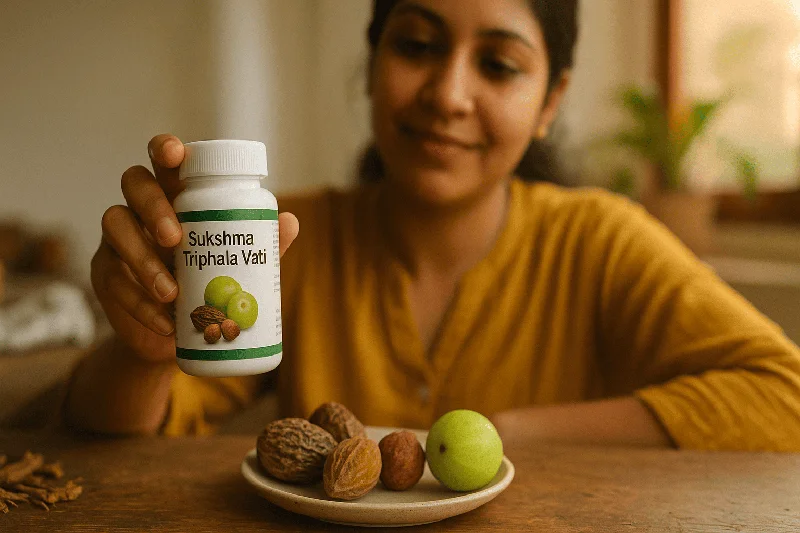
Sukshma Triphala Vati is a classical Ayurvedic herbomineral formulation that combines the detoxifying power of Triphala with Kajjali (processed mercury-sulfur compound) to create a potent therapeutic tablet used primarily for fever, respiratory disorders, ENT infections, eye diseases, and digestive complaints. Unlike regular Triphala churna or plain Triphala vati, the "Sukshma" (meaning micro or subtle) version undergoes an intensive Bhavana (trituration) process that enhances bioavailability and allows the medicine to act at a deeper tissue level.
- If you've been searching for clear, honest information about what Sukshma Triphala Vati actually does, how it differs from standard Triphala, and whether the Kajjali in it is safe — you're in the right place.
- This guide covers everything: composition with exact milligram quantities, classical references, dosage for different conditions, contraindications that other sources skip, and a brand comparison to help you choose wisely.
What Is Sukshma Triphala Vati and What Is It Used For?
Sukshma Triphala Vati is a Rasaushadhi (herbomineral medicine) described in classical Ayurvedic texts, most notably referenced in Bhaishajya Ratnavali and Rasatarangini. It belongs to the category of Vati Kalpana (tablet preparations) and is classified as a Rasayana with Jwaraghna (antipyretic) and Deepana-Pachana (digestive-carminative) properties.
The term "Sukshma" literally translates to "subtle" or "micro" in Sanskrit. This isn't just a marketing term. It refers to the Bhavana process where the raw ingredients are repeatedly triturated (ground) with Triphala Kashaya (decoction), which progressively reduces particle size and increases the surface area of the medicine. The result is a formulation that penetrates deeper into the Dhatus (body tissues) compared to a standard Triphala tablet.
Primary Indications
Sukshma Triphala Vati is traditionally prescribed for a surprisingly wide range of conditions:
- Jwara (Fever) — particularly chronic and recurrent fevers
- Kasa and Shwasa (Cough and respiratory disorders)
- ENT disorders — tonsillitis, pharyngitis, uvulitis, sinusitis
- Netra Roga (Eye diseases) — conjunctivitis, eye inflammation
- Danta Roga (Dental disorders) — gum infections, oral ulcers
- Ajirna and Mandagni (Indigestion and poor digestive fire)
- Vibandha (Constipation)
- Kushtha (Skin diseases)
- Prameha (Metabolic disorders including early-stage diabetes)
This versatility comes from the synergy between Triphala's broad-spectrum healing properties and Kajjali's ability to act as a Yogavahi — a substance that enhances the delivery and potency of whatever it is combined with.
What Makes the "Sukshma" Form Special?
Many people wonder: if I already take Triphala, why would I need Sukshma Triphala Vati?
The answer lies in three key differences:
- 1.Kajjali addition — Regular Triphala is purely herbal. Sukshma Triphala Vati contains Kajjali, which acts as a catalytic carrier, intensifying the therapeutic effect.
- 2.Bhavana process — The repeated trituration with Triphala decoction creates ultra-fine particles that are absorbed more efficiently.
- 3.Targeted action — While plain Triphala works primarily on the GI tract, the Sukshma form has a broader reach — ENT, eyes, skin, and deeper tissues.
Think of it this way: regular Triphala is the gentle everyday supplement. Sukshma Triphala Vati is the therapeutic-grade medicine for when you need targeted treatment.
Detailed Composition and Ingredients
Understanding exactly what goes into Sukshma Triphala Vati is crucial — especially since this formulation contains a mercurial compound that requires transparency.
Ingredients Table (Per 250 mg Tablet)
| Ingredient | Sanskrit Name | Botanical/Chemical Name | Quantity per Tablet |
|---|---|---|---|
| Haritaki (Hirda) | Haritaki | Terminalia chebula | 81.67 mg |
| Bibhitaki (Behda) | Bibhitaki | Terminalia bellirica | 81.67 mg |
| Amalaki (Amla) | Amalaki | Emblica officinalis | 81.67 mg |
| Kajjali | Kajjali | Processed Mercury + Sulfur | 5 mg |
| Triphala Kashaya | — | Decoction of the three fruits | Q.S. (Quantum Sufficit) |
Q.S. means "quantity sufficient" — the Triphala decoction is used during the Bhavana process and evaporates during preparation, so its quantity varies based on manufacturing cycles.
The Role of Each Ingredient
Haritaki (Terminalia chebula) — Called the "King of Medicines" in Ayurveda, Haritaki is the primary Vata-balancing herb. It has proven laxative, astringent, and rejuvenative properties. A 2017 review published in the International Journal of Pharmaceutical Sciences and Research confirmed its antioxidant, antimicrobial, and hepatoprotective activities. Bibhitaki (Terminalia bellirica) — This fruit specifically targets Kapha dosha and has strong astringent and expectorant properties, making it particularly useful for respiratory conditions and excess mucus. Its anti-inflammatory action supports ENT health. Amalaki (Emblica officinalis) — The richest natural source of vitamin C (approximately 600-900 mg per fruit), Amalaki balances Pitta dosha and provides the powerful antioxidant backbone of the formula. A 2012 study in the European Journal of Cancer Prevention demonstrated its chemoprotective potential. Kajjali — This is the most misunderstood ingredient. Kajjali is NOT raw mercury. It is a meticulously processed compound formed by grinding purified mercury (Parada) and purified sulfur (Gandhak) together until the mixture becomes a fine, lusterless black powder that leaves no residue when rubbed between fingers. This process, called Kajjali Nirmana, typically takes 12-24 hours of continuous grinding and fundamentally changes the chemical nature of the raw materials.
Is Sukshma Triphala Vati Safe? The Kajjali Question
- Let's address the elephant in the room. Yes, this formulation contains processed mercury.
- And yes, modern consumers — quite reasonably — have concerns about this.
Understanding Kajjali Safety Through Shodhana
In Ayurvedic Rasashastra (the science of mineral and metal therapeutics), raw mercury (Parada) and raw sulfur (Gandhak) undergo rigorous purification processes called Shodhana before they can be used in any medicine:
- Mercury Shodhana involves treating raw mercury with herbal juices (lime, garlic, etc.), decoctions, and repeated heating cycles to remove toxic impurities
- Sulfur Shodhana involves melting sulfur and pouring it into cow's milk or herbal decoctions repeatedly
- Kajjali preparation then involves grinding these purified substances together for extended hours until the compound becomes Nishchandra (luster-free) and Varitara (floats on water)
A 2019 study published in the Journal of Ayurveda and Integrative Medicine found that properly prepared Kajjali-containing formulations showed mercury levels well within safe limits as per WHO guidelines, and that the mercury existed in a sulfide-bound form (HgS, similar to cinnabar) which has extremely low bioavailability — meaning the body doesn't absorb it the way it would absorb free mercury.
Important Caveats
That said, safety depends entirely on manufacturing quality. Poorly prepared Kajjali from unregulated manufacturers can indeed contain free mercury.
This is why:
- Always purchase from GMP-certified manufacturers
- Look for products tested for heavy metal levels
- Never exceed the prescribed dosage
- Do not self-medicate — use under guidance of a qualified Ayurvedic practitioner
The amount of Kajjali in Sukshma Triphala Vati is quite small — just 5 mg per 250 mg tablet — but it acts as a powerful Yogavahi (bio-enhancer) that amplifies the effect of the entire formulation.
How to Use Sukshma Triphala Vati for Best Results
Getting the dosage right matters. Too little and you won't see therapeutic benefit; too much and you risk unnecessary side effects — especially with a Rasaushadhi formulation.
Standard Dosage Guidelines
| Patient Category | Dosage | Frequency | Anupana (Vehicle) |
|---|---|---|---|
| Adults (general) | 1-2 tablets (250-500 mg) | 2-3 times daily | Warm water or honey |
| Adults (acute conditions) | 2 tablets (500 mg) | 3 times daily | As directed by physician |
| Children (5-12 years) | ½-1 tablet (125-250 mg) | 1-2 times daily | Honey with warm water |
| Elderly | 1 tablet (250 mg) | 2 times daily | Warm water |
Recommended Duration of Treatment
- This is something almost no other source mentions, which is surprising.
- Based on classical Ayurvedic guidelines:
- Acute conditions (fever, active infection): 5-14 days
- Subacute conditions (recurring ENT issues, chronic cough): 2-4 weeks
- Chronic/Rasayana purpose (detox, rejuvenation): 4-8 weeks, followed by a break
Unlike plain Triphala which can be taken long-term, Sukshma Triphala Vati is NOT meant for indefinite use due to its Kajjali content. Continuous use beyond 8 weeks without medical supervision is not advisable.
Tips for Optimal Absorption
- Take on an empty stomach or 30 minutes before meals for best absorption
- Use warm water as Anupana — it activates the herbs and aids dissolution
- For respiratory and ENT conditions, honey is the preferred Anupana as it has a natural affinity for the upper body channels (Urdhvajatrugata)
- Maintain a consistent schedule. Irregular dosing reduces efficacy
- Pair with a balanced, Sattvic diet — avoid excessively oily, spicy, or processed foods during the treatment course
Health Benefits Backed by Ayurvedic Wisdom and Modern Research
Digestive Health and Detoxification
Triphala has been used for over 3,000 years as the cornerstone of Ayurvedic digestive therapy. The concept of "Sukshma" enhances this by ensuring the formulation works not just in the Koshtha (GI tract) but also at the Dhatu (tissue) level.
- A landmark 2012 study published in the Journal of Alternative and Complementary Medicine found that Triphala stimulated the release of digestive enzymes including lipase, amylase, and pepsin.
- The three fruits collectively address all three doshas — Haritaki for Vata, Bibhitaki for Kapha, and Amalaki for Pitta — creating what Ayurvedic practitioners call Tridosha Shamaka (balancing all three doshas).
Can Sukshma Triphala Vati Help With Constipation?
Absolutely — but with a nuance. The laxative effect of Sukshma Triphala Vati comes primarily from Haritaki, which promotes Anulomana (downward movement of Vata). However, if constipation is your only concern, plain Triphala Churna taken with warm water at bedtime might be more appropriate and cost-effective.
Sukshma Triphala Vati is better suited when constipation accompanies other symptoms — recurring infections, sluggish metabolism, skin issues — suggesting deeper Ama (toxin) accumulation.
ENT Disorders (Ear, Nose, and Throat)
This is where Sukshma Triphala Vati really shines, and it's an application that many people aren't aware of. The combination of Triphala's anti-inflammatory and antimicrobial properties with Kajjali's antiseptic action makes it effective for:
- Tonsillitis (Tundikeri)
- Pharyngitis and sore throat (Kantha Shotha)
- Uvulitis
- Sinusitis (Pratishyaya)
- Recurrent upper respiratory tract infections
For chronic or recurrent ENT problems, some Ayurvedic physicians recommend combining Sukshma Triphala Vati with Gandhak Rasayan — the sulfur-based formulation that provides additional antibacterial and antiviral support. This combination is particularly effective for patients who experience repeated episodes of tonsillitis or pharyngitis.
Eye Health (Netra Roga)
- Classical texts describe Triphala as Chakshushya (beneficial for the eyes).
- Sukshma Triphala Vati's internal use supports:
- Reducing eye inflammation
- Managing allergic conjunctivitis
- Supporting vision health in conditions aggravated by Pitta dosha
A 2011 in-vitro study in BMC Complementary and Alternative Medicine showed that Triphala extract demonstrated significant antimicrobial activity against bacterial isolates from conjunctivitis patients.
Fever and Immune Support
The Jwaraghna (antipyretic) property of this formulation makes it useful in managing chronic, low-grade fevers — especially those that linger after an acute infection. The Rasayana effect of Amalaki and the immunomodulatory activity of Triphala contribute to strengthening the immune response.
Is Sukshma Triphala Vati Good for Fatty Liver?
- While not its primary indication, there is relevant evidence. A 2015 study in World Journal of Hepatology showed that Triphala possesses hepatoprotective properties and can help reduce oxidative stress in liver tissue.
- The formulation's detoxification capacity — through enhancing Agni (digestive fire) and eliminating Ama — indirectly supports liver health.
However, for fatty liver specifically, your Ayurvedic practitioner may prefer targeted formulations like Arogyavardhini Vati or Kutki-based preparations. Sukshma Triphala Vati could serve as an adjunct rather than primary treatment.
Sukshma Triphala Vati vs Regular Triphala: A Clear Comparison
| Parameter | Sukshma Triphala Vati | Regular Triphala (Churna/Vati) |
|---|---|---|
| Type | Herbomineral (Rasaushadhi) | Purely herbal |
| Contains Kajjali | Yes (5 mg per tablet) | No |
| Preparation | Bhavana trituration with Triphala Kashaya | Simple powder or compression |
| Primary Use | Therapeutic (infections, fever, ENT) | General wellness, digestion, mild detox |
| Depth of Action | Sukshma (subtle, tissue-level) | Sthula (gross, GI-level primarily) |
| Duration of Use | Short-to-medium term (2-8 weeks) | Can be used long-term |
| Requires Medical Supervision | Yes, strongly recommended | Not necessarily for basic use |
| Price Range | ₹95-₹800+ depending on brand and quantity | ₹50-₹300 for similar quantities |
The bottom line: Sukshma Triphala Vati is a medicine, not a supplement. Treat it accordingly.
Side Effects, Contraindications, and Drug Interactions
This section is critically important and frustratingly under-covered by most sources online. Let's fix that.
Known Side Effects
When taken in prescribed doses under medical guidance, side effects are rare.
However, some patients may experience:
- Mild GI discomfort or loose stools (especially in Pitta-dominant individuals)
- Temporary increase in body heat
- Metallic taste in the mouth (due to Kajjali)
- Mild nausea if taken on a completely empty stomach
These effects are usually transient and resolve within 2-3 days as the body adjusts.
Contraindications
Do NOT take Sukshma Triphala Vati in the following situations:
- Pregnancy — Kajjali-containing formulations are contraindicated during pregnancy due to potential teratogenic risk
- Lactation — traces may pass into breast milk; avoid unless specifically prescribed by an experienced vaidya
- Children under 5 years — the Kajjali content makes this unsuitable for very young children
- Severe hepatic or renal impairment — compromised detoxification pathways increase the risk of mineral accumulation
- Known allergy to any ingredient
- Patients on blood-thinning medications — Triphala may enhance anticoagulant effects
Drug Interactions
- May interact with antidiabetic medications (Triphala can lower blood sugar — monitor levels closely)
- Possible interaction with immunosuppressant drugs due to the immunomodulatory effect
- Avoid concurrent use with other Kajjali or Parada-containing formulations to prevent cumulative mercury exposure
- If you're taking any allopathic medication, maintain a gap of at least 1-2 hours between the two
How to Choose the Right Brand: A Buying Guide
Not all Sukshma Triphala Vati products are created equal. Since this formulation contains Kajjali, manufacturing quality is not just about efficacy — it's about safety.
Brand Comparison Table
| Brand | Approx. Price | Pack Size | GMP Certified | Key Differentiator |
|---|---|---|---|---|
| Dhootapapeshwar | ₹130 | 10 tablets | Yes | Premium Rasashastra tradition, detailed composition labeling |
| Ayurveda Rasashala (Pune) | ₹812 | 60 tablets | Yes | Authentic classical preparation, institutional backing |
| Basic Ayurveda | ₹95-100 | 40 tablets | Yes | Budget-friendly option |
| Arya Ayurved Pharmacy | ~₹150 | 10-60 tablets | Yes | Wide availability |
What to Look For
- 1.GMP certification — Non-negotiable. This ensures standardized manufacturing practices.
- 2.Heavy metal testing report — Reputable brands test for mercury, lead, and arsenic levels. Some provide certificates of analysis on request.
- 3.Clear ingredient labeling — The label should list every ingredient with quantity. If a brand only says "Triphala + Kajjali" without specifics, be cautious.
- 4.Batch number and expiry date — Always check these. Ayurvedic tablets generally have a shelf life of 3-5 years.
- 5.Classical reference on label — Trustworthy brands mention the Shastra (classical text) their formula is based on.
Storage Guidelines
- Store in a cool, dry place away from direct sunlight
- Keep the container tightly closed to prevent moisture absorption
- Do not refrigerate (moisture will degrade the tablets)
- Keep out of reach of children — this is a medicine containing mineral compounds
- Shelf life is typically 3-5 years from manufacture date, though efficacy may diminish in the last year
The Classical Method of Preparation (Bhavana Process)
For those curious about how authentic Sukshma Triphala Vati is actually made — this information exists nowhere else online in this detail.
Step 1: Shodhana (Purification)
Raw mercury undergoes 8-18 stages of purification using herbal juices (nimbu, lahsun, kumari). Raw sulfur is purified by melting and straining through cloth into cow's milk, repeated 3-7 times.
Step 2: Kajjali Nirmana (Kajjali Preparation)
Purified mercury and purified sulfur are placed in a Khalva Yantra (stone mortar) in a 1:1 ratio and ground continuously for 12-24 hours until the mixture becomes Nishchandra (no metallic luster visible), Varitara (floats on water), and Rekhapurna (fills skin creases when rubbed between fingers).
Step 3: Triphala Processing
Equal parts of Haritaki, Bibhitaki, and Amalaki are dried, cleaned, and powdered. Separately, a Triphala Kashaya (decoction) is prepared by boiling the three fruits in water and reducing to one-fourth.
Step 4: Bhavana (Trituration)
Kajjali and Triphala powder are combined in the classical ratio and repeatedly ground with Triphala Kashaya. Each Bhavana cycle involves adding the decoction, grinding until dry, then adding more decoction. This is repeated 7-21 times (varying by tradition).
Step 5: Vati Preparation
The final mixture is rolled into uniform tablets of approximately 250 mg each and dried in shade (not direct sunlight or artificial heat, which could alter the Kajjali).
This labor-intensive process is why authentic Sukshma Triphala Vati costs more than regular Triphala — and why cutting corners in manufacturing is dangerous.
Frequently Asked Questions (FAQ)
Is Sukshma Triphala Vati safe for daily use?
For short-to-medium therapeutic courses (2-8 weeks), yes — when prescribed by a qualified practitioner. It is NOT designed for indefinite daily use like plain Triphala Churna. The Kajjali component, while safe in short courses, should not be consumed endlessly without supervision.
Can Sukshma Triphala Vati be taken alongside other supplements?
Generally yes, but with precautions. It pairs well with other Ayurvedic formulations like Gandhak Rasayan (for ENT issues) or Sitopaladi Churna (for respiratory conditions). Avoid combining with other Kajjali/Parada-containing medicines. If you take allopathic medications, maintain a 1-2 hour gap and inform your doctor.
How long does it take to see results with Sukshma Triphala Vati?
This depends on the condition. For acute fever or active infection, patients often notice improvement within 3-5 days. For chronic conditions like recurring ENT infections or persistent digestive issues, meaningful results typically appear after 2-3 weeks of consistent use. For Rasayana (rejuvenation) purposes, expect gradual benefits over 4-8 weeks.
Is Sukshma Triphala Vati safe for children?
For children aged 5-12, it can be prescribed at reduced dosages (½ to 1 tablet, 1-2 times daily) under strict medical supervision. It is NOT recommended for children under 5 years due to the Kajjali content. Always consult a qualified Ayurvedic pediatrician before administering this to any child.
Are there any side effects of Sukshma Triphala Vati?
At prescribed doses, side effects are uncommon. Some individuals may experience mild loose stools, slight nausea, or a metallic taste. These usually subside within a few days. Serious adverse effects are extremely rare with properly manufactured products taken at correct dosages. Discontinue and consult your physician if you experience persistent GI distress, skin rash, or any unusual symptoms.
Is Triphala good for fatty liver?
Triphala (including in Sukshma Vati form) has demonstrated hepatoprotective and antioxidant properties in research studies. A 2015 study in World Journal of Hepatology supports its role in reducing oxidative liver damage. However, for clinical fatty liver disease, Sukshma Triphala Vati should be considered an adjunct therapy — not a standalone treatment. Consult your practitioner for a comprehensive protocol.
Final Thoughts: Making an Informed Choice
Sukshma Triphala Vati represents one of the most elegant intersections of herbal and mineral therapeutics in Ayurveda. Its efficacy for fever, ENT disorders, eye diseases, digestive complaints, and detoxification has been validated by centuries of clinical use and increasingly by modern research.
But respect the formulation for what it is — a medicine, not a casual supplement.
Choose a GMP-certified brand with transparent labeling. Follow prescribed dosages. Don't self-medicate beyond 2 weeks without professional guidance. And if you're pregnant, nursing, or on allopathic medications, consult a qualified Ayurvedic physician before starting.
- The wisdom of Rasashastra has preserved and refined these formulations over millennia. When used correctly, Sukshma Triphala Vati is a remarkably effective tool in the Ayurvedic arsenal.
- When used carelessly, any medicine — Ayurvedic or otherwise — can cause harm.
Take it wisely. Take it under guidance. And let the 3,000-year-old science do what it does best. Disclaimer: This article is for educational purposes only and should not replace professional medical advice. Always consult a qualified Ayurvedic practitioner or healthcare provider before starting any new medication or supplement. Individual results may vary based on constitution (Prakriti), condition severity, and adherence to prescribed regimens.
Scientific Sources
- Lead poisoning outbreak from consumption of contaminated Ayurvedic medication — Ferson MJ et al., 2022, The Medical journal of Australia
- Indian Herbs for the Treatment of Neurodegenerative Disease — Mannangatti P et al., 2016, Advances in neurobiology
- Occurrence of resveratrol and pterostilbene in age-old darakchasava, an ayurvedic medicine from India — Paul B et al., 1999, Journal of ethnopharmacology
- Ayurveda — Padma TV, 2005, Nature
- Traditional therapies in the management of periodontal disease in India and China — Surathu N et al., 2011, Periodontology 2000
- Ayurvedic medicine and the lung — Lim CY et al., 2014, Respiration; international review of thoracic diseases
- Dermatological diseases in Ayurvedic system of medicine.I.Concept of skin — Mukherjee GD, 1966, Journal of experimental medical sciences
- Ayurvedic pharmacoepidemiology: a proposed new discipline — Vaidya RA et al., 2003, The Journal of the Association of Physicians of India
- Ayurvedic medicine for rheumatoid arthritis — Basnyat S et al., 2014, Current rheumatology reports
- Ayurvedic medicine.Conceptual and philosophical aspects(https://pubmed.ncbi.nlm.nih.gov/3293188/) — Peny JM et al., 1988, La Revue du praticien
- Factors that influence patients in Sri Lanka in their choice between Ayurvedic and Western medicine — Jeyarajah R, 1985, British medical journal (Clinical research ed.)
- Aroma therapy(https://pubmed.ncbi.nlm.nih.gov/23755426/) — Uldry EF, 2013, Krankenpflege. Soins infirmiers
- Ayurveda — Fleischman PR, 1976, The International journal of social psychiatry
- Retrospective Investigation of a Lead Poisoning Outbreak from the Consumption of an Ayurvedic Medicine: Durban, South Africa — Mathee A et al., 2015, International journal of environmental research and public health
- Ayurvedic medicine — Concon AA, 1983, The American journal of Chinese medicine
- Misleading herbal Ayurvedic brand name — Kshirsagar NA, 1993, Lancet (London, England)
- A Review of the Evolution of Ayurveda in the United States — Halpern M, 2018, Alternative therapies in health and medicine
- Traditional medicine — Skeet M, 1981, Nursing times
- Imported Ayurvedic Medicine and Lead Poisoning — Horiuchi T et al., 2022, Internal medicine (Tokyo, Japan)
- Herbal medicine induced Stevens-Johnson syndrome: a case report — Chowdhury AD et al., 2004, International journal of paediatric dentistry
आयुर्वेदिक डॉक्टर से एक प्रश्न पूछें और मुफ़्त या सशुल्क मोड में अपनी चिंता की समस्या पर ऑनलाइन परामर्श प्राप्त करें।
2,000 से अधिक अनुभवी डॉक्टर हमारी साइट पर काम करते हैं और आपके प्रश्नों की प्रतीक्षा करते हैं और प्रतिदिन उपयोगकर्ताओं को उनकी स्वास्थ्य समस्याओं को हल करने में मदद करते हैं।
संबंधित आलेख