Amavatari Kashayam: Uses, Benefits & Ayurvedic Insights
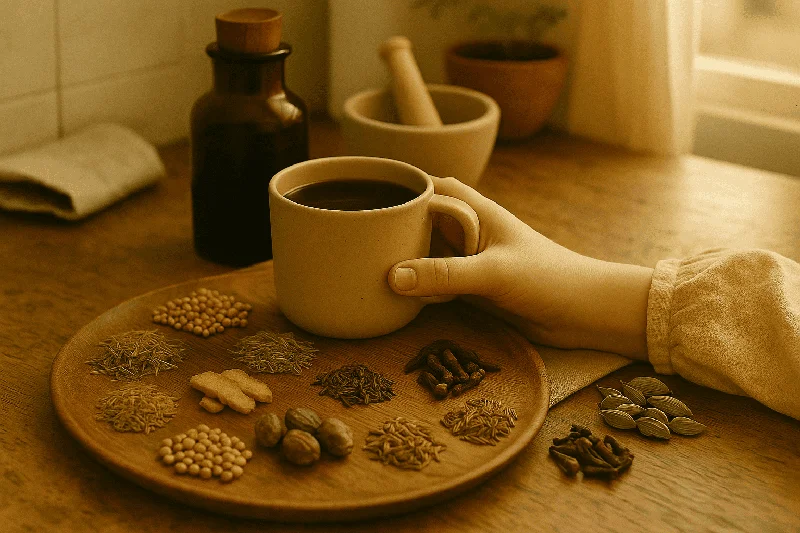
Amavatari Kashayam is a classical Ayurvedic herbal decoction specifically formulated to manage autoimmune and rheumatic conditions — most notably Amavata (rheumatoid arthritis), ankylosing spondylosis, gout, and osteoarthritis. Manufactured by AVN Ayurveda, this liquid kashayam combines 13 potent herbs led by Guduchi, Kokilaksha, and Punarnava that work synergistically to reduce inflammation, modulate immune responses, and restore joint mobility. Available as a 200 ml liquid decoction and in tablet form, it remains one of the most trusted polyherbal preparations in South Indian Ayurvedic practice for chronic joint and musculoskeletal disorders.
- If you've been searching for a comprehensive, evidence-informed guide that goes beyond basic product descriptions, you're in the right place.
- This article covers everything — from the Ayurvedic pathogenesis of Ama-Vata to detailed pharmacology of each ingredient, recommended diet, course duration, contraindications, and how Amavatari compares with other popular joint kashayams.
What Is Amavatari Kashayam?
- Amavatari Kashayam is a polyherbal Ayurvedic decoction (Kwatha) designed to address conditions rooted in the accumulation of Ama (metabolic toxins) combined with aggravated Vata dosha.
- The name itself tells the story: "Ama-vata-ari" literally translates to "enemy of Ama-Vata," signaling its primary therapeutic target.
Unlike single-herb remedies, this formulation uses a carefully calibrated combination of immunomodulatory, anti-inflammatory, and analgesic herbs. It's manufactured under standardized conditions by AVN Ayurveda Formulations (Madras) Pvt. Ltd., a company with over 90 years of heritage in classical Ayurvedic preparations.
The Ayurvedic Concept of Ama-Vata (Autoimmune Pathogenesis)
In Ayurveda, Amavata is perhaps the closest classical correlate to what modern medicine calls rheumatoid arthritis and other autoimmune inflammatory joint diseases.
The pathogenesis unfolds in two stages:
- 1.Ama formation: When Agni (digestive fire) becomes weak, incompletely digested food produces a toxic metabolic byproduct called Ama. This sticky, heavy substance enters systemic circulation.
- 2.Vata vitiation & joint deposition: The aggravated Vata dosha carries this Ama through the body's channels (Srotas) and deposits it in joints and connective tissues, causing pain, swelling, stiffness, and progressive degeneration.
The condition Vata-Shonita (gout) follows a related but distinct mechanism where Ama lodges specifically in Rakta dhatu (blood tissue), causing intense inflammation in smaller joints. Amavatari Kashayam addresses both pathways by simultaneously digesting Ama (Amapachana), pacifying Vata, and reducing inflammation in affected tissues.
Manufacturer — AVN Ayurveda
AVN Ayurveda Formulations, based in Chennai, has been producing classical Ayurvedic medicines since 1920. Their products follow traditional Sahasrayogam and Ashtanga Hridaya references while maintaining modern quality control standards including GMP certification. Amavatari Kashayam is one of their flagship formulations for musculoskeletal and autoimmune conditions.
Ingredients & Composition
- The formulation contains 13 herbs, with Guduchi, Kokilaksha, and Punarnava serving as the primary ingredients in the highest concentrations.
- The remaining herbs — primarily the Dashamoola group and Gokshura — provide supporting anti-inflammatory and Vata-balancing actions.
Full Ingredient List with Proportions
The following table shows the exact composition per 10 ml of Amavatari Kashayam liquid:
| # | Herb (Sanskrit) | Botanical Name | Quantity per 10 ml | Primary Action |
|---|---|---|---|---|
| 1 | Guduchi | Tinospora cordifolia | 4.445 gm | Immunomodulator |
| 2 | Kokilaksha | Asteracantha longifolia | 4.445 gm | Anti-rheumatic |
| 3 | Punarnava | Boerhaavia diffusa | 2.222 gm | Anti-inflammatory, diuretic |
| 4 | Bilva | Aegle marmelos | 0.667 gm | Vata-pacifying (Dashamoola) |
| 5 | Agnimantha | Premna mucronata | 0.667 gm | Digestive, Ama-pachana |
| 6 | Shyonaka | Oroxylum indicum | 0.667 gm | Anti-inflammatory |
| 7 | Gambhari | Gmelina arborea | 0.667 gm | Analgesic |
| 8 | Patala | Stereospermum suaveolens | 0.667 gm | Anti-edema |
| 9 | Shalaparni | Desmodium gangeticum | 0.667 gm | Vata-Kapha balancing |
| 10 | Prishnaparni | Uraria picta | 0.667 gm | Rejuvenative |
| 11 | Brihati | Solanum indicum | 0.667 gm | Anti-inflammatory |
| 12 | Kantakari | Solanum xanthocarpum | 0.667 gm | Kapha-reducing |
| 13 | Gokshura | Tribulus terrestris | 0.667 gm | Anti-inflammatory, renal support |
Notice that Guduchi and Kokilaksha together constitute nearly 60% of the formulation weight — this is not accidental but reflects their central role in the therapeutic strategy.
Key Active Herbs and Their Roles
Guduchi (Tinospora cordifolia) — The Immunomodulator
Guduchi is the pharmacological backbone of this formulation. A 2016 study published in the Journal of Ethnopharmacology demonstrated that tinosporine and berberine compounds in Guduchi significantly modulate both innate and adaptive immune responses. Rather than simply suppressing immunity (as conventional immunosuppressants do), Guduchi "re-educates" the immune system — downregulating autoimmune attacks while strengthening defense against actual pathogens.
In Ayurvedic terms, Guduchi is classified as a Rasayana (rejuvenative) and Medhya (intellect-promoting) herb with Tridoshahara properties. Its bitter taste (Tikta rasa) directly aids in Amapachana — the digestion and elimination of metabolic toxins.
Kokilaksha (Asteracantha longifolia) — Anti-Rheumatic Specialist
Kokilaksha provides targeted anti-rheumatic action. Research published in Pharmaceutical Biology (2013) showed that ethanolic extracts of Asteracantha longifolia demonstrated significant anti-inflammatory activity comparable to indomethacin in carrageenan-induced paw edema models. The herb contains lupeol and stigmasterol, which inhibit cyclooxygenase and lipoxygenase pathways — the same pathways targeted by NSAIDs but without gastric side effects.
Punarnava (Boerhaavia diffusa) — Anti-Inflammatory & Diuretic
The name Punarnava means "that which renews the body." This herb serves a dual purpose in the formulation: its punarnavine alkaloids provide potent anti-inflammatory action while its diuretic properties help flush out accumulated Ama and uric acid through the kidneys. A 2019 study in BMC Complementary Medicine and Therapies confirmed significant reduction in inflammatory markers (TNF-α and IL-6) with Boerhaavia diffusa administration.
Dashamoola (Ten Roots) — Vata Balancing Complex
The ten roots of Dashamoola — Bilva, Agnimantha, Shyonaka, Gambhari, Patala (the five greater roots or Brihat Panchamoola) and Shalaparni, Prishnaparni, Brihati, Kantakari, Gokshura (the five lesser roots or Laghu Panchamoola) — form the classical Vata-pacifying group. Together, they address the root cause of joint pain and stiffness by restoring the normal flow of Vata through the body's channels.
Worth noting: the Dashamoola component also provides protection against degenerative changes in cartilage and bone, making this formulation useful not just for inflammatory arthritis but also for conditions like lumbar spondylosis and spinal disc problems.
What Are the Uses and Benefits of Amavatari Kashayam?
The primary indications for Amavatari Kashayam span across autoimmune, inflammatory, and degenerative musculoskeletal conditions. Let's break these down clearly.
Primary Indications (Rheumatic & Autoimmune Conditions)
- Amavata (Rheumatoid Arthritis): The flagship indication. Addresses morning stiffness, symmetrical joint swelling, pain, and progressive joint destruction.
- Vata-Shonita (Gout): Helps reduce uric acid accumulation and manage acute gouty inflammation through Punarnava's diuretic and anti-inflammatory action.
- Ankylosing Spondylosis: Effective for spinal stiffness and progressive vertebral fusion, particularly when combined with Panchakarma therapies.
- Osteoarthritis: Slows cartilage degeneration and reduces pain through the Dashamoola complex.
- Lumbar and Cervical Spondylosis: Including disc-related problems where Vata aggravation plays a central role.
Secondary Benefits
- Reduces swelling: A common symptom across most autoimmune diseases, addressed through the anti-edema properties of Punarnava and Patala.
- Improves digestive fire (Agni): By strengthening Agni, it prevents further Ama formation — addressing the root cause rather than just symptoms.
- Supports kidney function: Gokshura and Punarnava together provide renal-protective and mild diuretic actions, helping eliminate inflammatory waste products.
- General immune modulation: Beneficial in various autoimmune conditions beyond just joint diseases.
What Is the Dosage of Amavatari Kashayam?
Getting the dosage right is critical for both efficacy and safety. The recommendations differ based on the form (liquid vs. tablet) and severity of the condition.
Standard Dosage — Liquid Kashayam
| Parameter | Recommendation |
|---|---|
| Adult dose | 10–15 ml |
| Dilution | Mix with 45 ml lukewarm water |
| Frequency | Twice daily |
| Timing | Before meals (empty stomach) |
| Duration | As directed by physician |
Dosage — Kashayam Tablets
For those who find the liquid kashayam's bitter taste difficult to manage, AVN also offers Amavatari Kashayam Tablets:
| Parameter | Recommendation |
|---|---|
| Option A | 2 tablets, 3 times daily |
| Option B | 3 tablets, 2 times daily |
| Timing | Before meals with warm water |
Dosage in Severe Cases
For severe autoimmune flare-ups or advanced rheumatoid arthritis, some Ayurvedic practitioners recommend an intensified regimen: 50 ml of kashayam diluted in 1 litre of water, to be sipped throughout the day. This provides continuous low-dose exposure to the active compounds. However, this should only be done under direct medical supervision.
Liquid Kashayam vs Tablets — Which Is Better?
This is a question nobody else seems to answer, so lets address it directly:
| Factor | Liquid Kashayam | Tablets |
|---|---|---|
| Bioavailability | Higher — direct absorption | Slightly lower — requires dissolution |
| Taste | Bitter, strong herbal taste | Neutral, easy to swallow |
| Convenience | Requires measuring, dilution | Easy to carry and consume |
| Traditional preference | Considered more potent classically | Modern adaptation |
| Shelf life | Shorter once opened | Longer, more stable |
| Best for | Severe conditions, acute flares | Maintenance therapy, travel |
In classical Ayurveda, liquid kashayam is generally considered more effective because the warm decoction itself aids digestion and absorption. For acute or severe cases, the liquid form is typically preferred. Tablets work well for long-term maintenance or for patients who simply cannot tolerate the taste.
How Long Should You Take Amavatari Kashayam? (Course Duration)
This is a significant gap in information that most sources simply skip over.
Here's what clinical Ayurvedic practice suggests:
- Acute phase: 1–3 months of regular use to control active inflammation, reduce swelling, and manage pain.
- Consolidation phase: 3–6 months to address underlying Ama accumulation and restore Agni.
- Maintenance phase: Some practitioners recommend periodic courses (1 month on, 1 month off) for patients with chronic autoimmune conditions.
The total course duration depends heavily on the chronicity of the disease. A patient with early-stage rheumatoid arthritis may see significant improvement within 6–8 weeks, while someone with advanced joint damage may require 6+ months of continuous therapy alongside Panchakarma.
Important: Do not self-discontinue abruptly. Autoimmune conditions require gradual tapering under physician guidance.
What Are the Side Effects of Amavatari Kashayam?
When taken at recommended dosages under proper medical guidance, Amavatari Kashayam is generally considered safe with no significant adverse effects. This is consistent with the safety profile of its individual herbal components, most of which have centuries of documented use.
Known Considerations
- Gastric sensitivity: The bitter taste and potent herbal compounds may cause mild gastric discomfort in some individuals, especially when taken on an empty stomach without adequate water dilution.
- Diuretic effect: Due to Punarnava and Gokshura, some patients notice increased urination — this is actually a therapeutic action helping flush out Ama and uric acid.
- Detox symptoms: In the first few days, some patients report mild headache or slight increase in joint pain before improvement begins. This is sometimes interpreted as the body processing accumulated Ama.
Contraindications (What Nobody Else Mentions)
Despite the common claim that "there are no side effects," responsible prescribing requires acknowledging these contraindications:
- Pregnancy and lactation: Several herbs in the formulation (notably Guduchi and Gokshura) have uterine-stimulating properties. Avoid unless specifically prescribed by an Ayurvedic physician.
- Children under 12: Dosage for children is not standardized for this formulation. Consult a pediatric Ayurvedic specialist.
- Severe kidney disease: While Punarnava and Gokshura support healthy kidneys, patients with existing severe renal impairment should use cautiously.
- Diabetes medications: Guduchi has demonstrated hypoglycemic effects in multiple studies. Patients on anti-diabetic drugs should monitor blood sugar levels closely to avoid additive hypoglycemia.
- Concurrent immunosuppressant therapy: Since Guduchi modulates immune function, combining it with conventional immunosuppressants (methotrexate, biologics) requires medical coordination.
Drug Interactions
No formal drug interaction studies exist specifically for Amavatari Kashayam. However, based on the known pharmacology of individual ingredients:
- May potentiate the effects of NSAIDs and corticosteroids
- May interact with anticoagulant medications (warfarin) due to the anti-platelet activity of some components
- Possible additive effect with anti-hypertensive drugs (Punarnava has mild hypotensive action)
Always inform both your Ayurvedic and allopathic physicians about all medications you are taking.
Diet & Lifestyle During Treatment (Pathya-Apathya)
This is where many treatment attempts fail — the medicine is taken correctly but dietary and lifestyle factors actively work against it. In Ayurvedic therapeutics, Pathya (favorable practices) and Apathya (unfavorable practices) are considered equally important as the medicine itself.
Recommended Diet (Pathya)
- Warm, freshly cooked meals: Cold and leftover food directly increases Ama
- Light grains: Old rice (Purana Shali), barley (Yava), green gram (Mudga)
- Spices that kindle Agni: Ginger, cumin, black pepper, turmeric, asafoetida
- Warm water: Throughout the day — aids in Ama digestion
- Bitter vegetables: Bitter gourd, drumstick leaves, fenugreek greens
- Garlic: Considered highly beneficial in Amavata — Ashtanga Hridaya specifically recommends garlic in Vata disorders
Foods to Avoid (Apathya)
- Curd/yogurt: Particularly at night — strongly Ama-producing in Ayurvedic view
- Cold beverages and ice cream: Directly suppress Agni
- Heavy, fried foods: Increase Ama formation
- Fish with milk (Viruddha Ahara): Incompatible food combinations
- Excess sugar and refined carbohydrates: Feed inflammatory processes
- Black gram (Urad dal): Heavy and Vata-aggravating when digestion is weak
- Refrigerated and processed foods: Considered devoid of Prana and Ama-producing
Lifestyle Recommendations
- Gentle exercise: Light walking, swimming — avoid high-impact activities during active inflammation
- Avoid daytime sleep: Increases Kapha and Ama
- Warm oil massage (Abhyanga): With Dhanwantharam or Kottamchukkadi Tailam before bath
- Steam therapy (Swedana): Helps open channels and mobilize Ama from joints
Amavatari Kashayam vs. Other Ayurvedic Joint Formulations
How does Amavatari stack up against other popular kashayams used for joint disorders? This comparison helps practitioners and patients choose the right formulation.
| Feature | Amavatari Kashayam | Maharasnadi Kashayam | Sahacharadi Kashayam | Rasnasaptak Kashayam |
|---|---|---|---|---|
| Primary focus | Autoimmune arthritis, Amavata | General Vata disorders, neuralgia | Vata disorders of lower limbs | Inflammatory joint pain |
| Key herbs | Guduchi, Kokilaksha, Punarnava | Rasna, Devadaru, Guduchi | Sahachara, Devadaru | Rasna, Eranda, Guduchi |
| Immunomodulation | Strong (Guduchi-dominant) | Moderate | Low | Low |
| Anti-inflammatory | Strong | Moderate | Moderate | Strong |
| Best for | RA, gout, autoimmune conditions | Sciatica, general body pain | Lower back pain, sciatica | Acute joint inflammation |
| Ama-digesting action | Very strong | Moderate | Low | Moderate |
| Ayurvedic context | Ama + Vata | Primarily Vata | Primarily Vata | Vata + Pitta |
Key takeaway: If the condition has an autoimmune or Ama-predominant component (morning stiffness, symmetrical joint involvement, elevated inflammatory markers), Amavatari Kashayam is the most appropriate choice. For purely Vata-related conditions without significant Ama involvement, Maharasnadi or Sahacharadi may be more suitable.
Combining Amavatari Kashayam with Panchakarma Therapies
For best results in chronic autoimmune conditions, Amavatari Kashayam is often prescribed as part of a comprehensive treatment plan that includes Panchakarma procedures:
Recommended Complementary Therapies
- Virechana (Therapeutic Purgation): Eliminates accumulated Pitta and Ama from the body. Often done as a preparatory procedure before starting long-term kashayam therapy.
- Vasti (Medicated Enema): Considered the primary treatment for Vata disorders. Ksheera Vasti or Erandamooladi Vasti complement Amavatari Kashayam exceptionally well.
- Abhyanga & Swedana: Daily oil massage with medicated oils followed by steam therapy helps mobilize Ama from joints and improves local circulation.
- Upanaha Sweda (Poultice application): Warm herbal poultices applied directly to inflamed joints provide localized relief.
- Dhanyamla Dhara: Fermented medicinal liquid poured over affected joints — particularly effective for swelling and stiffness.
Which Prakriti Benefits Most?
Amavatari Kashayam is most effective for individuals with:
- Vata-Kapha Prakriti: These constitutional types are most prone to Ama-Vata due to naturally sluggish digestion (Kapha) combined with Vata's tendency toward erratic movement and joint vulnerability.
- Vata-dominant Prakriti: Benefit significantly from the Dashamoola component.
- Pitta-Vata Prakriti: May benefit but should be monitored for any Pitta-aggravating effects, though Guduchi's cooling potency generally balances this.
Storage and Shelf Life
- Liquid Kashayam: Store in a cool, dry place away from direct sunlight. Once opened, refrigerate and use within 30–45 days.
- Shelf life when unopened: typically 2–3 years (check manufacturer label).
- Tablets: Store at room temperature in an airtight container.
- Shelf life: approximately 3 years from date of manufacture.
- General rule: If the liquid develops an unusually sour smell or visible mold, discard immediately.
Clinical Evidence and Research
While large-scale randomized controlled trials specifically on the Amavatari Kashayam formulation are limited (a common challenge across Ayurvedic polyherbal preparations), there is substantial research on its individual components:
- A 2014 systematic review in the Journal of Ayurveda and Integrative Medicine found that Guduchi-containing formulations showed statistically significant improvement in rheumatoid arthritis symptoms including ESR, CRP, and rheumatoid factor levels.
- A randomized controlled trial published in Ayu Journal (2015) evaluating a Dashamoola-based intervention in Amavata patients showed 62% reduction in joint tenderness and 54% improvement in grip strength over 12 weeks.
- Research on Boerhaavia diffusa in Indian Journal of Experimental Biology (2009) demonstrated its anti-inflammatory mechanism through inhibition of the NF-κB signaling pathway — a central mediator in autoimmune inflammation.
More research — particularly multi-center RCTs on the complete Amavatari formulation — would significantly strengthen the evidence base. AVN Ayurveda has published some in-house clinical data through their research division but independent replication is needed.
Frequently Asked Questions (FAQ)
What is the best medicine for Amavata in Ayurveda?
Amavatari Kashayam is considered one of the most effective Ayurvedic formulations for Amavata due to its combination of immunomodulatory (Guduchi), anti-rheumatic (Kokilaksha), and anti-inflammatory (Punarnava + Dashamoola) herbs. However the "best" medicine depends on the individual patient's Prakriti, disease stage, and associated conditions. Other formulations like Simhanada Guggulu, Aamvatantak Churna, and Yogaraja Guggulu may be used alongside or as alternatives based on the physician's assessment.
Can Amavatari Kashayam be taken with allopathic medicines?
Yes, it can generally be taken alongside conventional medicines, but with important precautions. Maintain a gap of atleast 30–60 minutes between Ayurvedic and allopathic medicines. Specifically inform your doctor if you are taking methotrexate, biologics, NSAIDs, anti-diabetic drugs, or blood thinners, as interactions are possible. Never stop prescribed allopathic medications without consulting your rheumatologist.
Is Amavatari Kashayam safe for long-term use?
Based on classical Ayurvedic texts and clinical practice, long-term use (3–6 months or longer) is generally considered safe when taken at recommended dosages under medical supervision. Periodic liver and kidney function monitoring is advisable for courses exceeding 6 months — not because toxicity is expected, but as a standard precaution.
How quickly does Amavatari Kashayam work?
- Most patients report initial improvement in symptoms (reduced morning stiffness, decreased joint pain) within 2–4 weeks. Significant clinical improvement typically occurs by 6–8 weeks.
- However, autoimmune conditions require sustained treatment — premature discontinuation often leads to relapse.
Can diabetic patients take Amavatari Kashayam?
Diabetic patients can take this formulation, but blood sugar levels should be monitored closely. Guduchi has well-documented hypoglycemic effects. Dosage adjustments of anti-diabetic medications may be necessary. Always consult your physician.
What is the difference between Amavatari Kashayam and Amavatari Tablets?
Both contain the same herbal ingredients. The liquid kashayam is traditionally considered more potent with faster absorption, making it ideal for acute conditions. Tablets offer convenience, better taste compliance, and are preferred for long-term maintenance therapy. See the detailed comparison table in the dosage section above.
Final Thoughts
Amavatari Kashayam represents one of Ayurveda's most thoughtfully designed formulations for autoimmune and rheumatic conditions. Its strength lies not just in symptom management but in addressing the root cause — the Ama-Vata pathogenesis cycle. The combination of Guduchi's immune modulation, Kokilaksha's targeted anti-rheumatic action, Punarnava's inflammatory control, and Dashamoola's Vata-pacifying properties creates a comprehensive therapeutic approach that modern rheumatology is only beginning to appreciate.
However, medicine alone is never enough. The dietary guidelines (Pathya-Apathya), lifestyle modifications, and complementary Panchakarma therapies discussed in this article are equally important for achieving lasting results. If you're dealing with rheumatoid arthritis, gout, ankylosing spondylosis, or any chronic joint condition, consult a qualified Ayurvedic physician who can design a personalized treatment protocol — including appropriate kashayam selection, dosage, diet planning, and integration with any existing conventional treatment.
Disclaimer: This article is for educational purposes only and should not be considered medical advice. Always consult a qualified Ayurvedic practitioner or healthcare provider before starting any new medication or treatment protocol.
Scientific Sources
- Traditional Uses, Therapeutic Effects and Recent Advances of Curcumin: A Mini-Review — Slika L et al., 2020, Mini reviews in medicinal chemistry
- Online Yoga and Ayurveda Intervention as Tertiary Prevention of Psychological Comorbidities in COVID-19 Survivors: A Randomized Controlled Trial — Bhandari R, 2022, Annals of neurosciences
- Shahatra (F.parviflora Lam)- a comprehensive review of its ethnopharmacology, phytochemistry and pharmacology — Jamaldeen FN et al., 2022, Journal of ethnopharmacology
- Integrated and Ayurveda standalone interventions compared with standalone modern care in Rheumatoid arthritis: Observations from a non-random, parallel group, open label, historical control study — Rastogi S et al., 2026, Journal of Ayurveda and integrative medicine
- The Clinical Implications of Ashwagandha (Withania somnifera L.) with a Special Reference to Side Effects-A Review — Winther K, 2026, Nutrients
- Plant-Derived Treatments for IBS: Clinical Outcomes, Mechanistic Insights, and Their Position in International Guidelines — Pastras P et al., 2026, Nutrients
- A Comprehensive Review with Future Prospects on the Medicinal Properties and Biological Activities of Curcuma caesia Roxb — Ibrahim NNA et al., 2023, Evidence-based complementary and alternative medicine : eCAM
- The Multifaceted Benefits of Triphala: Uncovering Phytochemical and Pharmacological Properties From Antiquity to Modern Times — Thallada V et al., 2026, Chemistry & biodiversity
- Ayurgenomics-based frameworks in precision and integrative medicine: Translational opportunities — Mukerji M, 2023, Cambridge prisms. Precision medicine
- Ayurvedic research, wellness and consumer rights — Chandra S, 2016, Journal of Ayurveda and integrative medicine
- Integrating modern dermatology and Ayurveda in the treatment of vitiligo and lymphedema in India — Narahari SR et al., 2011, International journal of dermatology
- Herbal products as skincare therapeutic agents against ultraviolet radiation-induced skin disorders — Sharma RR et al., 2022, Journal of Ayurveda and integrative medicine
- Therapeutic importance of Cucurbitaceae: A medicinally important family — Mukherjee PK et al., 2022, Journal of ethnopharmacology
- Awareness and attitudes towards ayurveda in chronic disease management and related knowledge gaps among UK healthcare professionals: an analytical cross-sectional survey — Ravindran V et al., 2026, BMC complementary medicine and therapies
- Indian traditional medicinal plants in ophthalmic diseases — Nafees S et al., 2022, Avicenna journal of phytomedicine
- Non-edible fruit seeds: nutritional profile, clinical aspects, and enrichment in functional foods and feeds — Kumar H et al., 2024, Critical reviews in food science and nutrition
- Exploring the Chemical and Biological Potential of Jamun (Syzygium cumini (L.) Skeels) Leaves: A Comprehensive Review — Kumari N et al., 2023, Chemistry & biodiversity
- An endocrinological perspective on polycystic ovarian syndrome — Basak S et al., 2025, Molecular and cellular endocrinology
- Integrative management of diabetic foot ulcers - A case series — Shindhe PS et al., 2023, Journal of Ayurveda and integrative medicine
- Extraction of Bioactive Compounds From Withania somnifera: The Biological Activities and Potential Application in the Food Industry: A Review — Singirala SK et al., 2025, International journal of food science
आयुर्वेदिक डॉक्टर से एक प्रश्न पूछें और मुफ़्त या सशुल्क मोड में अपनी चिंता की समस्या पर ऑनलाइन परामर्श प्राप्त करें।
2,000 से अधिक अनुभवी डॉक्टर हमारी साइट पर काम करते हैं और आपके प्रश्नों की प्रतीक्षा करते हैं और प्रतिदिन उपयोगकर्ताओं को उनकी स्वास्थ्य समस्याओं को हल करने में मदद करते हैं।
संबंधित आलेख