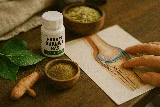
Kukkutnakhi Guggul: Ayurvedic Arthritis & Joint Pain Relief

Kukkutnakhi Guggul is a classical Ayurvedic formulation primarily used for lymphatic disorders, glandular swellings, joint inflammation, and skin conditions. It combines the anti-inflammatory resin of Guggul (Commiphora mukul) with the potent herb Kukkutnakhi to address deep-seated blockages in the body's channels (srotas). Unlike many modern supplements that target symptoms alone, this time-tested preparation works at the level of dosha, dhatu, and mala — correcting the root imbalances that cause chronic swelling, stiffness, and pain.
- If you've been searching for a natural approach to stubborn glandular enlargements, persistent joint discomfort, or recurring skin nodules, Kukkutnakhi Guggul deserves serious attention.
- In this comprehensive guide, we cover everything — from its classical textual references and full ingredient breakdown to dosage, side effects, and how it compares with other Guggul formulations.
What Is Kukkutnakhi Guggul?
- Kukkutnakhi Guggul is a Guggul-based Ayurvedic compound (vati/tablet) that has been prescribed by Ayurvedic physicians for centuries to manage conditions involving the lymphatic system, glands, joints, and soft tissues.
- The word "Kukkutnakhi" literally translates to "hen's claw" — referring to the distinctive claw-shaped thorns of the plant used as the primary ingredient.
- This formulation belongs to the broader category of Guggul Kalpana, where purified Guggul resin serves as a binding matrix for powdered herbs.
- The combination creates a synergistic effect: the Guggul enhances bioavailability and tissue penetration of the herbal components, while the herbs direct the therapeutic action toward specific body systems.
Classical Ayurvedic Reference (Textual Source)
One of the significant gaps in most online resources is the failure to cite the exact classical reference for Kukkutnakhi Guggul. This formulation is described in Bhaishajya Ratnavali, one of the most authoritative Ayurvedic pharmacopoeias compiled by Govind Das Sen in the 18th century. Specifically, it appears in the Galaganda-Gandamala-Apachi-Granthi Rogadhikara (the chapter dealing with goitre, cervical lymphadenitis, and glandular tumors).
The formulation is also referenced in Sharangadhara Samhita and certain regional compilations like Yogaratnakara. The classical indication centers on gandamala (cervical lymphadenopathy), apachi (chronic lymph node enlargement), and granthi (cystic swellings) — conditions that modern medicine would categorize under lymphatic and glandular disorders.
Knowing the textual source matters. It tells you the formulation isn't a modern invention but a rigorously documented preparation with centuries of clinical observation behind it.
The Kukkutnakhi Plant — Botanical Profile
- The identity of "Kukkutnakhi" has been a subject of some botanical debate.
- Two plants are commonly associated with this name:
- Martynia annua (Family: Martyniaceae) — Also called Devil's Claw or Cat's Claw plant, native to tropical regions of India. It is the more widely accepted botanical identity in most Ayurvedic pharmacies.
- Blepharis edulis (Family: Acanthaceae) — Sometimes used as a substitute in certain regional traditions.
- Martynia annua is a robust annual herb that grows up to 1–1.5 meters in height. It has broad, heart-shaped leaves with a sticky surface, and produces tubular pink-purple flowers.
- The fruit is distinctive — hooked at the tip, resembling a bird's claw, which gives the plant its Sanskrit name (kukkut = hen; nakhi = claw).
The plant thrives in arid and semi-arid regions across Rajasthan, Gujarat, Madhya Pradesh, and Maharashtra. Traditional harvesting typically occurs during the post-monsoon season (September–November) when the active phytochemical concentration is at its peak. The whole plant, including roots and fruits, is used in different formulations, though for Kukkutnakhi Guggul, the choorna (fine powder) of the aerial parts is typically employed.
Key phytochemicals identified in Martynia annua include flavonoids, phenolic acids, luteolin, apigenin, and several triterpenoids — compounds with demonstrated anti-inflammatory and antioxidant properties.
Kukkutnakhi Guggul Ingredients & Composition
Complete Ingredient List (Classical Formula)
The classical formulation as described in Bhaishajya Ratnavali is relatively straightforward compared to complex multi-herb Guggul preparations.
The core ingredients are:
- 1.Kukkutnakhi Choorna (Martynia annua powder) — the primary active herb
- 2.Shuddha Guggul (Purified Commiphora mukul resin) — the base matrix and co-active ingredient
Some manufacturers add supportive herbs to enhance efficacy or improve palatability. These may include Triphala (for detox support), Trikatu (for bioavailability enhancement), or specific minerals.
However, the classical formula keeps it minimal — and this simplicity is actually a therapeutic advantage, as it reduces the risk of herb-drug interactions and makes the formulation suitable for long-term use.
Rasa Panchaka — Ayurvedic Pharmacology
- The Ayurvedic pharmacological profile (Rasa Panchaka) of Kukkutnakhi Guggul is critical for understanding why and how it works from a traditional perspective.
- No competitor currently provides this breakdown:
| Parameter | Kukkutnakhi | Shuddha Guggul | Combined Effect |
|---|---|---|---|
| Rasa (Taste) | Tikta (Bitter), Kashaya (Astringent) | Tikta (Bitter), Katu (Pungent) | Predominantly Tikta-Katu |
| Guna (Quality) | Laghu (Light), Ruksha (Dry) | Laghu, Snigdha (Unctuous) | Balanced — light yet penetrating |
| Virya (Potency) | Ushna (Hot) | Ushna (Hot) | Strongly Ushna |
| Vipaka (Post-digestive effect) | Katu (Pungent) | Katu (Pungent) | Katu Vipaka |
| Prabhava (Special action) | Granthihara (dissolves nodules) | Medohara, Shothhara (fat-scraping, anti-inflammatory) | Deep tissue penetration & channel-clearing |
The Ushna Virya (hot potency) and Katu Vipaka make this formulation particularly effective against Kapha and Vata disorders — the two doshas most commonly implicated in glandular swellings, joint stiffness, and lymphatic congestion.
Key Ingredients & Their Functions
| Ingredient | Latin/Botanical Name | Primary Function |
|---|---|---|
| Kukkutnakhi | Martynia annua | Anti-inflammatory, lymphatic decongestant, anti-tumor |
| Shuddha Guggul | Commiphora mukul | Bioavailability enhancer, anti-inflammatory, lipid regulation |
| Triphala* | Emblica, Terminalia chebula, T. bellirica | Detoxification, antioxidant support |
| Trikatu* | Piper longum, P. nigrum, Zingiber officinale | Deepana-Pachana (digestive fire enhancement) |
*Present in some commercial formulations; not always part of the classical recipe.
How Is Kukkutnakhi Guggul Prepared?
Guggul Shodhana (Purification Process)
Raw Guggul resin cannot be used directly — it must undergo Shodhana (purification) to remove impurities and reduce potential gastrointestinal irritation.
The classical method involves:
- Breaking raw Guggul into small pieces
- Wrapping in a muslin cloth (pottali)
- Boiling in a decoction of Triphala Kwatha (Triphala water) using the Dolayantra method (the cloth bundle is suspended in the liquid, not touching the bottom of the vessel)
- Pressing and filtering — the softened Guggul is squeezed through the cloth while hot, separating pure resin from woody debris and sand
- Drying on a greased plate until the purified Guggul reaches a semi-solid, workable consistency
This process typically takes 6–8 hours and must be done carefully. Overheating destroys active guggulsterones (the primary bioactive compounds), while underprocessing leaves irritating impurities. A 2018 study published in the Journal of Ayurveda and Integrative Medicine confirmed that Shodhana significantly reduces heavy metal content while preserving therapeutic compounds.
Vati (Tablet) Formation Method
After Guggul Shodhana, the preparation proceeds as follows:
- Kukkutnakhi plant material is dried in shade (not direct sunlight, which degrades flavonoids) and ground into a fine powder (choorna)
- The Kukkutnakhi Choorna is mixed thoroughly with Shuddha Guggul in the classical ratio
- The mixture is subjected to Bhavana — repeated trituration with a liquid medium (often Kukkutnakhi Kwatha or plain water) to homogenize the preparation and enhance potency
- Small, uniform pills (approximately 250–500 mg each) are rolled by hand or machine
- Tablets are dried at room temperature and stored in airtight containers
A 2019 pharmacognostic study published on ResearchGate examined the conversion of this classical formula into standardized tablets, confirming that the tableted form retained the expected organoleptic and physicochemical characteristics of the original vati preparation.
Health Benefits of Kukkutnakhi Guggul
Lymphatic & Glandular Support
This is the primary classical indication.
Kukkutnakhi Guggul has been traditionally prescribed for:
- Gandamala — cervical lymphadenopathy (swollen lymph nodes in the neck)
- Apachi — chronic, hardened lymph node enlargements
- Galaganda — goitre and thyroid-related swellings
- Granthi — cystic growths, lipomas, and benign soft tissue nodules
The mechanism, from an Ayurvedic standpoint, involves the formulation's Lekhana (scraping) and Chedana (excising/cutting) properties. It essentially "cuts through" accumulated Kapha and Meda (fat tissue) that form the basis of these abnormal growths.
An in vitro study published in the International Journal of Ayurvedic Medicine (IJAM) evaluated the anti-cancer activity of Kukkutanakhi Guggula on cell lines and found promising cytotoxic effects, suggesting potential beyond traditional applications — though clinical trials in humans are still needed.
Anti-Inflammatory & Joint Health
Kukkutnakhi Guggul's strong Ushna Virya and Vata-Kapha-shamaka properties make it effective for various joint conditions:
- Sandhivata (Osteoarthritis) — reduces stiffness and pain
- Amavata (Rheumatoid Arthritis) — helps digest and eliminate ama (metabolic toxins) from joints
- Vatarakta (Gouty Arthritis) — supports uric acid metabolism
- The guggulsterones in Shuddha Guggul have been extensively studied for their anti-inflammatory action.
- They inhibit NF-κB signaling — a key inflammatory pathway — and reduce levels of TNF-α and IL-6 (pro-inflammatory cytokines). A 2004 study in The Journal of Pharmacology and Experimental Therapeutics demonstrated these effects clearly.
Detoxification & Sroto-Shodhana
In Ayurveda, disease often begins with Srotavarodha — blockage of the body's channels. Kukkutnakhi Guggul is classified as a Sroto-Shodhana (channel-purifying) formulation.
It specifically targets:
- Rasavaha Srotas (lymphatic channels)
- Medovaha Srotas (fat tissue channels)
- Asthivaha Srotas (bone tissue channels)
By clearing these channels, the formulation improves nutrient delivery, waste removal, and overall tissue metabolism. Patients often report improved energy and reduced heaviness within the first 2–3 weeks of use.
Immune System Enhancement
- The Kukkutnakhi plant contains flavonoids and phenolic compounds that modulate immune function. Specifically, these compounds appear to enhance the activity of white blood cells (leukocytes) and natural killer cells, strengthening the body's defense against infections.
- Guggul itself has documented immunomodulatory properties — a 2017 review in Phytomedicine confirmed that guggulsterones can shift immune responses from a pro-inflammatory to a regulatory phenotype.
Skin & Soft Tissue Disorders
Traditional practitioners also prescribe Kukkutnakhi Guggul for certain skin conditions, particularly those involving subcutaneous nodules, chronic abscesses, and non-healing ulcers. Its Lekhana karma helps dissolve abnormal tissue accumulations, while its antimicrobial properties (attributed to Kukkutnakhi's phenolic content) prevent secondary infection.
How Kukkutnakhi Guggul Works — Mechanism of Action
Ayurvedic Perspective (Dosha, Dhatu, Srotas)
From the Ayurvedic framework, Kukkutnakhi Guggul works through a multi-level mechanism:
- 1.Dosha Level: Pacifies vitiated Kapha (responsible for swelling, congestion, growth) and Vata (responsible for pain, stiffness, degeneration). Its Ushna Virya directly counters Kapha's cold, heavy nature.
- 2.Dhatu Level: Acts primarily on Rasa Dhatu (plasma/lymph), Mamsa Dhatu (muscle tissue), Meda Dhatu (adipose tissue), and Asthi Dhatu (bone tissue). It performs Lekhana on excess Meda while nourishing Asthi.
- 3.Srotas Level: Clears blockages in Rasavaha and Medovaha Srotas, restoring normal flow of nutrients and waste products. This is why it's effective for both swellings (excess accumulation) and degeneration (impaired nourishment).
- 4.Agni Level: Enhances Dhatvagni (tissue-level metabolism), ensuring proper transformation of one dhatu to the next.
This is crucial in preventing the formation of ama — the toxic metabolic residue that Ayurveda considers the root cause of most chronic diseases.
Modern Pharmacological Insights
From a modern pharmacological perspective, several mechanisms have been identified:
- NF-κB Inhibition: Guggulsterones (E and Z forms) suppress NF-κB, reducing transcription of inflammatory genes
- Antioxidant Activity: Flavonoids in Kukkutnakhi scavenge free radicals, protecting cells from oxidative damage
- Anti-proliferative Action: The IJAM study on Kukkutanakhi Guggula demonstrated cytotoxic activity on cancer cell lines, suggesting it may inhibit abnormal cell proliferation
- Lipid Metabolism: Guggulsterones act as antagonists of the Farnesoid X Receptor (FXR), promoting cholesterol catabolism and reducing serum lipids
- Adaptogenic Properties: The formulation appears to modulate the hypothalamic-pituitary-adrenal (HPA) axis, helping the body manage stress — a known contributor to immune dysfunction and inflammation
A PMC study examining the antihyperlipidemic activity of related plant compounds (Tectaria species rhizome) found significant reductions in serum cholesterol and triglycerides in animal models, supporting the lipid-regulating potential of similar Ayurvedic preparations.
Kukkutnakhi Guggul vs Other Guggul Formulations
One of the most common questions practitioners receive is: "Which Guggul should I take?" Here's a detailed comparison that no other resource currently provides:
| Parameter | Kukkutnakhi Guggul | Kanchanar Guggul | Yogaraj Guggul | Triphala Guggul |
|---|---|---|---|---|
| Primary Indication | Lymphatic disorders, glandular swellings | Thyroid disorders, PCOS, tumors | Musculoskeletal pain, Vata disorders | Obesity, lipid disorders, constipation |
| Key Herb | Kukkutnakhi (Martynia annua) | Kanchanar (Bauhinia variegata) | 28+ herbs including Chitrak, Rasna | Triphala (Amalaki, Bibhitaki, Haritaki) |
| Dosha Action | Kapha-Vata Shamaka | Kapha Shamaka | Primarily Vata Shamaka | Tridosha Shamaka |
| Best For | Gandamala, Apachi, joint swelling | Goitre, cysts, fibroids | Joint pain, sciatica, neuralgia | High cholesterol, sluggish digestion |
| Virya | Ushna | Sheeta-Ushna (balanced) | Ushna | Mildly Ushna |
| Number of Ingredients | 2–4 | 12–15 | 28+ | 4–5 |
| Complexity | Simple, targeted | Moderate | Complex, broad-spectrum | Simple, versatile |
When to Choose Which Guggul
- Choose Kukkutnakhi Guggul when the primary concern is swollen lymph nodes, glandular enlargements, or subcutaneous nodules — especially when accompanied by joint pain
- Choose Kanchanar Guggul for thyroid-related issues, uterine fibroids, PCOS, or lipomas
- Choose Yogaraj Guggul for widespread musculoskeletal pain, sciatica, or neurological Vata disorders
- Choose Triphala Guggul when obesity, high cholesterol, or chronic constipation is the primary complaint
In some cases, practitioners combine formulations — for example, Kukkutnakhi Guggul with Kanchanar Guggul for complex lymphatic-thyroid disorders. But this should only be done under qualified supervision.
Dosage & How to Take Kukkutnakhi Guggul
Recommended Dosage
| Age Group | Dosage | Frequency | Duration |
|---|---|---|---|
| Adults (general) | 250–500 mg (1–2 tablets) | Twice daily, after meals | 1–3 months |
| Adults (acute conditions) | 500 mg (2 tablets) | Thrice daily, after meals | 2–4 weeks, then reassess |
| Elderly (65+) | 250 mg (1 tablet) | Twice daily, after meals | Start low, increase gradually |
| Children (12–18 years) | 125–250 mg | Once or twice daily, after meals | Only under practitioner guidance |
| Children below 12 | Not recommended without direct supervision | — | — |
Important: These are general guidelines. Individual dosage should be determined by a qualified Ayurvedic practitioner based on your Prakriti (constitution), Vikriti (current imbalance), Agni (digestive strength), and severity of the condition.
Best Anupana (Adjuvant) for Different Conditions
The Anupana — the medium used to take the medicine — significantly influences where and how the formulation acts. This is a crucial aspect of Ayurvedic prescribing that is almost never discussed online:
| Condition | Recommended Anupana | Why This Works |
|---|---|---|
| Lymphatic swellings / Gandamala | Warm water | Enhances Ushna Virya, promotes Kapha liquefaction |
| Joint pain / Arthritis | Warm milk or Dashamoola Kwatha | Nourishes Asthi Dhatu while reducing Vata |
| Skin disorders / Nodules | Honey + warm water | Honey's Lekhana property amplifies scraping action |
| Obesity-related swellings | Honey (1 tsp) | Reduces Kapha and Meda without adding bulk |
| General detoxification | Triphala Kwatha (decoction) | Enhances Sroto-Shodhana across all channels |
| Gouty arthritis / Vatarakta | Giloy (Tinospora) decoction | Anti-inflammatory + blood purification |
How Long Does It Take to See Results?
This is one of the most frequently asked questions. Based on traditional clinical experience and practitioner reports:
- Week 1–2: Improved digestion, reduced heaviness, subtle reduction in tenderness
- Week 3–4: Noticeable decrease in swelling, improved joint mobility, reduced pain intensity
- Month 2–3: Significant reduction in glandular enlargements, measurable improvement in joint range of motion
- Month 3–6: Consolidation of benefits, potential resolution of chronic conditions
- Chronic conditions (present for years) naturally take longer. Acute flare-ups may respond within 1–2 weeks.
- Consistency is key — skipping doses or taking the medicine irregularly significantly reduces effectiveness.
Side Effects, Precautions & Contraindications
- Kukkutnakhi Guggul is generally well-tolerated when taken in recommended doses under proper guidance.
- However, certain precautions are essential:
Potential Side Effects
- Mild gastric irritation (especially if taken on an empty stomach)
- Loose stools in individuals with sensitive digestion
- Skin rash (rare, usually indicates an allergy to Guggul resin)
- Increased body heat or mild headaches (due to Ushna Virya)
Contraindications in Detail
- Pregnancy: Guggul has potential uterine-stimulating properties. Avoid during pregnancy.
- Lactation: Insufficient safety data. Use only if explicitly prescribed by an Ayurvedic physician.
- Active bleeding disorders: The formulation may have mild blood-thinning effects
- Concurrent anticoagulant use: Guggul may interact with Warfarin, Aspirin, and other blood thinners — potentially increasing bleeding risk
- Thyroid medications: Guggulsterones can influence thyroid hormone metabolism. If you're on Levothyroxine or similar drugs, consult your doctor before starting
- Children under 12: Not enough safety data for unsupervised use
- Pitta Prakriti individuals with active inflammation: The Ushna Virya may aggravate Pitta in some cases. A practitioner may modify the Anupana to counterbalance this.
Storage, Shelf Life & Quality Standards
- Storage: Keep in a cool, dry place away from direct sunlight. Use airtight containers.
- Shelf Life: Typically 2–3 years from date of manufacture (as per classical texts, Guggul preparations gain potency with age up to a point, unlike many herbal products)
- Quality Certifications to Look For: AYUSH manufacturing license, GMP certification, FSSAI registration, and ideally, third-party heavy metal and pesticide testing
- Price Range: Expect to pay approximately ₹130–₹200 for 60 tablets from reputable manufacturers. If prices are significantly lower, question the quality. Common pack sizes include 60 and 500 tablets.
Frequently Asked Questions (FAQ)
What is the use of Kombadnakhi Guggul?
Kombadnakhi is the Marathi name for Kukkutnakhi. Kombadnakhi Guggul and Kukkutnakhi Guggul are the same formulation — used for lymphatic disorders, glandular swellings, joint inflammation, and certain skin conditions. The name difference is purely linguistic.
What are the ingredients in Kukkutnakhi Guggul?
The classical formula contains two primary ingredients: Kukkutnakhi Choorna (Martynia annua powder) and Shuddha Guggul (purified Commiphora mukul resin). Some commercial preparations may also include Triphala and Trikatu for enhanced bioavailability and digestive support.
Where can I buy Kukkutnakhi Guggul online?
Kukkutnakhi Guggul is available from established Ayurvedic pharmacies such as Ayurved Rasashala, Dhootapapeshwar, and other AYUSH-licensed manufacturers. You can purchase it through platforms like IndiaMART, specialized Ayurvedic e-commerce stores, and some general health platforms. Always verify the manufacturer's GMP and AYUSH certifications before purchasing.
What is the Kukkutnakhi plant?
Kukkutnakhi (Martynia annua) is an annual herb belonging to the Martyniaceae family. It grows in tropical and semi-arid regions of India and is recognizable by its distinctive claw-shaped fruits, broad sticky leaves, and pink-purple flowers. The entire plant possesses anti-inflammatory, analgesic, and anti-microbial properties.
How is Kukkutnakhi Guggul different from Kanchanar Guggul?
While both target swellings and growths, Kukkutnakhi Guggul focuses more on lymphatic disorders and joint pain, whereas Kanchanar Guggul is the go-to formulation for thyroid conditions, PCOS, fibroids, and lipomas. Their ingredient profiles, Rasa Panchaka, and clinical indications differ significantly — see the comparison table above for details.
Is Kukkutnakhi Guggul safe for daily use?
When taken in recommended doses and under practitioner guidance, Kukkutnakhi Guggul is generally safe for daily use over a course of 1–3 months. Longer courses may be prescribed in chronic conditions, but periodic breaks and monitoring are advisable. It is not intended as a lifelong daily supplement without professional oversight.
Can I take Kukkutnakhi Guggul with modern medicines?
Exercise caution if you are on anticoagulants, thyroid medications, or immunosuppressants. Guggul-based formulations can interact with these drug categories. Always inform both your Ayurvedic practitioner and allopathic doctor about all medicines you are taking.
Final Thoughts
- Kukkutnakhi Guggul represents one of Ayurveda's most targeted and effective formulations for lymphatic, glandular, and joint disorders.
- Its strength lies in its simplicity — a focused combination of two powerful ingredients that work synergistically to clear blocked channels, dissolve abnormal growths, and reduce inflammation at the tissue level.
However, like all potent Ayurvedic medicines, it works best when prescribed as part of a holistic treatment plan that includes dietary modifications (Pathya-Apathya), lifestyle adjustments, and possibly complementary therapies like Panchakarma.
Don't self-prescribe. Consult a qualified Ayurvedic physician who can assess your unique constitution and condition. The right formulation, in the right dose, with the right Anupana, at the right time — that's what makes Ayurveda truly effective. Disclaimer: This article is for educational purposes only and should not be considered medical advice. Always consult a qualified healthcare practitioner before starting any new supplement or medication. Individual results may vary based on constitution, diet, lifestyle, and severity of the condition.
Scientific Sources
- Phytochemistry, pharmacological applications, and therapeutic effects of green synthesized nanomaterials using Cichorium species-a comprehensive review — Sishu NK et al., 2024, Naunyn-Schmiedeberg's archives of pharmacology
- Salutogenesis and Ayurveda: indications for public health management — Morandi A et al., 2011, The EPMA journal
- Integrative therapeutics for ocular surface disorders — Kourosh A et al., 2024, Current opinion in allergy and clinical immunology
- Understanding hypertension in the light of Ayurveda — Menon M et al., 2018, Journal of Ayurveda and integrative medicine
- Integrative Approach Improves Fall Risk and Postural Stability in Spinocerebellar Ataxia-2 - A Case Report — Kulamarva K et al., 2022, International journal of yoga
- Knowledge, attitude and practices of ayurvedic medicine practitioners in Kerala towards millets and millet-based diet: a prospective cross-sectional online survey study — Chettiyam Kandy S et al., 2024, BMJ nutrition, prevention & health
- Efficacy of Integrated Ayurveda treatment protocol in type 2 Diabetes Mellitus - A case report — Kumari S et al., 2022, Journal of Ayurveda and integrative medicine
- The Microbiome in Health and Disease from the Perspective of Modern Medicine and Ayurveda — Wallace RK, 2020, Medicina (Kaunas, Lithuania)
- Ancient Indian perspectives and practices of mental well-being — Bhati R et al., 2025, Frontiers in psychology
- A machine learning-based clinical decision support system for effective stratification of gestational diabetes mellitus and management through Ayurveda — Shetty NP et al., 2024, Journal of Ayurveda and integrative medicine
- Navigating the Alzheimer's Treatment Landscape: Unraveling Amyloid-beta Complexities and Pioneering Precision Medicine Approaches — Patwekar M et al., 2024, Current topics in medicinal chemistry
- Effects of Ayurvedic practices on quality of life of health professionals in Brazil: trends from a quasi experimental study — das Neves BE et al., 2024, Journal of Ayurveda and integrative medicine
- Intermittent Fasting and Vitamin E Supplementation Attenuates Hypothyroidism-Associated Ophthalmopathy — Kumar N et al., 2024, Molecular nutrition & food research
- Complementary therapy and infertility: an Icelandic perspective — Veal L, 1998, Complementary therapies in nursing & midwifery
- A review of whole-medical systems and holistic care approach for type 2 diabetes and associated metabolic syndrome — Makoni L et al., 2024, Journal of integrative medicine
- Classical ayurveda management of TCH (taxane, carboplatin, and herceptin) based chemotherapy induced peripheral neuropathy- A case report — Buch Z et al., 2024, Journal of Ayurveda and integrative medicine
- Ayurveda and Epigenetics — Sharma H et al., 2020, Medicina (Kaunas, Lithuania)
- Role of Ayurveda and Yoga-Based lifestyle in the COVID-19 pandemic - A narrative review — Umesh C et al., 2022, Journal of Ayurveda and integrative medicine
- Aloe vera in diabetic dyslipidemia: Improving blood glucose and lipoprotein levels in pre-clinical and clinical studies — Deora N et al., 2022, Journal of Ayurveda and integrative medicine
- Reversal of type 2 diabetes mellitus through integrated Ayurveda dietary protocol - A case report — Kumari S et al., 2024, Journal of Ayurveda and integrative medicine
आयुर्वेदिक डॉक्टर से एक प्रश्न पूछें और मुफ़्त या सशुल्क मोड में अपनी चिंता की समस्या पर ऑनलाइन परामर्श प्राप्त करें।
2,000 से अधिक अनुभवी डॉक्टर हमारी साइट पर काम करते हैं और आपके प्रश्नों की प्रतीक्षा करते हैं और प्रतिदिन उपयोगकर्ताओं को उनकी स्वास्थ्य समस्याओं को हल करने में मदद करते हैं।
संबंधित आलेख