आयुर्वेदिक डॉक्टर से प्रश्न पूछें और निःशुल्क या भुगतान मोड में अपनी चिंता की समस्या पर ऑनलाइन परामर्श प्राप्त करें। 2,000 से अधिक अनुभवी डॉक्टर हमारी साइट पर काम करते हैं और आपके प्रश्नों का इंतजार करते हैं और उपयोगकर्ताओं को उनकी स्वास्थ्य समस्याओं को हल करने में प्रतिदिन मदद करते हैं।
मुफ्त! आयुर्वेदिक डॉक्टरों से पूछें 24/7

 तेज़ प्रतिक्रियाएँ
 1000+ सत्यापित डॉक्टर
Body DetoxEar, Nose, and Throat DisordersGeriatrics & RejuvenationImmunodeficiencyInfertility TreatmentNutritionOrthopedic DisordersPediatricsRespiratory DisordersSexually Transmitted Diseases (STDs)Surgery RecoveryUrological DisordersVascular DisordersDental DisordersEndocrinological DisordersGastrointestinal DisordersYoga TherapyGeneral MedicineAllergic DisordersCardio DisordersGynecology and ObstetricsCosmetologySkin and Hair DisordersEye DisordersInfectious DiseasesMental DisordersNeurological DisordersOncologyPanchakarmaSexual Health & DisordersSports Medicine
पर प्रकाशित 12/30/24
(को अपडेट 06/22/26)
2,785
Tulasi Kantakari: Uses, Benefits, and Ayurvedic Applications
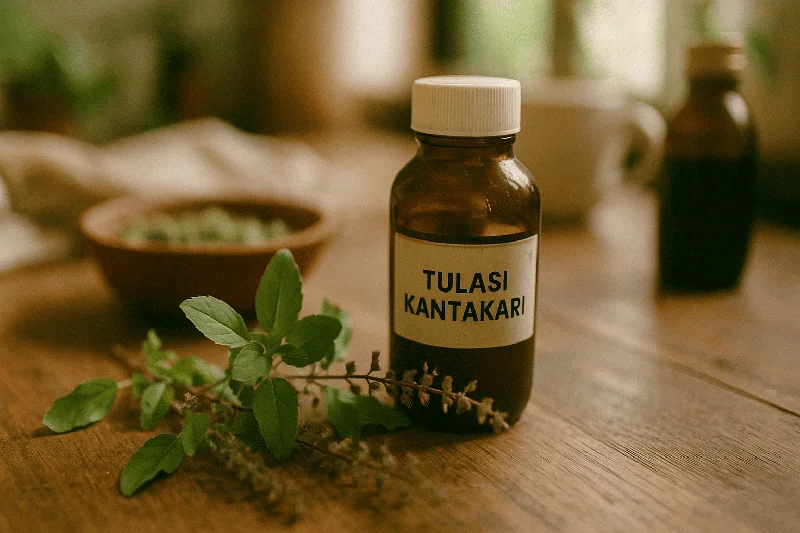
Tulasi Kantakari is an Ayurvedic herbal formulation — most commonly available as a syrup — that combines the therapeutic power of Tulasi (Holy Basil, Ocimum sanctum) and Kantakari (Solanum xanthocarpum) to address respiratory ailments like cough, asthma, and bronchitis. It works by pacifying aggravated Vata and Kapha doshas, clearing mucus from the airways, and strengthening the body's natural immune response. Whether you're dealing with a persistent seasonal cough or looking for a natural alternative to conventional cough syrups for your family, this guide covers everything you need to know — from ingredients and mechanism of action to age-specific dosages, safety concerns, and how it stacks up against other popular Ayurvedic cough formulations.
What Is Tulasi Kantakari?
Tulasi Kantakari is a polyherbal Ayurvedic formulation classified under Kasa-Swasa Chikitsa (treatment of cough and respiratory disorders) in traditional Ayurvedic pharmacology. It is predominantly manufactured as a liquid syrup, though some practitioners use the individual herbs in powder or decoction form.
The name itself tells the story: Tulasi refers to Holy Basil, often called the "Queen of Herbs" in Indian tradition, and Kantakari refers to the thorny nightshade plant, one of the ten roots in the legendary Dashmul (Dashamoola) group of Ayurveda. Together, they create a synergistic formula that targets the respiratory tract while simultaneously supporting digestion and immunity.
Historical Roots & Significance in Ayurveda
The use of both Tulasi and Kantakari in Indian medicine stretches back thousands of years. Tulasi finds mention in the Charaka Samhita and Bhavaprakasha Nighantu as a potent herb for Swas Roga (respiratory diseases) and Jwara (fever). Kantakari is explicitly referenced in Sushruta Samhita as part of the Laghu Panchamoola — a sub-group of five smaller roots used to treat inflammation and breathing difficulties.
The combination of these two herbs isn't a modern innovation. Classical Ayurvedic physicians recognized that Tulasi's warming, Kapha-liquefying properties complemented Kantakari's expectorant and bronchodilatory actions. Together, they addressed the root cause of respiratory congestion according to Ayurvedic pathology: the accumulation of Ama (metabolic toxins) in the Pranavaha Srotas (respiratory channels).
Kantakari and the Dashmul Tradition
Kantakari holds a distinguished position as one of the ten roots in the Dashmul formulation — a cornerstone of Ayurvedic therapeutics. The Dashmul group is divided into Brihat Panchamoola (five major roots) and Laghu Panchamoola (five minor roots). Kantakari belongs to the latter, alongside Shalaparni, Prishnaparni, Gokshura, and Brihati.
This classification isn't just academic. It tells us that Kantakari has been considered essential enough to be included in one of the most frequently prescribed compound formulations in all of Ayurveda — used in everything from postpartum care to chronic inflammatory conditions.
Regional Names & Synonyms of Kantakari
Kantakari is known by a remarkable number of regional names across India, which speaks to how widely it's been used in folk medicine:
| Language | Name(s) |
|---|---|
| Sanskrit | Kantakari, Nidigdhika, Kshudra, Duhsparsha |
| Hindi | Chhoti Kateri, Bhatkatiya, Ringani |
| Tamil | Kandankathiri |
| Telugu | Vakudu, Nelamulaka |
| Kannada | Nelagulla |
| Malayalam | Kantakari Chunda |
| Marathi | Ringani, Bhuiringani |
| Bengali | Kantikari |
| Gujarati | Bhoringani |
| English | Yellow-berried Nightshade, Thorny Nightshade |
Key Ingredients & Full Composition
While the name highlights Tulasi and Kantakari, most commercial Tulasi Kantakari syrups contain a carefully balanced blend of supporting herbs. Here is a detailed composition table based on widely available formulations (per 10 ml serving):
| Ingredient | Botanical Name | Quantity (per 10 ml) | Primary Role |
|---|---|---|---|
| Tulasi | Ocimum sanctum | 250 mg | Antimicrobial, immunomodulator |
| Kantakari | Solanum xanthocarpum | 250 mg | Expectorant, bronchodilator |
| Vasa (Adulsa) | Adhatoda vasica | 250 mg | Mucolytic, antitussive |
| Yastimadhu | Glycyrrhiza glabra | 250 mg | Throat soothing, anti-inflammatory |
| Pippali | Piper longum | 125 mg | Bioavailability enhancer, decongestant |
| Bharangi | Clerodendrum serratum | 125 mg | Anti-asthmatic, anti-allergic |
| Pushkaramoola | Inula racemosa | 125 mg | Cardiac-respiratory tonic |
| Shunti (Ginger) | Zingiber officinale | 125 mg | Anti-inflammatory, digestive |
| Honey/Sugar base | — | q.s. | Vehicle, throat coating |
Note: Exact quantities may vary slightly between manufacturers. Always check the label of your specific product.
Tulasi (Ocimum sanctum) — The Queen of Herbs
Tulasi contributes antimicrobial, antioxidant, and immunomodulatory properties to the formulation. A 2017 study published in the Journal of Ayurveda and Integrative Medicine demonstrated that eugenol — the primary active compound in Tulasi — exhibits significant anti-inflammatory activity by inhibiting COX-2 enzyme pathways. Tulasi also contains ursolic acid and rosmarinic acid, which have shown adaptogenic (stress-reducing) properties in preclinical research.
Kantakari (Solanum xanthocarpum) — The Respiratory Specialist
Kantakari is rich in steroidal alkaloids, particularly solasodine and solanine, which are credited with its bronchodilatory and expectorant effects. A 2014 study in Pharmacognosy Reviews confirmed that Kantakari extracts relaxed bronchial smooth muscles in animal models, validating its traditional use in asthma management. Its bitter and pungent taste (Tikta and Katu Rasa) helps digest and expel accumulated Kapha from the respiratory tract.
Supporting Herbs — Why They Matter
The supporting ingredients aren't fillers.
Each one plays a specific role:
- Vasa (Adulsa) contains vasicine, a well-studied alkaloid with proven mucolytic action — it literally helps break down thick mucus
- Yastimadhu (Licorice) coats the irritated throat mucosa and reduces the cough reflex
- Pippali acts as a bioavailability enhancer (Yogavahi), helping the body absorb the other herbs more effectively
- Bharangi has demonstrated anti-histaminic activity in studies, making it useful for allergic coughs
- Pushkaramoola is specifically indicated in Ayurveda for Hikka (hiccups) and Swasa (breathlessness)
- Shunti stimulates Agni (digestive fire) and has well-documented anti-inflammatory effects
Health Benefits of Tulasi Kantakari
Respiratory Health: Cough, Asthma & Bronchitis
This is the primary indication. Tulasi Kantakari works through multiple mechanisms to address respiratory distress:
- 1.Expectorant action — loosens and expels phlegm from the bronchi and lungs
- 2.Bronchodilation — relaxes constricted airways, easing breathing in asthmatic patients
- 3.Anti-tussive effect — reduces the frequency and severity of cough reflex
- 4.Antimicrobial protection — fights bacterial and viral pathogens that cause respiratory infections
In Ayurvedic terms, it performs Kaphahara (Kapha-reducing), Swasahara (breathlessness-relieving), and Kasahara (cough-relieving) functions. This makes it suitable for both productive coughs (with mucus) and dry, irritating coughs.
Immune System Enhancement
- Tulasi is classified as a Rasayana (rejuvenative) herb in Ayurveda.
- Modern research supports this — a 2015 randomized controlled trial published in Evidence-Based Complementary and Alternative Medicine found that Tulasi leaf extract significantly increased IgA, IgM, and T-helper cell counts in healthy volunteers compared to placebo over 4 weeks. The combined formula may therefore offer preventive benefits during flu season and monsoon months.
Digestive Health & Agni Support
- Tulasi Kantakari isn't just about the lungs.
- Several of its ingredients — particularly Shunti, Pippali, and Kantakari — stimulate Agni (digestive fire) and perform Deepan-Pachan (appetizing and digestive) functions. This is important because Ayurveda considers weak digestion as the root cause of Ama formation, which in turn leads to respiratory congestion.
Users often report reduced bloating and improved appetite as secondary benefits, even when they start taking the syrup primarily for cough.
Stress Reduction & Adaptogenic Benefits
Tulasi is one of the most well-documented adaptogenic herbs in Ayurveda. It modulates cortisol levels and supports the body's stress response. A 2012 study in Indian Journal of Clinical Biochemistry showed that Tulasi supplementation reduced markers of oxidative stress and improved stress-related parameters in human subjects. While Tulasi Kantakari syrup isn't primarily marketed for stress, this adaptogenic action contributes to overall well-being — especially during illness.
Skin Health & Detoxification
Kantakari has traditionally been used in Ayurvedic dermatology for conditions like eczema, acne and psoriasis. Its blood-purifying (Raktashodhaka) properties help remove toxins that manifest as skin eruptions. Tulasi similarly supports liver detoxification pathways. Some practitioners recommend Tulasi Kantakari as a supportive therapy during skin detox protocols, though this is a secondary, not primary, application.
Joint Pain Relief
Kantakari paste, applied externally, has been used in folk medicine for joint pain and inflammation. The oral formulation may offer mild anti-inflammatory benefits through systemic absorption of solasodine alkaloids. A 2019 preclinical study in Journal of Ethnopharmacology demonstrated anti-arthritic activity of Solanum xanthocarpum extract in rat models. However, dedicated joint formulations like Dashmul Kwath are more appropriate for chronic joint conditions.
How Tulasi Kantakari Works: Mechanism of Action
Understanding how this formulation works helps you appreciate why it's more than just another cough syrup.
Ayurvedic Mechanism (Samprapti Vighatana)
According to Ayurveda, most respiratory disorders result from Vata and Kapha imbalance. Cold, heavy, damp qualities of aggravated Kapha produce excess mucus in the respiratory channels (Pranavaha Srotas). Disturbed Vata then pushes this mucus upward, causing cough and breathlessness.
Tulasi Kantakari intervenes at multiple levels:
- Reduces Kapha through its hot potency (Ushna Virya) and pungent-bitter taste profile
- Normalizes Vata through its grounding and nourishing herbs like Yastimadhu
- Clears Ama through stimulating digestive fire, preventing fresh toxin formation
- Opens Srotas (channels) allowing normal flow of Prana Vayu
Pharmacological Mechanism
From a modern pharmacological perspective:
- Eugenol (from Tulasi) inhibits COX-2 and lipoxygenase pathways → reduces inflammation
- Vasicine (from Vasa) stimulates bronchial secretion and increases mucociliary clearance
- Solasodine (from Kantakari) relaxes bronchial smooth muscle → bronchodilation
- Glycyrrhizin (from Yastimadhu) has cortisol-like anti-inflammatory effects without steroidal side effects
- Piperine (from Pippali) enhances bioavailability of co-administered compounds by 30-200% (as documented in multiple pharmacokinetic studies)
How Quickly Does It Work?
This is something no competitor addresses clearly. Based on clinical practice and available traditional guidelines:
| Condition | Expected Onset of Relief | Recommended Course Duration |
|---|---|---|
| Acute cough (viral) | 2–3 days | 5–7 days |
| Chronic bronchitis | 7–10 days | 4–6 weeks |
| Allergic cough | 5–7 days | 3–4 weeks |
| Asthma (adjunct) | 2–3 weeks | 2–3 months |
| General immunity | 2–4 weeks | Seasonal course (1–2 months) |
These are general estimates. Individual response varies based on Prakriti (constitution), severity, and concurrent treatments.
Dosage: Age-Specific Guidelines
Standard Dosage (Syrup Form)
| Age Group | Dosage | Frequency | Best Time |
|---|---|---|---|
| Children 2–5 years | 2.5 ml (½ teaspoon) | 2 times daily | After meals |
| Children 5–12 years | 5 ml (1 teaspoon) | 2 times daily | After meals |
| Adolescents 12–18 years | 5–10 ml | 2–3 times daily | After meals |
| Adults | 10 ml (2 teaspoons) | 2–3 times daily | After meals or as directed |
| Elderly (65+) | 5–10 ml | 2 times daily | After meals |
Special Considerations for Children
- Tulasi Kantakari syrup is generally considered safe for children above 2 years of age.
- However, a few important points:
- Under 2 years: Not recommended without direct physician supervision due to the presence of honey in some formulations (botulism risk) and alkaloid content
- Children with known allergies to nightshade family plants (tomatoes, eggplant) should be monitored for sensitivity reactions
- Start with the lowest recommended dose and observe for 2–3 days before increasing
- Many parents prefer the syrup form over powder because children accept the sweeter taste more readily
Dosage for Powder & Decoction Forms
If using Kantakari Churna (powder) separately or as a home preparation:
- Powder: 1–3 grams, twice daily, mixed with honey or warm water
- Fresh juice (Swarasa): 10–20 ml, once or twice daily
- Decoction (Kwath): Boil 5–10 grams of dried herb in 200 ml water, reduce to 50 ml, strain and drink warm
स्वयं दवा न लें और प्रतीक्षा न करें। अभी डॉक्टर से चैट शुरू करें
Tulasi Kantakari vs. Other Ayurvedic Cough Formulations
This is a comparison no one else provides, and it's probably the most practical question for anyone choosing between Ayurvedic cough remedies:
| Parameter | Tulasi Kantakari | Sitopaladi Churna | Talisadi Churna | Vasavaleha | Kanakasava |
|---|---|---|---|---|---|
| Primary Form | Syrup | Powder | Powder | Avaleha (jam) | Asava (fermented liquid) |
| Main Action | Expectorant + Bronchodilator | Antipyretic + Expectorant | Expectorant + Digestive | Mucolytic + Anti-tussive | Anti-asthmatic |
| Best For | Productive & dry cough, mild asthma | Cough with fever, loss of appetite | Chronic cough with digestive issues | Chronic cough with thick sputum | Chronic asthma, wheezing |
| Taste | Sweet-pungent | Sweet-pungent | Pungent-sweet | Sweet | Sweet-sour (fermented) |
| Child-Friendly | Yes (syrup) | Moderate (powder) | Less (strong taste) | Yes (sweet jam) | No (contains self-generated alcohol) |
| Kapha Pacifying | Strong | Moderate | Strong | Moderate | Strong |
| Vata Pacifying | Moderate | Moderate | Mild | Strong | Strong |
| Onset of Action | 2–3 days | 3–5 days | 3–5 days | 5–7 days | 1–2 weeks |
| Typical Price Range | ₹80–150 | ₹60–120 | ₹70–130 | ₹120–200 | ₹100–180 |
Bottom line: Tulasi Kantakari syrup is arguably the most versatile option for general household use — it's effective for multiple types of cough, easy to administer (liquid form), acceptable to children, and acts relatively quickly. Sitopaladi is better when fever accompanies cough. Kanakasava is more specifically suited for chronic asthma but is not appropriate for children.
When to Take Tulasi Kantakari: Seasonal Guide
Ayurveda emphasizes Ritucharya (seasonal regimen), and timing your intake can significantly enhance results.
Best Seasons for Preventive Use
- Monsoon (July–September): Kapha accumulates due to humidity; respiratory infections peak. Start Tulasi Kantakari 1–2 weeks before monsoon onset as a preventive measure.
- Late Autumn / Early Winter (October–December): Vata aggravation combines with cold air to trigger dry cough and asthma. A 4-week course during this transition is ideal.
- Spring (March–April): Accumulated Kapha from winter liquefies, causing allergic rhinitis, cough, and congestion. A short 2–3 week course helps.
Course Duration & Cycling
- Acute conditions: 5–14 days, discontinue when symptoms resolve
- Chronic conditions: 6–8 week course, followed by a 2-week break, then reassess
- Preventive/immunity: 30-day course at the start of each problematic season
- Do not take continuously for more than 3 months without physician guidance
Side Effects & Safety Profile
Common Side Effects
Tulasi Kantakari is generally well-tolerated. However, based on reported clinical observations and pharmacological profiles of its ingredients, the following side effects can occur:
| Side Effect | Frequency | Likely Cause | Action |
|---|---|---|---|
| Mild gastric discomfort | Occasional (5–10%) | Pungent herbs stimulating Agni | Take after meals; reduce dose |
| Loose stools | Rare (<5%) | Excess Pitta stimulation | Reduce dose or discontinue |
| Allergic reaction (skin rash, itching) | Very rare (<1%) | Sensitivity to Solanaceae alkaloids | Discontinue immediately |
| Heartburn/acid reflux | Occasional in Pitta types | Ushna Virya (hot potency) herbs | Take with milk; consult physician |
| Drop in blood sugar | Rare | Tulasi's hypoglycemic effect | Monitor if diabetic |
Contraindications
Do not use Tulasi Kantakari in the following situations:
- Pregnancy: Tulasi has mild emmenagogue (uterine-stimulating) properties; Kantakari alkaloids have not been adequately studied for fetal safety
- Breastfeeding: Use only under medical supervision — some alkaloids may pass into breast milk
- Gastric ulcers / severe hyperacidity: The pungent and hot nature of several ingredients can aggravate peptic ulcers
- Known allergy to Solanaceae (nightshade) family: Since Kantakari belongs to this family
- Hypotension: Some ingredients may lower blood pressure further
- Autoimmune conditions: Tulasi's immunostimulatory effect could theoretically worsen autoimmune disorders like lupus, rheumatoid arthritis, or multiple sclerosis — consult your physician first
Drug Interactions
This is an area competitors mention vaguely but never specify.
Based on the pharmacological profiles of the individual herbs:
| Medication Class | Interaction Concern | Risk Level |
|---|---|---|
| Anti-diabetic drugs (Metformin, Glimepiride) | Tulasi may potentiate blood sugar lowering → hypoglycemia risk | Moderate |
| Anticoagulants (Warfarin, Aspirin) | Tulasi may have mild blood-thinning effects | Low-Moderate |
| Anti-hypertensives | Additive blood pressure lowering | Low |
| Immunosuppressants (Cyclosporine, Tacrolimus) | Tulasi's immunostimulation may counteract drug effects | Moderate |
| Bronchodilators (Salbutamol, Theophylline) | Additive bronchodilation — generally beneficial but monitor | Low |
| Antibiotics | Generally compatible; Tulasi may enhance antibiotic efficacy | Low (positive) |
| Antihistamines (Cetirizine, Levocetirizine) | No significant interaction reported | Minimal |
Always inform your physician about all supplements and herbs you're taking along with prescription medications.
Storage & Shelf Life
Something almost no one covers, but practically everyone needs to know:
- Store in a cool, dry place away from direct sunlight (below 30°C / 86°F)
- Do not refrigerate unless the label specifically recommends it — cold can cause sugar crystallization in syrups
- Keep the cap tightly closed after each use to prevent contamination
- Typical shelf life: 24–36 months from the date of manufacture (check label)
- After opening: Use within 6 months for optimal potency
- Discard if you notice color change, unusual odor, sedimentation that doesn't disperse on shaking, or any signs of microbial growth
How to Make Tulasi Kantakari at Home
For those who prefer fresh preparations or don't have access to commercial syrups, here's a traditional recipe:
Simple Tulasi Kantakari Decoction (Kashaya)
Ingredients:
- Fresh Tulasi leaves — 10–15 leaves
- Dried Kantakari root powder — 5 grams (available at Ayurvedic pharmacies)
- Pippali (Long pepper) — 2 pieces
- Ginger (fresh) — 1-inch piece, crushed
- Raw honey — 1 teaspoon
- Water — 400 ml
Method:
- Boil 400 ml water with Kantakari root powder, Pippali, and crushed ginger
- Reduce to approximately half (200 ml) on low flame — this takes about 15–20 minutes
- Add fresh Tulasi leaves in the last 2 minutes (do not over-boil Tulasi — it destroys volatile oils)
- Strain the decoction
- Allow it to cool to lukewarm temperature, then add honey (never add honey to boiling water — Ayurveda considers heated honey toxic)
- Drink warm, twice daily
This preparation is best for acute cough and cold episodes. For chronic conditions, standardized commercial formulations offer more consistent dosing.
How to Choose a Quality Tulasi Kantakari Product
With numerous brands available, here's what to look for:
- GMP certification: Ensures the product is manufactured under standardized conditions
- AYUSH license number: Mandatory for all Ayurvedic products sold in India
- Complete ingredient list with quantities: Avoid products that list herbs without specifying amounts
- No artificial colors or preservatives: Quality Ayurvedic syrups use natural preservatives like honey, sugar syrup, or citric acid
- Organic certification (optional but preferable): Ensures herbs are free from pesticide residues
- Batch number and expiry date: Always clearly printed
- Price range: Expect to pay ₹80–₹150 for a 100–200 ml bottle. Extremely cheap products may use inferior raw materials
Frequently Asked Questions (FAQ)
What is Tulasi Kantakari syrup used for?
Tulasi Kantakari syrup is primarily used for cough relief, bronchial asthma management, bronchitis, and respiratory congestion. It works as a natural expectorant and bronchodilator. Secondary benefits include digestive improvement, immunity enhancement, and stress reduction.
Which is the number 1 Ayurvedic cough syrup in India?
There isn't a single "number 1" — the best Ayurvedic cough syrup depends on your specific condition. Tulasi Kantakari is among the most versatile options for general cough relief. For cough with fever, Sitopaladi-based syrups may be more appropriate. For chronic asthma, Kanakasava is often preferred. Consult an Ayurvedic practitioner for personalized recommendations.
Can Tulasi Kantakari be taken daily?
Yes, it can be taken daily during an active course (typically 2–8 weeks depending on the condition). However, continuous daily use beyond 3 months is not recommended without physician supervision. For preventive use, seasonal courses of 4–6 weeks are ideal.
How long does it take to see results with Tulasi Kantakari?
For acute cough, most people notice improvement within 2–3 days. For chronic conditions like bronchitis or asthma, it may take 1–3 weeks of consistent use. Immune-building effects typically require 2–4 weeks of regular intake.
Is Tulasi Kantakari safe for children?
Yes, for children above 2 years of age at appropriate doses (2.5 ml for ages 2–5, 5 ml for ages 5–12, twice daily). It is not recommended for infants under 2 years without direct medical supervision. Many parents prefer it over conventional cough syrups because it is free from codeine, antihistamines, and artificial sedatives.
Does Tulasi Kantakari interact with other medications?
It may interact with anti-diabetic drugs (risk of hypoglycemia), blood thinners (additive anticoagulant effect), and immunosuppressants (may reduce their efficacy). It is generally compatible with antibiotics and antihistamines. Always inform your doctor about herbal supplements you are taking.
Can Tulasi Kantakari help with weight loss?
Not directly. While it improves digestive fire (Agni) and helps metabolize Ama (toxins) — which may indirectly support metabolic health — it is not formulated or indicated for weight loss. Dedicated weight management formulations like Triphala or Guggulu are more appropriate.
Where can I buy high-quality Tulasi Kantakari supplements?
Tulasi Kantakari syrup is available at Ayurvedic pharmacies, online platforms like Amazon India and IndiaMART, and directly through manufacturer websites such as SDP Ayurveda. Look for products with GMP certification and a valid AYUSH license. A 100 ml bottle typically costs around ₹80, while 200 ml bottles range from ₹130–₹150.
Final Thoughts: Why Choose Tulasi Kantakari?
- Tulasi Kantakari represents the kind of formulation Ayurveda does best — combining multiple herbs that work synergistically to address not just symptoms but underlying imbalances. It isn't a magic cure, and it won't replace emergency medical care for severe asthma attacks or pneumonia.
- But for the vast majority of everyday respiratory complaints — the persistent monsoon cough, the winter bronchitis, the seasonal allergic wheeze — it offers a safe, well-tolerated, and time-tested solution.
The fact that it simultaneously supports digestion, immunity, and stress resilience makes it more than just a cough syrup. It's a holistic respiratory wellness formula rooted in centuries of clinical observation and increasingly supported by modern pharmacological research.
Always consult a qualified Ayurvedic practitioner before starting any new herbal regimen, especially if you have pre-existing conditions, are pregnant, or are taking prescription medications. Ayurveda is most effective when treatments are tailored to your individual Prakriti (constitution) and Vikriti (current imbalance) — a one-size-fits-all approach, even with natural medicine, is never ideal.
Scientific Sources
- An update on Shankhpushpi, a cognition-boosting Ayurvedic medicine — Sethiya NK et al., 2009, Zhong xi yi jie he xue bao = Journal of Chinese integrative medicine
- Star anise (Illicium verum): Chemical compounds, antiviral properties, and clinical relevance — Patra JK et al., 2020, Phytotherapy research : PTR
- Nano-ayurvedic medicine and its potential in cancer treatment — Lopus M, 2023, Journal of integrative medicine
- Eugenol isolated from supercritical fluid extract of Ocimum sanctum: a potent inhibitor of DENV-2 — Kaushik S et al., 2023, AMB Express
- The practitioner's perspective: introduction to Ayurvedic herbalism — Khalsa KP, 2007, Journal of herbal pharmacotherapy
- Rasayans and non-rasayans herbs: Future immunodrug - Targets — Doshi GM et al., 2013, Pharmacognosy reviews
- Gut microbiota: One of the new frontiers for elucidating fundamentals of Vipaka in Ayurveda — Ranade AV et al., 2019, Ayu
- Exploration of bioactive compounds from Olea dioica in Western Ghats of Karnataka using GC-MS — Krishnappa S et al., 2024, 3 Biotech
- Drug development with hints from traditional Indian Ayurveda medicine: hepatitis and rheumatoid as an example — Okamoto T et al., 2000, International journal of molecular medicine
- Role of Mandukparni (Centella asiatica Linn Urban) in neurological disorders: Evidence from ethnopharmacology and clinical studies to network enrichment analysis — Sharma R et al., 2024, Neurochemistry international
- Immunity against COVID-19: Potential role of Ayush Kwath — Gautam S et al., 2022, Journal of Ayurveda and integrative medicine
- Analyzing the Use of Medicinal Herbs During the First Wave and Second Wave of COVID-19 — Singh T et al., 2022, Proceedings of the National Academy of Sciences, India. Section B
- Antiviral Potential of Selected Medicinal Herbs and Their Isolated Natural Products — Perera WPRT et al., 2021, BioMed research international
- Mesenchymal stem cells as a platform for research on traditional medicine — Bhonde R et al., 2021, Journal of Ayurveda and integrative medicine
- Efficacy of phytochemicals as immunomodulators in managing COVID-19: a comprehensive view — Bhattacharya S et al., 2021, Virusdisease
- Preserving neural retina through re-emerging herbal interventions — Anand A et al., 2014, Journal of cellular biochemistry
- Ashwagandha withanolides, Withaferin-A, and Withanone for natural interventions in aging and obesity — Yoshitomi R et al., 2025, Mechanisms of ageing and development
- Comparative efficacy of Medhya Rasayana,Bacopa monnieri, and Centella asiatica in enhancing memory and IQ of 8-10 year-old healthy boys: A prakriti-based double-blind, randomized controlled trial — Verma J et al., 2025, Journal of Ayurveda and integrative medicine
- Herbal Insights: Exploring the Therapeutic Potential of Indian Dietary Herbs in Diabetic Cardiomyopathy Management — Dahiya R et al., 2025, Current diabetes reviews
- An Ayurvedic formulation 'Trikatu' and its constituents — Johri RK et al., 1992, Journal of ethnopharmacology
उपयोगकर्ताओं के प्रश्न
What is the best way to store Tulasi Kantakari to maintain its effectiveness?
Robert
6 दिनों पहले
To keep Tulasi Kantakari effective, store it away from direct sunlight and moisture, in a cool, dry place. Airtight containers help prevent degradation. A kitchen cabinet or cupboard works well. Avoid storing near any strong-smelling substances, as it might absorb odors. If it's in syrup form, keep it in the fridge after opening!
How does seasonal timing affect the effectiveness of Tulasi Kantakari syrup?
Henry
15 दिनों पहले
Seasonal timing plays a big role! Tulasi Kantakari syrup is especially effective during the monsoon (July-Sept) when kaphas accumulate due to humidity. It helps clear respiratory congestion and supports your immunity. Think of it like nature's own rhythm, which guides when certain treatments work best. Want more detailed timing? Look into the concept of Ritucharya in Ayurveda!
What should I know about potential interactions between Tulasi Kantakari and other medications?
Sophia
26 दिनों पहले
Tulasi Kantakari might interact with meds for respiratory problems or immune-related treatments. It's best to chat with an Ayurvedic doctor or your usual doc if you're considering taking it alongside your existing medications. This way, they'll help ensure everything works smoothly together without unwanted side effects.
What is the best diet to follow while taking Tulasi Kantakari for health benefits?
Mckenzie
36 दिनों पहले
While taking Tulasi Kantakari, aim for a diet that's light, warm, and easy to digest. Think soups, stews, cooked veggies. Avoid heavy, oily, and cold foods which may disrupt your Agni (digestive fire). Also, balance your doshas by opting for foods that suit your prakriti (constitution). Remember, moderation's key - and listen to your body! 🙂
What is the role of Tulasi Kantakari in enhancing cognitive function and mental clarity?
Yolanda
46 दिनों पहले
Tulasi Kantakari helps in improving cognitive function mainly due to its relaxing aromatic compounds. These compounds can aid in reducing stress, which when managed effectively, often leads to better mental clarity and reduced mental fatigue. So, less stress means you can think more clearly! Consistent use might be a key here.
What are the benefits of using Tulasi Kantakari for chronic cough and asthma relief?
Rachael
55 दिनों पहले
Tulasi Kantakari is great for supporting respiratory health. For chronic cough and asthma, it helps to clear mucus, reduce inflammation, and soothe the airways. Plus, it can strengthen your lungs' defenses over time. Just make sure to choose organic, sustainably sourced options for best results. Enjoy exploring this herbal remedy!
How does Tulasi Kantakari affect immune system function in adults?
Aaliyah
65 दिनों पहले
Tulasi Kantakari, a combo of Tulasi and Kantakari, can definitely give a nice boost to the immune system in adults! Tulasi is known for strengthening immunity and reducing stress, while Kantakari helps with respiratory health and vitality. So together, they kinda work as a tag team to support overall immune function. But hey, always good to consult your doctor, especially if you’re on other meds.
What is the best time of day to take Tulasi Kantakari for maximum benefits?
Sofia
74 दिनों पहले
The best time to take Tulasi Kantakari really depends on what you're looking to achieve. For respiratory support, you might want to take it in the morning to help with breathing throughout the day. If you're using it for stress relief, evening could work better. Just be consistent with it! If possible, consult with a practitioner for personalized advice 😊
What natural remedies can enhance the effects of Tulasi Kantakari for respiratory health?
Emma
84 दिनों पहले
To boost the effects of Tulasi Kantakari for respiratory health, try combining it with herbs like ginger, licorice, or black pepper. They can help enhance lung function and support clear breathing. Also, keeping your agni strong by eating warm, easy-to-digest foods can be really beneficial. Remember to always listen to your body as you go along!
What research is available on the long-term effects of using Tulasi Kantakari regularly?
Virginia
160 दिनों पहले
Hey there! About research on the long-term effects of Tulasi Kantakari, it's still a bit limited. Most studies focus on shorter-term usage and traditional benefits, like digestion and skin health. To be safe, it's best to stick to traditional recommendations and consult with a healthcare professional who specializes in Ayurveda to get personalized advice based on your doshas and unique constitution.
संबंधित आलेख

Gastrointestinal Disorders
Pittantak Ras – Ayurvedic Remedy for Pitta Imbalance and Digestive Health
Discover Pittantak Ras, an Ayurvedic tonic designed to balance digestive fire and rejuvenate the body. Learn how this herbal formulation supports dosha harmony and enhances vitality.
3,003
Gastrointestinal Disorders
Mansyadi Kwath – Natural Ayurvedic Remedy for Digestive Health & Detoxification
Discover the benefits and uses of Mansyadi Kwath, a traditional Ayurvedic herbal decoction known for improving digestion, detoxifying the body, and supporting overall health and vitality.
2,882
Gastrointestinal Disorders
Bhallataka Uses – Ayurvedic Benefits for Health and Wellness
Explore the powerful uses of Bhallataka (Semecarpus anacardium) in Ayurveda for treating various health conditions, promoting joint health, and boosting immunity.
4,438

Gastrointestinal Disorders
Does Cold Milk Reduce Acidity? Ayurvedic Explanation and Uses
Explore if cold milk reduces acidity, its benefits at night, how and when to drink it. Learn if cold milk is good for acidity relief according to Ayurveda
12,651

Gastrointestinal Disorders
Pachak Ras: Ayurvedic Digestive Tonic for Optimal Health
Learn about Pachak Ras, an Ayurvedic digestive tonic. Discover its benefits, ingredients, uses, dosage, and how it supports digestive health and overall well-being.
4,079

Gastrointestinal Disorders
मुष्ठारिष्ट के उपयोग, खुराक, सामग्री, और साइड इफेक्ट्स
मुष्ठारिष्टम के उपयोग, खुराक, सामग्री और साइड इफेक्ट्स की खोज
1,245

Gastrointestinal Disorders
Parijatak Ghan Vati
Parijatak Ghan Vati is a powerful Ayurvedic remedy that addresses a range of health concerns while promoting holistic wellness. Its ability to manage inflammation, support joint health, and boost immunity makes it a valuable addition to your wellness rout
3,593

Gastrointestinal Disorders
Shankh Vati Benefits, Dosage, Ingredients and Side Effects
Exploration of Shankh Vati Benefits, Dosage, Ingredients and Side Effects
2,851

Gastrointestinal Disorders
Kutaja Parpati Vati Uses – Traditional Ayurvedic Remedy for Digestive Disorders
Discover the traditional Ayurvedic uses of Kutaja Parpati Vati, a potent remedy for digestive disorders including dysentery and diarrhea. Learn about its benefits, usage guidelines, and expert insights.
2,602
Gastrointestinal Disorders
IBS Treatment in Ayurveda: What Actually Helps When Your Gut’s a Mess
Let’s be honest. If you’re googling "IBS treatment in Ayurveda," you’re probably desperate. Because Irritable Bowel Syndrome is one of those things that makes you feel like your body is sabotaging you from the inside out. And all the antispasmodics and lo
2,877
विषय पर संबंधित प्रश्न
क्या मैं वजन बढ़ाने की कोशिश करते समय एसिड रिफ्लक्स के लिए फुल फैट दूध का इस्तेमाल कर सकता हूँ?
13 दिनों पहले
एक बुजुर्ग मरीज में, जिसे डुओडेनल अल्सर का इतिहास है, पुरानी एसिडिटी और कमजोरी का इलाज कैसे करें?
13 दिनों पहले
किण्वन कोलाइटिस और शुरुआती विटिलिगो का इलाज आयुर्वेदिक उपायों से कैसे करें?
13 दिनों पहले
अतिरिक्त दस्तावेज़
© 2024 Ask Ayurveda. सर्वाधिकार सुरक्षित।