आयुर्वेदिक डॉक्टर से प्रश्न पूछें और निःशुल्क या भुगतान मोड में अपनी चिंता की समस्या पर ऑनलाइन परामर्श प्राप्त करें। 2,000 से अधिक अनुभवी डॉक्टर हमारी साइट पर काम करते हैं और आपके प्रश्नों का इंतजार करते हैं और उपयोगकर्ताओं को उनकी स्वास्थ्य समस्याओं को हल करने में प्रतिदिन मदद करते हैं।


Body DetoxEar, Nose, and Throat DisordersGeriatrics & RejuvenationImmunodeficiencyInfertility TreatmentNutritionOrthopedic DisordersPediatricsRespiratory DisordersSexually Transmitted Diseases (STDs)Surgery RecoveryUrological DisordersVascular DisordersDental DisordersEndocrinological DisordersGastrointestinal DisordersYoga TherapyGeneral MedicineAllergic DisordersCardio DisordersGynecology and ObstetricsCosmetologySkin and Hair DisordersEye DisordersInfectious DiseasesMental DisordersNeurological DisordersOncologyPanchakarmaSexual Health & DisordersSports Medicine
पर प्रकाशित 01/03/25
(को अपडेट 08/10/26)
3,439
Calcaneal Spur Ayurvedic Treatment: Natural Relief for Heel Pain
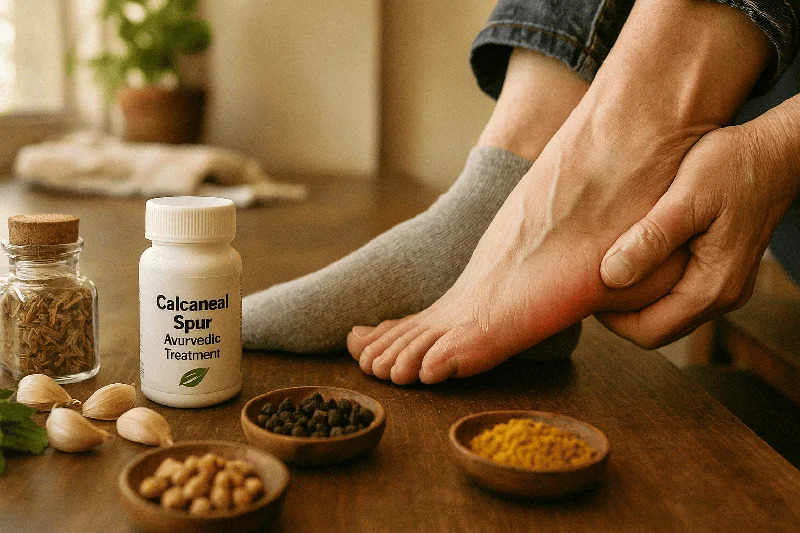
- A calcaneal spur is a bony outgrowth of calcium deposits that forms on the underside or back of the heel bone (calcaneus).
- It develops gradually — often over months or years — and can range from a few millimeters to over a centimeter in length. While many calcaneal spurs cause no symptoms at all, others lead to persistent heel pain that disrupts daily life, sleep, and the ability to work or exercise. Understanding exactly what causes these spurs, how they're diagnosed, and which treatments actually work is essential for anyone dealing with this surprisingly common condition.
- In this comprehensive guide, we cover everything from the underlying anatomy and pathogenesis theories to evidence-based treatment options, recovery timelines, and prevention strategies.
- We also address areas that most resources overlook — including calcaneal spurs in children and athletes, nutritional factors, recurrence rates, and the psychological impact of chronic heel pain.
What Is a Calcaneal Spur?
A calcaneal spur is a pointed bony projection that forms where tendons or fascia attach to the calcaneus (heel bone). These spurs are not random growths; they develop in response to chronic mechanical stress, repetitive microtrauma, or inflammatory processes at the bone-soft tissue interface. Radiographically, they appear as shelf-like or hook-shaped protrusions on X-ray.
- It's worth noting that calcaneal spurs are remarkably common. Studies estimate they are present in approximately 11–16% of the general population, and their prevalence increases significantly with age.
- Many people have spurs without ever knowing it — an incidental finding on an X-ray taken for another reason entirely.
Anatomy of the Calcaneus and Plantar Fascia
The calcaneus is the largest bone in the foot and bears the majority of body weight during standing and walking. Its inferior (bottom) surface serves as the attachment point for the plantar fascia — a thick, fibrous band of connective tissue that runs from the heel to the toes and supports the arch of the foot.
The Achilles tendon attaches to the posterior (back) surface of the calcaneus. Both of these attachment sites are subject to enormous mechanical forces during locomotion, which is precisely why spurs tend to develop in these locations.
Types of Calcaneal Spurs: Plantar vs. Dorsal
There are two main types:
| Feature | Plantar (Inferior) Calcaneal Spur | Dorsal (Posterior) Calcaneal Spur |
|---|---|---|
| Location | Underside of the heel, at the plantar fascia origin | Back of the heel, at the Achilles tendon insertion |
| Common association | Plantar fasciitis | Achilles tendinopathy, Haglund's deformity |
| Pain pattern | Pain under the heel, worse with first steps in the morning | Pain at the back of the heel, worse with activity |
| Prevalence | More common | Less common |
| Typical age group | 40–60 years | Varies, often active individuals |
Plantar calcaneal spurs are by far the more frequently discussed type and are the primary focus of this article.
Calcaneal Spur vs Plantar Fasciitis: Are They the Same?
No, and this is one of the most common misunderstandings. Plantar fasciitis is inflammation or degeneration of the plantar fascia — the soft tissue. A calcaneal spur is a bony growth. They often coexist, but they are distinct conditions.
Here's what many people don't realize: the spur itself usually isn't the source of pain. Research has shown that many people with large spurs are completely pain-free, while others with no visible spur on X-ray suffer from severe heel pain. The pain in most cases comes from the inflamed or damaged plantar fascia and surrounding soft tissues — not from the bony projection poking into flesh, as is commonly imagined.
That said, chronic plantar fasciitis is considered a major driver of spur formation. The constant pulling and inflammation at the fascia's attachment point triggers the body's repair response, which deposits calcium and eventually forms a spur.
What Causes Calcaneal Spurs?
The formation of a calcaneal spur is not a single-event injury but a gradual biological process driven by repetitive stress. Several theories attempt to explain why the body produces these bony outgrowths.
Pathogenesis Theories: Traction, Vertical Compression, and Heel Pad Changes
Three primary theories dominate the academic literature:
- 1.Traction Theory — The most traditional explanation. Repeated pulling (traction) of the plantar fascia on its attachment point at the calcaneus causes periosteal irritation and reactive bone formation. Think of it like a rope repeatedly tugging on a post — eventually the post starts building material at the stress point.
- 2.Vertical Compression Theory — This theory proposes that it's not the fascia pulling but rather repetitive vertical loading (impact from walking, running, standing) that compresses the heel's inferior surface and stimulates bone growth. A 2014 biomechanical study found that spur morphology often aligns more with compressive forces than with the direction of fascial pull.
- 3.Heel Pad and Fascial Thickness Theory — Age-related thinning of the heel's fat pad reduces its shock-absorbing capacity, leading to increased mechanical stress on the calcaneus. Combined with thickening and degeneration of the plantar fascia itself, this creates an environment favorable for spur development.
In reality, the cause is likely multifactorial — a combination of all three mechanisms operating simultaneously.
Chronic Plantar Fasciitis as a Primary Trigger
Chronic, untreated plantar fasciitis remains the most commonly cited precursor to plantar calcaneal spur formation. Prolonged inflammation at the enthesis (the fascia-bone junction) triggers an osteogenic response. One large-scale study found that approximately 50% of patients with symptomatic plantar fasciitis had an associated calcaneal spur on radiography.
Biomechanical Factors: Flat Feet, High Arches, and Gait Abnormalities
Abnormal foot mechanics create uneven distribution of force across the heel:
- Pes planus (flat feet) — Excessive pronation stretches the plantar fascia beyond its normal range with every step
- Pes cavus (high arches) — Reduced shock absorption leads to concentrated pressure on the heel
- Gait abnormalities — Particularly in the geriatric population, altered walking patterns change the biomechanical loading of the calcaneus
These structural variations don't guarantee spur formation, but they significantly increase the risk over time.
Risk Factors for Calcaneal Spurs
Age and Gender Variations
- Calcaneal spurs are predominantly a condition of middle and older age. Peak incidence occurs between 40 and 60 years, with prevalence rising sharply after 50.
- Age-related changes — fat pad atrophy, decreased tissue elasticity, cumulative wear — all contribute.
Gender differences are notable. Women are affected more frequently than men, which is partly attributed to hormonal factors (post-menopausal changes in bone metabolism) and partly to footwear choices. Years of wearing high heels can shorten the Achilles tendon and increase strain on the plantar fascia. However, men in physically demanding occupations show comparable rates.
Obesity and Occupational Factors
Excess body weight is one of the most significant modifiable risk factors. Every kilogram of body weight translates to approximately 2–3 kg of force on the heel during walking. For individuals with a BMI over 30, the chronic overload on the calcaneal enthesis is substantial.
- Occupational risk is equally important.
- People who spend prolonged hours standing on hard surfaces — factory workers, teachers, nurses, retail staff — face a considerably higher risk. One occupational health study found that workers standing more than 5 hours per day had nearly double the incidence of heel spur-related symptoms compared to sedentary workers.
Associated Conditions: Gout, Arthropathies, and Diabetes
Several systemic conditions increase susceptibility:
- Gout — Urate crystal deposition around the calcaneal enthesis can trigger inflammation and reactive bone formation
- Rheumatoid arthritis and seronegative spondyloarthropathies (including ankylosing spondylitis and reactive arthritis) — These conditions cause enthesitis, which directly promotes spur development
- Diabetes mellitus — Diabetic foot complications, peripheral neuropathy, and altered gait all contribute
- Osteoporosis — Changes in bone metabolism may paradoxically promote reactive bone formation at stress points
Nutritional and Metabolic Factors
- This is an area most resources overlook entirely.
- Vitamin D deficiency — extremely common in India, affecting an estimated 70–90% of the population according to multiple surveys — impairs calcium metabolism and may contribute to abnormal bone remodeling. Low magnesium levels similarly affect musculoskeletal health. While direct causal evidence linking vitamin D deficiency to calcaneal spur formation is still emerging, maintaining adequate levels (above 30 ng/mL) supports overall bone and soft tissue health and is a reasonable preventive measure.
Symptoms of Calcaneal Spurs
Classic Heel Pain Patterns
The hallmark symptom is sharp, stabbing pain under the heel — often described as feeling like stepping on a nail or a stone.
The pain follows a characteristic pattern:
- First-step pain — The most distinctive feature. Pain is worst with the first few steps after getting out of bed in the morning or after sitting for extended periods. This occurs because the plantar fascia contracts during rest and is suddenly stretched upon weight-bearing.
- Post-activity pain — Pain that intensifies after (not usually during) prolonged standing, walking, or exercise
- Gradual progression — What starts as mild discomfort can evolve into chronic, debilitating pain over weeks to months if untreated
- Localized tenderness — A specific tender point on the medial plantar aspect of the heel, reproducible with palpation
Not all calcaneal spurs produce symptoms. Asymptomatic spurs are common and typically require no treatment.
When to See a Doctor
Seek medical evaluation if:
- Heel pain persists for more than 2–3 weeks despite rest and basic home measures
- Pain is severe enough to alter your gait or limit daily activities
- You notice swelling, redness, or warmth around the heel (possible signs of infection or inflammatory arthritis)
- You have diabetes or peripheral neuropathy and develop new foot pain
- Over-the-counter pain medication provides no relief
How Is a Calcaneal Spur Diagnosed?
Physical Examination
Diagnosis begins with a thorough clinical assessment. The clinician will press on the medial calcaneal tubercle to check for point tenderness, assess the foot's arch structure, evaluate ankle dorsiflexion range, and observe gait patterns. A positive Windlass test (pain reproduced by dorsiflexing the great toe) suggests plantar fascia involvement.
X-Ray Findings
Lateral foot X-ray is the primary imaging modality. A calcaneal spur appears as a bony projection extending from the calcaneal tuberosity, typically measuring 1–10 mm in length. The X-ray can confirm the presence and size of the spur, but remember — the spur's size does not necessarily correlate with symptom severity.
Ultrasound and MRI
When the diagnosis is uncertain or soft tissue pathology needs further evaluation:
- Ultrasound — Useful for assessing plantar fascia thickness (normal: ~4 mm; thickened fascia > 4.5 mm suggests fasciitis), detecting fluid collections, and guiding injections
- MRI — The gold standard for soft tissue evaluation. It can reveal plantar fascia tears, bone marrow edema, stress fractures, and other pathologies that mimic calcaneal spur symptoms
Differential Diagnosis: What Else Could It Be?
This is a critical step that many resources skip. Not all heel pain is from calcaneal spurs or plantar fasciitis.
A structured differential includes:
| Condition | Key Distinguishing Features |
|---|---|
| Achilles tendinopathy | Pain at the back of the heel, not the bottom |
| Tarsal tunnel syndrome | Burning, tingling, numbness — nerve compression |
| Calcaneal stress fracture | Pain with squeezing the heel sides, history of overuse |
| Sever's disease | Affects children/adolescents (ages 8–14) at the growth plate |
| Fat pad atrophy | Diffuse deep heel pain, reduced fat pad on exam |
| Nerve entrapment (Baxter's nerve) | Lateral plantar nerve, burning pain radiating laterally |
| Haglund's deformity | Bump at the back of the heel, aggravated by rigid shoes |
Accurate diagnosis matters because treatment differs significantly for each condition.
Calcaneal Spur Treatment: From Conservative to Surgical
The good news: the vast majority of calcaneal spur cases — approximately 90% — resolve with non-surgical treatment within 10–12 months, according to the American Academy of Orthopaedic Surgeons (AAOS).
Treatment follows a tiered approach, progressing from basic conservative measures to more invasive options only when necessary.
Can Calcaneal Spurs Go Away Without Surgery?
Yes, and this is important to emphasize. While the bony spur itself may not disappear (bone doesn't typically resorb), the symptoms can be fully resolved without surgery. The goal of treatment is not to remove the spur but to address the inflammation, mechanical stress, and soft tissue damage that are actually causing the pain.
Conservative Treatment Options
Tier 1: Basic Measures (Weeks 1–6)
- Rest and activity modification — Reduce or eliminate activities that aggravate heel pain. This doesn't mean complete immobilization, but smart modification
- Ice therapy — Apply ice for 15–20 minutes, 3–4 times daily, especially after activity
- NSAIDs — Ibuprofen or naproxen for short-term pain relief and inflammation reduction (use with caution in patients with GI or renal issues)
- Footwear modification — Avoid flat shoes, flip-flops, and worn-out footwear. Choose shoes with firm heel counters, cushioned soles, and adequate arch support
Tier 2: Targeted Interventions (Weeks 6–12)
- Orthotic insoles and heel cups — Custom or prefabricated orthotics redistribute pressure and support the arch. Silicone heel cups can provide immediate cushioning relief
- Night splints — Keep the plantar fascia in a stretched position during sleep, reducing morning pain
- Physical therapy — Supervised strengthening and stretching programs targeting the calf muscles and plantar fascia
Tier 3: Advanced Non-Surgical Options (Months 3–9)
- Corticosteroid injections — Ultrasound-guided injections of corticosteroids (e.g., methylprednisolone) can provide significant short-term relief (4–12 weeks). However, repeated injections carry risks including fat pad atrophy and plantar fascia rupture. Most clinicians limit these to 2–3 injections per year.
- PRP (Platelet-Rich Plasma) infiltrations — A newer approach where the patient's own concentrated platelets are injected into the affected area. PRP releases growth factors that promote tissue healing. A 2019 randomized controlled trial published in the Journal of Orthopaedic Surgery and Research found that PRP injections provided superior long-term pain relief compared to corticosteroid injections at 6 and 12 months. PRP is particularly recommended for patients who have not responded to corticosteroids or who have contraindications to steroid use.
- Extracorporeal Shockwave Therapy (ESWT) — High-energy sound waves are directed at the affected area to stimulate healing. ESWT has growing evidence supporting its effectiveness. A 2017 meta-analysis of 11 RCTs found that ESWT significantly reduced heel pain compared to placebo, with effects lasting beyond 12 months. Typical protocols involve 3–5 sessions spaced one week apart.
Calcaneal Spur Exercises: Step-by-Step
Exercises are a cornerstone of treatment and prevention.
Here are the most evidence-supported ones:
1. Calf Stretch (Wall Stretch)
- Stand facing a wall, hands on the wall at shoulder height
- Place the affected foot behind the other, knee straight
- Lean forward until you feel a stretch in the calf
- Hold for 30 seconds, repeat 3 times
- Perform 3 sets daily
2. Plantar Fascia Stretch (Seated)
- Sit with the affected foot crossed over the opposite knee
- Grasp the toes and gently pull them back toward the shin
- You should feel a stretch along the bottom of the foot
- Hold 20–30 seconds, repeat 5 times
- Perform before getting out of bed and 2–3 more times daily
3. Towel Curl
- Place a towel on the floor, sit in a chair
- Use your toes to scrunch and pull the towel toward you
- 10 repetitions, 3 sets daily
- Strengthens the intrinsic foot muscles
4. Frozen Water Bottle Roll
- Roll a frozen water bottle under the arch of the foot
- Apply moderate pressure for 5–10 minutes
- Combines stretching with ice therapy — quite effective
Surgical Treatment: When Is It Necessary?
- Surgery is reserved for the 5–10% of patients who fail to improve after 9–12 months of comprehensive conservative treatment.
- Options include:
- Plantar fascia release — Partial detachment of the plantar fascia from the calcaneus to reduce tension. Can be done endoscopically (minimally invasive) or as open surgery
- Calcaneal spur resection — Direct removal of the bony spur, sometimes performed alongside fascial release
- Gastrocnemius recession — Lengthening of the calf muscle for patients with documented equinus contracture (tight calf). This reduces the chronic pulling forces on the heel
- Ultrasonic tenotomy — A newer minimally invasive technique using ultrasonic energy to debride damaged tissue. Early results are promising but long-term data is still limited
Recovery timeline after surgery: Most patients can bear weight in a walking boot within 2–4 weeks, transition to regular shoes by 6–8 weeks, and return to full activity within 3–4 months. However, complete resolution of symptoms may take up to 6 months post-surgery.
Comparison of Treatment Methods
| Treatment | Effectiveness | Time to Relief | Evidence Level | Key Risks/Limitations |
|---|---|---|---|---|
| Rest + Ice + NSAIDs | Moderate | 2–6 weeks | High | Only addresses symptoms, not cause |
| Orthotics/Heel Cups | Good | 2–4 weeks | Moderate-High | Needs consistent use |
| Physical Therapy | Good-Excellent | 6–12 weeks | High | Requires patient compliance |
| Corticosteroid Injection | Good (short-term) | 1–2 weeks | High | Risk of fat pad atrophy, rupture |
| PRP Injection | Good (long-term) | 4–8 weeks | Moderate | Higher cost, less availability |
| ESWT | Good | 6–12 weeks | Moderate-High | Multiple sessions needed |
| Surgery | Excellent | 3–6 months | High | Surgical risks, recovery time |
Calcaneal Spurs in Special Populations
Children and Adolescents
Calcaneal spurs in the pediatric population are rare but not unheard of. More commonly, heel pain in children aged 8–14 is caused by Sever's disease (calcaneal apophysitis) — inflammation of the growth plate at the back of the heel. It's important not to confuse these conditions, as management differs. True calcaneal spurs in children are usually associated with underlying conditions such as juvenile idiopathic arthritis or mechanical abnormalities, and require specialist evaluation.
Athletes and Return-to-Sport
Athletes — particularly runners, basketball players, and dancers — face unique challenges.
The key considerations:
- Gradual return-to-sport protocol — Do not resume full training immediately after symptoms resolve.
- Follow a stepped progression: walking → light jogging → sport-specific drills → full training, with each phase lasting at least 1–2 weeks
- Biomechanical assessment — Video gait analysis can identify running form issues that contributed to the problem
- Footwear audit — Replace running shoes every 500–800 km; ensure appropriate shoe type for foot structure
- Cross-training — Swimming and cycling maintain fitness without heel impact during recovery
Is Walking Good for Heel Spurs?
- This is one of the most frequently asked questions, and the answer is nuanced. Moderate walking on flat, cushioned surfaces in supportive shoes is generally acceptable and even beneficial — it promotes blood flow, maintains calf flexibility, and prevents deconditioning. However, long walks on hard surfaces, barefoot walking, or walking through severe pain can worsen the condition.
- Listen to your body: mild discomfort that improves with continued walking is usually okay; sharp pain that worsens means you should stop.
Calcaneal Spur Footwear: What to Wear and What to Avoid
Choosing the right footwear is arguably one of the most impactful lifestyle changes you can make.
Look for:
- Firm heel counter (the back of the shoe should be rigid, not collapsible)
- Cushioned midsole with good shock absorption
- Arch support matching your foot type
- A slight heel elevation (10–15 mm drop) to reduce plantar fascia tension
- Roomy toe box
Avoid:
- Completely flat shoes (ballerinas, traditional chappals, Converse-style sneakers)
- High heels above 4 cm
- Flip-flops and sandals without heel support
- Worn-out shoes with compressed midsoles
Prevention: How to Reduce the Risk of Recurrence
Recurrence after successful treatment (both conservative and surgical) is estimated at 10–25%, underscoring the importance of ongoing prevention. After surgical spur removal specifically, recurrence can occur if the underlying biomechanical factors are not addressed.
Effective prevention strategies include:
- 1.Maintain a healthy body weight — Even a 5 kg reduction significantly decreases heel loading
- 2.Daily stretching — Continue calf and plantar fascia stretches even after symptoms resolve
- 3.Wear supportive footwear consistently — Not just during exercise but throughout the day
- 4.Use orthotics if recommended — Especially if you have flat feet or high arches
- 5.Adequate nutrition — Ensure sufficient vitamin D (target >30 ng/mL), calcium (1000–1200 mg/day), and magnesium intake
- 6.Gradual increase in activity — Never suddenly increase walking, running, or standing time by more than 10% per week
- 7.Surface awareness — When possible, choose softer surfaces for walking and exercise
The Psychological Impact of Chronic Heel Pain
This dimension is almost never discussed but is very real.
Chronic calcaneal spur pain — especially when it persists for months — can lead to:
- Sleep disruption from night pain or anxiety about morning pain
- Reduced physical activity leading to weight gain (which worsens the condition — a vicious cycle)
- Social withdrawal from activities that involve walking or standing
- Workplace productivity decline — Studies have shown that plantar heel pain causes an average of 4.6 lost workdays per year
- Mood changes including frustration, irritability, and in some cases depressive symptoms
If chronic heel pain is affecting your mental health, address it proactively. This might mean speaking with your doctor about pain management optimization, working with a physiotherapist on a structured recovery plan, or simply acknowledging that chronic pain is genuinely difficult — and seeking support is a sign of strength, not weakness.
Calcaneal Spur Medicine: What Medications Help?
For clarity, here's a summary of commonly used medications:
- Oral NSAIDs — Ibuprofen (400–600 mg, 2–3 times daily with food), naproxen (250–500 mg twice daily). Effective for short-term relief; not recommended beyond 2–3 weeks without medical supervision
- Topical NSAIDs — Diclofenac gel applied locally; fewer systemic side effects
- Acetaminophen/Paracetamol — For pain relief when NSAIDs are contraindicated
- Corticosteroid injections — As discussed above, for refractory cases
- Note on Ayurvedic approaches — In India, many patients explore Ayurvedic treatments including herbal formulations (Guggulu, Rasna), Panchakarma therapies (Agnikarma, Basti), and external applications. While some patients report symptomatic relief, robust clinical trial data comparing Ayurvedic interventions to conventional treatment remains limited. Patients should inform all their healthcare providers about any treatments being used concurrently
Frequently Asked Questions (FAQ)
How do you treat a calcaneal spur?
Treatment follows a stepped approach: start with rest, ice, supportive footwear, and stretching exercises. If pain persists after 6–8 weeks, add orthotics, physical therapy, and night splints. For stubborn cases, corticosteroid or PRP injections and ESWT may be recommended. Surgery is only considered after 9–12 months of failed conservative treatment and is needed in fewer than 10% of cases.
Can calcaneal spurs go away on their own?
The bony spur itself typically does not disappear, but the symptoms usually resolve completely with proper treatment. In many cases, people live their entire lives with calcaneal spurs visible on X-ray without ever experiencing pain. The focus of treatment is eliminating pain and inflammation, not necessarily removing the spur.
How to remove a calcaneal spur without surgery?
You can't physically remove the bony spur without surgery. However, you can eliminate the pain it causes through conservative measures — stretching, orthotics, physical therapy, shockwave therapy, and injections. Since the spur itself is rarely the direct cause of pain, surgical removal is seldom necessary.
How does PRP infiltration treatment for heel spurs work?
PRP therapy involves drawing a small amount of the patient's blood, centrifuging it to concentrate the platelets, and injecting the resulting platelet-rich plasma into the damaged plantar fascia under ultrasound guidance. The concentrated growth factors (including PDGF, TGF-β, and VEGF) stimulate tissue repair and reduce inflammation. The procedure takes approximately 30–45 minutes and typically requires 1–3 sessions spaced 2–4 weeks apart.
In which cases are PRP infiltrations recommended?
PRP is generally recommended when patients have failed at least 3 months of conservative treatment including physical therapy and orthotics, when corticosteroid injections have provided only temporary relief or are contraindicated, or when the patient wants to avoid surgery. It's also increasingly preferred for athletes due to its regenerative (rather than simply anti-inflammatory) mechanism.
What does a calcaneal spur look like on X-ray?
On a lateral foot radiograph, a plantar calcaneal spur appears as a sharply pointed or shelf-like bony projection extending from the anterior-inferior aspect of the calcaneal tuberosity, typically pointing forward in the direction of the toes. Size can vary from barely perceptible (1–2 mm) to quite prominent (10+ mm).
Are calcaneal spurs the same as plantar fasciitis?
- No. Plantar fasciitis is soft tissue inflammation; a calcaneal spur is a bony growth.
- They frequently coexist — roughly 50% of patients with plantar fasciitis have a visible spur — but they are separate conditions. You can have one without the other, and treatment targets the soft tissue inflammation regardless of whether a spur is present.
Conclusion: Taking Control of Your Heel Pain
Calcaneal spurs are common, well-understood, and — most importantly — highly treatable. The overwhelming majority of patients achieve full pain resolution through consistent, conservative measures without ever needing surgery. The keys to success are early intervention, patience (recovery often takes several months), appropriate footwear, regular stretching, and addressing underlying risk factors like excess weight and biomechanical issues.
- If you've been dealing with persistent heel pain, don't wait for it to become debilitating.
- Start with the basic measures outlined in this guide — supportive shoes, daily stretching, ice, and sensible activity modification. If symptoms persist beyond a few weeks, consult an orthopedic specialist or podiatrist for a proper evaluation and personalized treatment plan.
Your feet carry you through life. They deserve attention.
Scientific Sources
- The Relationship between Calcaneal Spur Type and Plantar Fasciitis in Chinese Population — Zhang L et al., 2020, BioMed research international
- Integrative Traditional Unani Medicine Management for Calcaneal Spur: A Case Report — Meraj M et al., 2025, Alternative therapies in health and medicine
- Anatomical features of plantar fasciitis in various age cohorts: Based on magnetic resonance imaging — Zhang L et al., 2023, Journal of orthopaedic surgery (Hong Kong)
- Ultrasound-guided endoscopy for recalcitrant plantar fasciitis with calcaneal spurs: A safety-oriented surgical adjunct to minimize complications — An J et al., 2026, International orthopaedics
- Clinical Study of a Four-Step Program for the Treatment of Plantar Fasciitis with Bone Spurs — Jiang L et al., 2024, Orthopaedic surgery
- Syringing method as an alternative to Śṛṇga therapy in Vātakaṇṭaka — Joshi S et al., 2014, Ancient science of life
उपयोगकर्ताओं के प्रश्न
How can physical therapy improve recovery from Sever's disease in children?
Client_fec573
4 दिनों पहले
Physical therapy can significantly enhance recovery from Sever's disease by focusing on stretching and strengthening exercises that reduce stress on the heel. Treatment often involves exercises to improve flexibility in the Achilles tendon and calf muscles, which can help alleviate pressure on the growth plate and reduce pain. Physical therapy may also include balance and coordination exercises to improve overall lower limb function. Improvements can start within a few weeks, but full recovery often takes several months. Persistent pain warrants consultation with a healthcare professional to explore additional interventions.
What are the risks of corticosteroid injections for heel spur treatment?
Client_fb8378
9 दिनों पहले
Corticosteroid injections for heel spur treatment carry certain risks, including fat pad atrophy, where the cushioning fat pad on your heel becomes thinner, and plantar fascia rupture, which is a severe tear of the connective tissue at the bottom of your foot. Typically, these risks increase with repeated injections. If administered, observe changes in pain levels and any unexpected reactions. It's crucial to discuss these risks with your doctor to ensure it is the appropriate treatment for you, especially if more conservative methods have not provided relief. If you experience significant pain or signs of infection following an injection, seek medical attention promptly.
What are the most effective non-surgical treatments for heel spurs?
Client_7d9499
14 दिनों पहले
The most effective non-surgical treatments for heel spurs focus on relieving symptoms and include stretching exercises, orthotic devices, and anti-inflammatory medications. Stretching the calf muscles and plantar fascia can alleviate tension and pain. Custom orthotics can reduce pressure on the heel. Over-the-counter NSAIDs like ibuprofen help reduce inflammation. Symptoms usually improve within weeks to months with consistent treatment. If pain persists despite these measures, consider treatments such as corticosteroid injections, PRP injections, or extracorporeal shock wave therapy (ESWT). Consult a doctor if symptoms are severe or do not improve after a few months of home treatments. Ayurveda might suggest supportive practices like holistic dietary changes to reduce inflammation but remains complementary.
What lifestyle changes can help reduce heel spur pain?
Client_a92f66
19 दिनों पहले
To reduce heel spur pain, focus on lifestyle changes like maintaining a healthy weight, as excess weight increases pressure on your heels. Proper footwear with good arch support and cushioned soles can help alleviate discomfort. Incorporate stretching exercises for the plantar fascia and calf muscles to reduce strain. Consider low-impact activities like swimming. While supplements like magnesium are sometimes discussed, they should not replace medical advice. Seek medical attention if pain persists, as you might require physical therapy or medical treatments such as Extracorporeal Shock Wave Therapy (ESWT).
How do orthotic insoles help with calcaneal spurs?
Client_68b4f6
29 दिनों पहले
Orthotic insoles help with calcaneal spurs by redistributing pressure away from the heel, cushioning the impact during walking, and providing necessary arch support. This can alleviate pain and prevent further stress that contributes to spur growth. Insoles can be custom-made or prefabricated, with a focus on supporting the foot’s natural arch and reducing strain on the plantar fascia. While some relief might be noticed within weeks, consistent use over 6-12 weeks is often necessary to achieve maximum benefit. If symptoms persist or worsen, consult a healthcare professional to explore further treatment options.
What are the benefits of PRP therapy for calcaneal spurs?
Client_71359f
39 दिनों पहले
PRP therapy for calcaneal spurs involves injecting a concentrated solution of a patient's own platelets into the affected area. The primary benefit is its regenerative capability, as PRP releases growth factors that may help promote tissue healing and reduce inflammation around the spur. Though not a direct cure for the bony growth itself, PRP can alleviate associated pain and discomfort. Improvements may be observed in a few weeks, but the response varies among individuals. Always consult a healthcare provider for precisely diagnosing severity and assessing whether PRP is beneficial or if other treatments are more suitable.
What imaging tests are required for diagnosing plantar fasciitis?
Client_190c43
48 दिनों पहले
Lateral foot X-rays are typically the primary imaging test for diagnosing plantar fasciitis. However, it's important to note that X-rays mainly help rule out other conditions such as fractures or arthritis, rather than directly diagnosing plantar fasciitis itself. An X-ray might reveal heel spurs, but these are not definitive of plantar fasciitis since many individuals with heel spurs experience no pain. Doctors may also perform physical exams like the Windlass test to assess plantar fascia involvement. MRI or ultrasound might be used if the diagnosis is uncertain or if symptoms persist despite treatment. If your heel pain continues after several weeks of home care or worsens, consult a healthcare provider for further evaluation.
How long does it take to see improvements from Ayurvedic treatments for heel spurs?
Client_792765
58 दिनों पहले
The time it takes to see improvements from Ayurvedic treatments for heel spurs can vary widely among individuals, usually ranging from a few weeks to a couple of months. Factors influencing the timeline include the severity of the heel spur, adherence to recommended lifestyle changes, and any concurrent treatments being used. While some individuals may experience relief through natural therapies such as herbal remedies and massage, others may require more conventional medical treatments like physical therapy or orthotics to see significant improvement. If pain persists despite treatment, consult a healthcare provider to explore other treatment options.
What is the relationship between age and the prevalence of calcaneal spurs?
Client_6549dd
67 दिनों पहले
Age can play a huge role in the prevalence of calcaneal spurs. As we get older, the wear and tear on our feet increases, leading to more chances of inflammation and spur development. It's like our bodies sometimes build these spurs in response to stress on the foot over time. So, older folks tend to have more of these compared to younger ones, since they've had more years of walking and standing!
What causes calcaneal spurs to develop and how can I prevent them?
Client_2511a1
77 दिनों पहले
Calcaneal spurs are often caused by chronic stress on the heel bone, repetitive trauma, or inflammation at the bone-soft tissue junction. To help prevent them, consider wearing supportive shoes, using heel cushions, stretching regularly, and managing weight to reduce pressure on your feet. Keeping an eye on your foot health can make a difference too!
संबंधित आलेख
Orthopedic Disorders
Laghu Panchamoola: Ayurvedic Roots for Holistic Wellness
Discover how laghu panchamoola, a key Ayurvedic remedy, supports holistic health with scientific insights, clinical studies, and practical usage tips.
4,737

Orthopedic Disorders
Rasna Saptaka Kashaya: Ayurvedic Decoction Explained
Discover the science, benefits, and usage of Rasna Saptaka Kashaya, an Ayurvedic herbal decoction. Learn how it may support joint health and overall wellness.
3,365

Orthopedic Disorders
When to Worry About Leg Cramps: Ayurvedic View on Causes and Relief
When should you worry about leg cramps? Learn Ayurvedic causes, night cramp risks, and natural remedies for relief from painful or recurring leg cramps
3,013

Orthopedic Disorders
पैरों की मालिश से दर्द कैसे दूर करें: आयुर्वेदिक तरीके और तेल
आयुर्वेदिक तेल और प्रेशर पॉइंट्स का इस्तेमाल करके पैरों की मालिश करना सीखें ताकि दर्द से राहत मिल सके। घर पर ही आसान तकनीकों से पैरों को आराम दें, थकान कम करें और तनाव को दूर करें।
5,009

Orthopedic Disorders
Amavata Lakshana: A Comprehensive Overview
Discover amavata lakshana, its Ayurvedic background, modern scientific insights, and practical strategies for managing joint pain and inflammation.
2,628

Orthopedic Disorders
रुमालया फोर्टे टैबलेट
रुमालया फोर्ट टैबलेट की खोज
3,327

Orthopedic Disorders
Amavata Home Remedies – Natural Ayurvedic Approaches for Joint Health
Explore amavata home remedies based on Ayurvedic principles. Discover natural treatments to alleviate joint pain, reduce inflammation, and restore balance in rheumatoid arthritis (Amavata) conditions.
3,002

Orthopedic Disorders
What Are the 5 Types of Psoriatic Arthritis?
What are the 5 types of psoriatic arthritis? Learn about each type, key symptoms, and Ayurvedic insights into natural psoriatic arthritis treatment and relief
1,730

Orthopedic Disorders
Which Oil Is Best for Knee Pain: Ayurvedic Remedies and Relief
Which oil is good for dandruff? Learn the best oils for dandruff and hair fall. Discover Ayurvedic hair oil remedies and essential oils for scalp health
9,890

Orthopedic Disorders
Rasayan Churna: Joint Pain Insights
Rasayan Churna is a traditional Ayurvedic formula renowned for its potential to alleviate joint pains, fitting well within the Ayurvedic approach to health.
6,821
विषय से संबंधित परामर्श
अतिरिक्त दस्तावेज़
© 2024 Ask Ayurveda. सर्वाधिकार सुरक्षित।