आयुर्वेदिक डॉक्टर से प्रश्न पूछें और निःशुल्क या भुगतान मोड में अपनी चिंता की समस्या पर ऑनलाइन परामर्श प्राप्त करें। 2,000 से अधिक अनुभवी डॉक्टर हमारी साइट पर काम करते हैं और आपके प्रश्नों का इंतजार करते हैं और उपयोगकर्ताओं को उनकी स्वास्थ्य समस्याओं को हल करने में प्रतिदिन मदद करते हैं।
मुफ्त! आयुर्वेदिक डॉक्टरों से पूछें 24/7

 तेज़ प्रतिक्रियाएँ
 1000+ सत्यापित डॉक्टर
Body DetoxEar, Nose, and Throat DisordersGeriatrics & RejuvenationImmunodeficiencyInfertility TreatmentNutritionOrthopedic DisordersPediatricsRespiratory DisordersSexually Transmitted Diseases (STDs)Surgery RecoveryUrological DisordersVascular DisordersDental DisordersEndocrinological DisordersGastrointestinal DisordersYoga TherapyGeneral MedicineAllergic DisordersCardio DisordersGynecology and ObstetricsCosmetologySkin and Hair DisordersEye DisordersInfectious DiseasesMental DisordersNeurological DisordersOncologyPanchakarmaSexual Health & DisordersSports Medicine
पर प्रकाशित 01/21/25
(को अपडेट 06/18/26)
2,440
Chandanbala Lakshadi Tel: Cooling Ayurvedic Oil for Skin and Mind
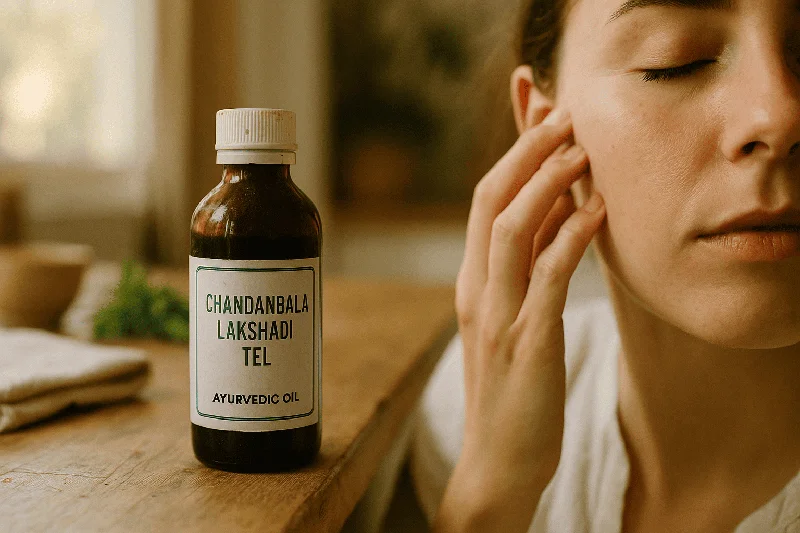
Chandanbala Lakshadi Tel is a classical Ayurvedic medicated oil primarily used for external massage to relieve chronic fever, burning sensations in the body, skin irritation, respiratory discomfort, and general weakness — especially in children suffering from rickets (Sukha Rog). Formulated with a base of sesame oil infused with Sandalwood (Chandan), Bala (Sida cordifolia), Laksha (Lac resin), and over a dozen supporting herbs, this oil delivers powerful cooling, anti-inflammatory, and rejuvenating effects through transdermal absorption. Referenced in the classical Ayurvedic compendium Ayurved Saar Sangrah, it remains one of the most trusted formulations for pediatric care and Pitta-related imbalances in traditional Indian medicine.
- If you've been searching for a natural, time-tested oil that soothes inflamed skin, calms the nervous system, and strengthens weak bones and muscles — this is the guide you need.
- Below, we cover everything: the complete ingredient breakdown, the science behind it, step-by-step application, dosage by age group, safety precautions, and how it compares to other popular Ayurvedic oils.
What Is Chandanbala Lakshadi Tel (Tailam)?
- Chandanbala Lakshadi Tel — also spelled Chandanbala Lakshadi Tailam or Chandan Bala Lakshadi Oil — is a polyherbal medicated oil (Siddha Taila) prepared by processing multiple therapeutic herbs in a sesame oil base.
- The name itself reveals the three anchor ingredients: Chandan (Sandalwood), Bala (Country Mallow), and Laksha (Lac / Shellac resin).
- In Ayurvedic pharmacology, medicated oils are prepared through a meticulous process called Taila Paka Vidhi, where raw herbs are decocted in water first, then this decoction (Kashaya) is slowly cooked with the base oil and herbal pastes (Kalka) until all the water evaporates and the oil absorbs the active phytochemicals.
- This isn't just mixing herbs into oil — it's a controlled extraction that can take several days.
Historical Roots & Classical Reference
The formulation is documented in Ayurved Saar Sangrah (also written as Ayurveda Sara Sangraha), a widely respected compendium of Ayurvedic formulations used by practitioners across India. Unlike many commercial "Ayurvedic" products created in modern labs, Chandanbala Lakshadi Tel has a traceable lineage going back centuries.
The classical Sanskrit shloka (verse) describing this formulation lists its ingredients and indications systematically. This verse has been preserved and transmitted through the Guru-Shishya (teacher-student) tradition and continues to guide manufacturing at reputable Ayurvedic pharmacies today.
How Does the Oil Work? The Science Behind Transdermal Absorption
- The mechanism is both elegant and practical. Sesame oil, the base, has an exceptionally small molecular structure that allows it to penetrate all seven layers of skin tissue (Sapta Dhatu) according to Ayurvedic theory.
- Modern dermatological research partially supports this — a 2008 study published in the Indian Journal of Experimental Biology confirmed that sesame oil possesses notable anti-inflammatory and antioxidant properties when applied topically.
When herb-infused sesame oil is massaged into the skin:
- The oil penetrates the dermal layers, carrying dissolved phytochemicals deep into underlying tissues
- Local blood circulation improves at the massage site, enhancing nutrient delivery and waste removal
- The cooling herbs (Sandalwood, Laksha, Manjishta) counteract excess Pitta dosha — reducing heat, redness, and inflammation
- Bala and Ashwagandha compounds provide nourishment to muscles, nerves, and bones through a strengthening (Balya) action
- The aromatic compounds — particularly from Sandalwood — activate the olfactory system, promoting parasympathetic nervous activity (relaxation response)
This dual action — topical anti-inflammatory plus systemic calming — makes the oil uniquely versatile.
Complete Ingredients of Chandanbala Lakshadi Tel & Their Roles
One of the biggest gaps we've noticed in available information is that nobody fully explains why each ingredient is in this formula.
Here's the complete breakdown:
| Ingredient | Latin / Source Name | Key Property | Specific Role in Formula |
|---|---|---|---|
| Chandan (Sandalwood) | Santalum album | Cooling, antiseptic | Primary coolant; reduces burning sensation & skin inflammation |
| Bala (Country Mallow) | Sida cordifolia | Balya (strengthening), Vata-pacifying | Nourishes muscles, nerves & bones; combats weakness |
| Laksha (Lac resin) | Laccifer lacca | Astringent, bone-healing | Promotes bone mineralization; key ingredient for rickets |
| Ashwagandha | Withania somnifera | Adaptogenic, Rasayana | Boosts overall vitality; reduces stress-related inflammation |
| Manjishta | Rubia cordifolia | Blood purifier, anti-inflammatory | Clears skin toxins; reduces redness and rashes |
| Kutki (Katuka) | Picrorhiza kurroa | Hepatoprotective, antipyretic | Addresses chronic fever; supports detoxification |
| Haridra (Turmeric) | Curcuma longa | Anti-inflammatory, antiseptic | Broad-spectrum skin healing; well-documented curcumin benefits |
| Devadaru (Himalayan Cedar) | Cedrus deodara | Anti-inflammatory, analgesic | Relieves pain in joints and muscles; anti-spasmodic |
| Nagkeshar | Mesua ferrea | Hemostatic, cooling | Supports skin integrity; mild astringent action |
| Dalchini (Cinnamon) | Cinnamomum zeylanicum | Warming circulatory stimulant | Improves local blood flow for better herb absorption |
| Padmaka (Wild Cherry) | Prunus cerasoides | Cooling, complexion-enhancing | Skin soothing; reduces hyperpigmentation |
| Mulethi (Licorice) | Glycyrrhiza glabra | Demulcent, anti-inflammatory | Soothes irritated skin; mild immunomodulatory action |
| Sesame Oil (Tila Taila) | Sesamum indicum | Ushna (warm), Vata-pacifying | Base oil; deep tissue penetration, antioxidant carrier |
Why Sesame Oil as the Base?
This is a question nobody seems to answer, but it's fundamental to understanding the formulation. In Ayurveda, sesame oil (Tila Taila) is considered the "king of oils" for several reasons:
- It is Ushna (warm in potency) — which may seem contradictory in a cooling formula, but this warmth is precisely what drives the oil deep into tissues. The cooling herbs then do their work once delivered.
- It pacifies Vata dosha — the primary dosha responsible for pain, dryness, and neurological symptoms.
- It has the unique property of Yogavahi — meaning it enhances and carries the properties of whatever herbs are processed with it, without losing its own beneficial qualities.
- Modern research confirms sesame oil contains sesamol and sesaminol, potent antioxidants that protect skin cells from oxidative damage (Hsu et al., 2012, BioMed Research International).
So the sesame base isn't just a carrier — it's therapeutically active and synergistic with the herbal ingredients.
What Is Chandanbala Lakshadi Tel Used For? Key Benefits
Chronic Fever and Burning Sensations
The primary classical indication is Jwara (fever) — particularly chronic, low-grade fevers that persist after the acute phase of an illness. The oil is massaged onto the chest, forehead, and soles of the feet to bring down the body's excess heat. The combination of Sandalwood, Kutki, and Manjishta creates a potent antipyretic effect when absorbed through the skin.
For patients experiencing Daha (burning sensations in the palms, soles, or eyes), this oil provides notable relief. This symptom pattern is strongly associated with Pitta aggravation and is common in conditions like chronic fatigue syndrome, post-viral fatigue, and menopausal hot flashes.
Rickets and Bone Weakness in Children (Sukha Rog)
This is perhaps the most important traditional application. Laksha (Lac resin) has been used in Ayurveda for centuries specifically for bone-related disorders. A 2015 pharmacological review in the Journal of Ayurveda and Integrative Medicine noted that Lac resin contains compounds that support calcium metabolism and bone tissue repair.
Combined with Bala (which strengthens Mamsa Dhatu — muscle tissue) and Ashwagandha (which promotes Asthi Dhatu — bone tissue), the oil creates a comprehensive bone-and-muscle nourishing therapy for children with:
- Delayed milestones
- Weak, thin limbs
- Poor weight gain
- Soft or deformed bones
Dosage Considerations for Infants and Toddlers
For babies (3-12 months): Use only 2-5 ml of oil, warmed slightly. Gentle massage with light pressure. Avoid the face and fontanelle area. Always patch test first on a small area of the inner forearm and wait 30 minutes.
For toddlers (1-5 years): 5-10 ml is generally sufficient for a full body massage. Focus on the limbs, chest, and back. Massage in gentle circular motions for 10-15 minutes.
Skin Soothing and Complexion Enhancement
The cooling and anti-inflammatory properties make this oil beneficial for various skin concerns:
- Mild eczema and dermatitis (as a supportive therapy, not a replacement for medical treatment)
- Heat rashes and prickly heat
- General skin dryness with irritation
- Post-inflammatory hyperpigmentation
Sandalwood oil alone has been studied extensively for skin benefits. A randomized controlled trial published in the Journal of Clinical and Aesthetic Dermatology (2017) found that topical sandalwood oil significantly reduced skin inflammation markers compared to placebo.
Respiratory Discomfort: Cough and Chest Congestion
When massaged onto the chest area, the aromatic and antispasmodic properties of Devadaru and Cinnamon help relax bronchial muscles.
This is particularly useful for:
- Persistent dry cough
- Mild chest congestion
- Breathing difficulty associated with cold weather
Can Chandanbala Lakshadi Tel Help With Joint Pain?
Yes, though it's not primarily a joint pain oil. The anti-inflammatory action of Turmeric, Devadaru, and the Vata-pacifying nature of the sesame base do provide some relief for mild joint stiffness and pain. However, for significant joint or nerve pain, dedicated formulations like Mahanarayan Tailam or Dhanvantaram Tailam are more appropriate. More on this comparison below.
Stress Relief and Sleep Improvement
Something most resources overlook is the neurological benefit. Sandalwood's aroma has been scientifically shown to reduce sympathetic nervous system activity. A 2006 study in Planta Medica found that sandalwood oil inhalation decreased systolic blood pressure and produced measurable relaxation responses in participants.
When used as a pre-bedtime massage — especially on the scalp and soles of the feet — Chandanbala Lakshadi Tel can meaningfully improve sleep quality and reduce anxiety. This makes it doubly useful for restless, irritable children who have trouble sleeping.
How to Apply Chandanbala Lakshadi Tel for Best Results
Step-by-Step Abhyanga (Self-Massage) Guide
Abhyanga is the Ayurvedic practice of oil massage, and it's the ideal method for applying this oil:
Step 1: Warm the Oil
- Pour 10-20 ml (for adults) into a small bowl. Place the bowl in a container of hot water for 2-3 minutes.
- The oil should be comfortably warm — not hot. Test on the inside of your wrist.
Step 2: Begin with the Head (Optional)
Apply a small amount to the crown of the head. Massage in slow circular motions. This is particularly helpful for headache and stress relief.
Step 3: Chest and Forehead Application
For fever, cough, or respiratory symptoms — apply oil to the chest in upward strokes, then gentle circles. For headache and burning forehead, apply to the temples and forehead with light pressure.
Step 4: Limbs — Use Long Strokes
On the arms and legs, use long strokes along the length of the bone. On the joints (elbows, knees, ankles), use circular motions. This is the direction of blood and lymph flow and enhances circulation.
Step 5: Soles of the Feet
Apply oil generously to the soles and massage each foot for 2-3 minutes. The soles contain nerve endings connected to virtually every organ system — this is why Ayurveda emphasizes foot massage.
> ⚠️ Safety note: After applying oil to the soles, wipe off excess oil before walking. Oil on feet makes floors extremely slippery. Also wipe up any spills immediately to prevent falls.
Step 6: Rest for 15-20 Minutes
Allow the oil to absorb. Ideally, rest in a warm room. You can cover yourself with an old cotton sheet.
Step 7: Bathe with Warm Water
After the rest period, take a warm (not hot) water bath. You may use a mild herbal soap or gram flour (Besan) to remove excess oil.
Timing: Before or After Steam Therapy?
This is an important nuance that most guides get wrong. If you're combining oil massage with steam therapy (Swedana), the oil should be applied BEFORE steam — not after. The heat from steam opens pores and drives the medicated oil deeper into the tissues. Applying oil after steam defeats this purpose.
Frequency and Duration of Use
- For acute conditions (fever, severe burning): Apply 2 times daily — morning and evening
- For general wellness and skin nourishment: Once daily is sufficient
- For pediatric use (rickets, weakness): Once daily, ideally in the morning before a warm bath
- Duration: Can be used continuously for 1-3 months for chronic conditions. For general wellness, regular use during Pitta-aggravating seasons is ideal.
Is Chandanbala Lakshadi Tel Suitable for All Skin Types?
Generally, yes. The formulation is designed to be gentle enough for infants and the elderly alike.
The cooling nature makes it especially suitable for:
- Pitta-dominant skin types (sensitive, redness-prone, easily irritated)
- Combination skin with occasional inflammation
- Normal skin seeking nourishment and a cooling effect
For extremely dry, Vata-dominant skin in cold weather, you might find this oil alone insufficient for moisturizing. In such cases, combining it with a richer oil like plain sesame or almond oil can work.
Patch Test Protocol
Even though no significant adverse reactions have been documented in classical texts, we always recommend a patch test — particularly for first-time users, babies, and people with known allergies:
- Apply a small amount to the inner forearm
- Wait 30 minutes
- Check for redness, itching, or swelling
- If no reaction occurs, proceed with broader application
स्वयं दवा न लें और प्रतीक्षा न करें। अभी डॉक्टर से चैट शुरू करें
Chandanbala Lakshadi Tel vs. Other Ayurvedic Massage Oils
No competitor has provided this comparison, and we think it's one of the most useful things you can know before choosing an oil:
| Feature | Chandanbala Lakshadi Tel | Bala Tailam | Dhanvantaram Tailam | Mahanarayan Tailam |
|---|---|---|---|---|
| Primary Action | Cooling, anti-inflammatory | Strengthening, Vata-pacifying | Vata-balancing, rejuvenating | Analgesic, anti-arthritic |
| Best For | Fever, burning, skin, pediatric care | Muscle weakness, neuralgia | Post-partum care, neuromuscular | Joint pain, arthritis, nerve pain |
| Dosha Focus | Pitta and Vata | Primarily Vata | Vata | Vata and Kapha |
| Suitable for Children | ✅ Excellent (primary use) | ✅ Yes | ✅ Yes | ⚠️ Limited pediatric data |
| Cooling Effect | ✅ Strong | ❌ Mild/Neutral | ❌ Neutral | ❌ Warming |
| Bone Strengthening | ✅ Yes (Laksha) | ⚠️ Mild | ✅ Yes | ⚠️ Indirect |
| Classical Reference | Ayurved Saar Sangrah | Ashtanga Hridaya | Ashtanga Hridaya | Bhaishajya Ratnavali |
Bottom line: If your primary concern is cooling, fever management, skin irritation, or pediatric bone weakness — Chandanbala Lakshadi Tel is your best choice. For severe joint pain or arthritis, Mahanarayan Tailam is more targeted. For post-partum recovery, Dhanvantaram Tailam is the gold standard.
Pregnancy, Lactation & Special Populations
Use During Pregnancy
If you were already using Chandanbala Lakshadi Tel before pregnancy and had no adverse reactions, most Ayurvedic practitioners consider it safe to continue. However, if you are considering using it for the first time during pregnancy, consult your Ayurvedic physician or obstetrician first.
The oil is for external use only, which significantly reduces systemic absorption concerns. But pregnancy alters skin sensitivity, so a fresh patch test is always wise.
Use During Lactation
Generally considered safe during breastfeeding. Avoid applying the oil directly on the breast area immediately before nursing, as the baby may ingest residual oil.
For Elderly Patients
Excellent for elderly individuals experiencing burning sensations, thin skin, or general weakness. Use slightly warmed oil and very gentle massage pressure. Avoid massage over varicose veins, skin ulcers, or areas with compromised skin integrity.
Side Effects, Precautions & Contraindications
Known Side Effects
Classical Ayurvedic texts report no significant side effects for this formulation when used as directed. In modern clinical practice, adverse reactions are extremely rare.
That said, potential issues include:
- Allergic contact dermatitis — rare, but possible if you're sensitive to any ingredient. The patch test protocol above addresses this.
- Staining of clothes — the oil contains Turmeric and Manjishta, both of which can leave yellow-red stains. Use old clothing during application.
Important Precautions
- External use only. Never ingest this oil.
- Avoid application on open wounds, burns, or active fungal infections
- Diabetic patients should exercise caution as reduced skin sensation may mask allergic reactions. Always monitor the application site.
- Do not heat the oil directly on a flame — always use a double-boiler method (bowl in hot water) to prevent degradation of active compounds.
Drug Interactions
While no formal drug interaction studies exist for this specific formulation, the external route of application makes significant systemic interactions unlikely. However, if you're using topical prescription medications (corticosteroid creams, antifungal agents, etc.), apply them at different times — ideally with a 2-hour gap — to avoid interference with absorption.
Seasonality: When Is the Best Time to Use This Oil?
According to Ayurvedic Ritucharya (seasonal regimen):
- Summer (Grishma Ritu) — Ideal. Pitta dosha naturally aggravates in summer. The cooling properties of Chandanbala Lakshadi Tel directly counteract summer heat-related issues like burning skin, heat rashes, irritability, and disturbed sleep.
- Monsoon (Varsha Ritu) — Good. Vata tends to aggravate during monsoon while residual Pitta from summer remains. The oil addresses both.
- Autumn (Sharad Ritu) — Excellent. Ayurveda considers Sharad the season of peak Pitta aggravation (accumulated summer heat released). This is actually the most classically recommended season.
- Winter (Hemanta/Shishira Ritu) — Conditional. If you still have burning sensations or Pitta symptoms, continue use. But for general wellness massage in deep winter, warmer oils (like Mahanarayan or plain sesame) may be more comfortable.
How to Identify Quality Chandanbala Lakshadi Tel & Proper Storage
Quality Indicators
Since no competitor covers this, here are practical tips to ensure you're getting a genuine product:
| Quality Marker | Good Sign | Red Flag |
|---|---|---|
| Color | Golden-green to amber-brown | Very pale (diluted) or very dark (overcooked) |
| Smell | Noticeable sandalwood aroma with herbal undertones | No smell, or rancid/sour odor |
| Consistency | Smooth, flows easily, slightly thicker than plain sesame oil | Watery or excessively thick/gummy |
| Label | Lists all ingredients, batch number, mfg/exp dates, license number | Missing GMP certification, no batch number |
| Sediment | Very minimal or none | Heavy sediment or floating particles |
Storage & Shelf Life
- Store in a cool, dry place away from direct sunlight
- Keep the bottle tightly sealed after each use
- Typical shelf life: 3 years from manufacturing date (check label)
- Signs of spoilage: Rancid smell (like old cooking oil), change in color to significantly darker shade, unusual viscosity, mold growth around the cap
Interestingly, properly prepared Ayurvedic oils can sometimes improve with age, as the base oil matures — but this applies mainly to oils stored in traditional earthen or glass containers, not plastic bottles.
Chandanbala Lakshadi Oil for Hair Growth: Does It Work?
This is a popular search query, so let's address it honestly. Chandanbala Lakshadi Tel is not traditionally indicated for hair growth. Its classical uses center on skin, fever, bones, and respiratory conditions.
However, there's an indirect connection. The oil does nourish the scalp, improve local blood circulation, and provide cooling relief from a hot, irritated scalp — all of which create better conditions for hair health. If your hair fall is linked to Pitta aggravation (premature greying, receding hairline with scalp inflammation), using this oil as an occasional scalp massage may provide some benefit.
For dedicated hair growth, Ayurvedic oils like Bhringraj Tailam, Neelibhringadi Tailam, or Mahabhringraj Tailam are more specifically formulated and clinically relevant.
Frequently Asked Questions (FAQ)
What is Lakshadi oil used for?
Lakshadi oil (and formulations containing Laksha/Lac resin) are primarily used for strengthening bones, managing chronic fever, soothing burning sensations, and treating rickets in children. The Laksha component specifically supports bone tissue repair and calcium metabolism, making it a key ingredient in pediatric Ayurvedic care.
Can I use Chandanbala Lakshadi Tel for baby massage?
Yes, this is one of its most traditional and well-documented uses. It is particularly recommended for babies and young children with weak bones, delayed milestones, or signs of malnutrition. Use only 2-5 ml for infants, always do a patch test first, and use gentle pressure. Consult a pediatrician or Ayurvedic doctor before starting regular use on babies under 3 months.
How long does it take to see results?
For acute conditions like fever or burning sensations, relief can be noticed within 1-3 applications. For chronic conditions like rickets or general weakness, consistent daily use for 4-8 weeks is typically needed before significant improvement is observed.
Which Thailam is best for nerve pain?
Chandanbala Lakshadi Tel provides mild nerve-calming benefits, but it's not the best choice for nerve pain specifically. For nerve pain (neuralgia, sciatica, neuropathy), Dhanvantaram Tailam, Ksheerabala Tailam, or Mahanarayan Tailam are more effective and traditionally indicated.
Can I use this oil on my face?
While there's no strict prohibition, the oil is formulated for body massage. The forehead and temples are fine (and classically indicated for headaches). For full facial application, patch test on a small area first, as facial skin is more sensitive. Avoid getting oil in the eyes.
What is the price range for Chandanbala Lakshadi Tel?
- Prices vary by manufacturer and quantity.
- Rough ranges in India (as of 2024-2025): 50 ml bottles typically cost ₹80-150, 100 ml bottles run ₹140-250, and 200 ml bottles range from ₹250-450. Larger sizes (500 ml, 1000 ml) offer better value per ml and are available from brands like Baidyanath, Kottakkal Arya Vaidya Sala, Nagarjuna, and Sitaram Ayurveda.
Can this oil be used alongside allopathic medicines?
Since it is applied externally, there are no documented interactions with oral allopathic medicines. However, avoid applying it at the same time as prescription topical medications. Maintain a 2-hour gap between applications, and always inform your doctor about all products you're using.
Does this oil stain clothes?
Yes, it can. Turmeric and Manjishta in the formulation may leave yellowish-red stains on fabrics. Wear old or dark-colored clothing during application and wash stained items promptly with soap and warm water.
Final Thoughts: Is Chandanbala Lakshadi Tel Worth Trying?
Chandanbala Lakshadi Tel is one of those Ayurvedic formulations that has earned its reputation over centuries — not through marketing, but through consistent clinical results observed by generations of practitioners. Its unique combination of cooling, anti-inflammatory, bone-strengthening, and nerve-calming properties makes it remarkably versatile.
For parents looking for a safe, natural massage oil for their children's bone and muscle development — this is a gold-standard choice. For adults dealing with Pitta-related skin issues, chronic low-grade fevers, or simply the physical and mental toll of excess body heat — it offers genuine relief that's hard to replicate with single-ingredient products.
Start with a patch test. Use it consistently for at least 4-6 weeks. And if you have a specific health condition, always work with a qualified Ayurvedic practitioner who can tailor the application method, frequency, and complementary therapies to your individual constitution.
The information in this article is for educational purposes and should not replace professional medical advice. Always consult a qualified healthcare provider before beginning any new therapeutic regimen.
Scientific Sources
- Properties of macerated herbal oil — Kantawong F et al., 2017, BioImpacts : BI
- Kampo herbal ointments for skin wound healing — Paul-Traversaz M et al., 2023, Frontiers in pharmacology
- Daily intranasal sesame oil instillation to improve nasal barrier function and mucosal immunity for respiratory health: A pilot randomized trial in healthy adults — Chaturvedi S et al., 2025, Complementary therapies in medicine
- Role of natural products in alleviation of rheumatoid arthritis-A review — Sharma D et al., 2021, Journal of food biochemistry
- Oil pulling for maintaining oral hygiene - A review — Shanbhag VK, 2017, Journal of traditional and complementary medicine
- Natural Oils for Skin-Barrier Repair: Ancient Compounds Now Backed by Modern Science — Vaughn AR et al., 2018, American journal of clinical dermatology
- Herbal Remedies for Hair Loss: A Review of Efficacy and Safety — Ahmed A et al., 2025, Skin appendage disorders
- The effect of oil pulling with coconut oil to improve dental hygiene and oral health: A systematic review — Woolley J et al., 2020, Heliyon
- African oils in dermatology — Ayanlowo O et al., 2022, Dermatologic therapy
- Coconut Oil and Immunity: What do we really know about it so far? — Joshi S et al., 2020, The Journal of the Association of Physicians of India
उपयोगकर्ताओं के प्रश्न
Is it okay to use Chandanbala Lakshadi Tel for children's skin?
Addison
9 दिनों पहले
Yes, Chandanbala Lakshadi Tel can typically be used for children's skin because it's soothing and cooling — great for Pitta imbalances like rashes or dryness. But just keep an eye on it; if you notice any irritation or reaction, stop using it. Maybe try a small patch test first, just to be safe! 😊
Can Chandanbala Lakshadi Tel improve joint mobility for arthritis sufferers?
Elizabeth
22 दिनों पहले
Yes, Chandanbala Lakshadi Tel can help with joint mobility for arthritis sufferers. Massage it onto the aching joints, spending about 15-20 minutes to really let it soak in deeply and work its magic. Keep in mind, it's like helping the body's natural healing ability by soothing and nourishing the tissues. Still, chat with your Ayurvedic practitioner to make sure it's all good with any other treatments you're doing.
Can Chandanbala Lakshadi Tel be used during pregnancy for skin care?
Julian
32 दिनों पहले
Yes, Chandanbala Lakshadi Tel can often be used during pregnancy for skin care, as it's generally gentle and calming. However, always consult your Ayurvedic practitioner or healthcare provider before trying new products during pregnancy to ensure they're suitable for your unique constitution and current needs. Just to be safe, you know?
Can Chandanbala Lakshadi Tel help with reducing inflammation in the body?
Mason
42 दिनों पहले
Yes, Chandanbala Lakshadi Tel can help with inflammation! Sandalwood in it is well-known for its cool and soothing anti-inflammatory qualities. By applying the oil, you might find relief from inflammation and discomfort. Everyone's different tho, so observe how your body reacts or try consulting an Ayurvedic practitioner.
What is the role of sandalwood in promoting skin health in Ayurvedic practices?
Serenity
51 दिनों पहले
Sandalwood, or Chandana, is awesome for skin care in Ayurveda. It's got these cooling and moisturizing properties that help soothe irritated skin, reduce redness, and keep it looking radiant and healthy. Plus, it's great for calming Vata and Pitta imbalances that can lead to skin issues. If you're dealing with angry, red, or dry skin, sandalwood might be your go-to!
Can I use Chandanbala Lakshadi Tel for aromatherapy or relaxation purposes?
Landon
61 दिनों पहले
You totally can! Chandanbala Lakshadi Tel is great for relaxation and can calm the mind. Just apply it to areas like the temples or neck and enjoy its calming aroma. While it's designed more for topical use, people often find its scent soothing too. Make sure it sits well with your skin tho! 😊
Is it safe to use Chandanbala Lakshadi Tel on sensitive skin?
Isaac
70 दिनों पहले
It's generally considered safe, but since you've got sensitive skin, it's a good idea to do a patch test first. Just apply a little on a small area and see if any irritation happens. If it does, better not to use it on your skin. The sandalwood and other herbs are calming, but everyone's skin can react differently!
Can I use Chandanbala Lakshadi Tel for hair care as well?
Tanner
80 दिनों पहले
Yes! You can use Chandanbala Lakshadi Tel for hair care too. Its cooling and nourishing properties might help soothe scalp irritation and promote hair strength. But if you notice any irritation, stop using it. Maybe try a small patch test first to ensure it suits your scalp. It's always best to listen to your body, you know?
What cultural practices or rituals are associated with using Chandanbala Lakshadi Tel in Ayurveda?
Quinn
156 दिनों पहले
Chandanbala Lakshadi Tel is often used in traditional Ayurvedic rituals like Abhyanga, a self-massage practice. It's sometimes part of pre-wedding ceremonies or in daily routines in certain Indian cultures for its calming and balancing effects. Using it during these practices helps balance doshas and soothe the mind.
What are some traditional methods for preparing Chandanbala Lakshadi Tel at home?
William
162 दिनों पहले
Making Chandanbala Lakshadi Tel at home can be a bit involved, but I can give ya a basic idea! Start with a base oil like coconut or sesame. Then blend sandalwood and sida cordifolia with other herbs like laksha. Slowly heat them together, but don’t boil it. Strain and store in a cool, dry place. Consistency and exact propsitions can vary, and sometimes it's best to follow a detailed recipe or consult an Ayurvedic practitioner.
संबंधित आलेख

Orthopedic Disorders
Maharasnadi Kashayam Side Effects – Awareness and Precautions in Ayurveda
Learn about the potential side effects of Maharasnadi Kashayam, an Ayurvedic formulation used for musculoskeletal disorders. Understand its benefits, precautions, and guidelines for safe use.
3,984

Orthopedic Disorders
धुर्धुरापत्रादि तेल के फायदे, उपयोग कैसे करें, सामग्री, संदर्भ
धुर्धुरापत्रादि थैलम के फायदे, उपयोग कैसे करें, सामग्री, संदर्भ की खोज
1,479

Orthopedic Disorders
Amavatari Ras Benefits, Dosage, Ingredients, Side Effects
Exploration of Amavatari Ras Benefits, Dosage, Ingredients, Side Effects
1,885

Orthopedic Disorders
Mahanarayan Oil
Exploration of Mahanarayan Oil
4,079

Orthopedic Disorders
Mahavat Vidhwansan Ras – Benefits, Dosage, Ingredients, Side Effects
Exploration of Mahavat Vidhwansan Ras – Benefits, Dosage, Ingredients, Side Effects
2,637
Orthopedic Disorders
Laghu Panchamoola: Ayurvedic Roots for Holistic Wellness
Discover how laghu panchamoola, a key Ayurvedic remedy, supports holistic health with scientific insights, clinical studies, and practical usage tips.
4,052
Orthopedic Disorders
Pravala Panchamrita Rasa – Ayurvedic Formulation for Rejuvenation and Balance
Discover Pravala Panchamrita Rasa, a traditional Ayurvedic medicine combining calcined coral and a blend of five potent ingredients for detoxification, rejuvenation, and overall wellness. Learn about its benefits, usage guidelines, and precautions.
2,422

Orthopedic Disorders
Mahamasha Thailam Benefits How To Use Side Effects Ingredients Reference
Exploration of Mahamasha Thailam Benefits How To Use Side Effects Ingredients Reference
2,259

Orthopedic Disorders
धुर्धुरापत्रादि तेल के फायदे, उपयोग कैसे करें, सामग्री, संदर्भ
धुर्धुरापत्रादि थैलम के फायदे, उपयोग कैसे करें, सामग्री, संदर्भ की खोज
2,238

Orthopedic Disorders
आयुर्वेद में रीढ़ की हड्डी की चोट का इलाज: प्राकृतिक उपचार और रिकवरी
आयुर्वेदिक तरीकों से रीढ़ की हड्डी की चोट के इलाज का पता लगाएं, जिसमें समग्र उपचार, हर्बल सपोर्ट, पुनर्वास के तरीके और बेहतर रिकवरी के लिए सुरक्षा संबंधी विचार शामिल हैं।
3,043
विषय पर संबंधित प्रश्न
अतिरिक्त दस्तावेज़
© 2024 Ask Ayurveda. सर्वाधिकार सुरक्षित।