आयुर्वेदिक डॉक्टर से प्रश्न पूछें और निःशुल्क या भुगतान मोड में अपनी चिंता की समस्या पर ऑनलाइन परामर्श प्राप्त करें। 2,000 से अधिक अनुभवी डॉक्टर हमारी साइट पर काम करते हैं और आपके प्रश्नों का इंतजार करते हैं और उपयोगकर्ताओं को उनकी स्वास्थ्य समस्याओं को हल करने में प्रतिदिन मदद करते हैं।
मुफ्त! आयुर्वेदिक डॉक्टरों से पूछें 24/7

 तेज़ प्रतिक्रियाएँ
 1000+ सत्यापित डॉक्टर
Body DetoxEar, Nose, and Throat DisordersGeriatrics & RejuvenationImmunodeficiencyInfertility TreatmentNutritionOrthopedic DisordersPediatricsRespiratory DisordersSexually Transmitted Diseases (STDs)Surgery RecoveryUrological DisordersVascular DisordersDental DisordersEndocrinological DisordersGastrointestinal DisordersYoga TherapyGeneral MedicineAllergic DisordersCardio DisordersGynecology and ObstetricsCosmetologySkin and Hair DisordersEye DisordersInfectious DiseasesMental DisordersNeurological DisordersOncologyPanchakarmaSexual Health & DisordersSports Medicine
पर प्रकाशित 04/14/25
(को अपडेट 06/28/26)
2,948
Sudha Varga in Ayurveda – Health Benefits and Scientific Insight
Introduction
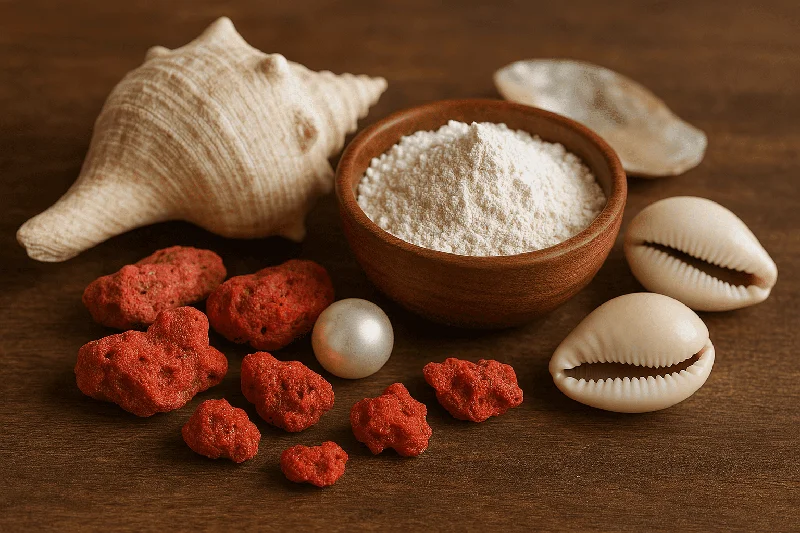
What if natural minerals held the key to rejuvenation, longevity, and disease prevention? In Ayurveda, a special group of substances known as Sudha Varga is believed to possess such powerful health-promoting properties. Rooted in the ancient Rasa Shastra tradition of Ayurvedic alchemy, Sudha Varga includes calcareous materials such as conch shells, pearls, corals, and other mineral-rich substances that undergo specialized purification and incineration processes before being used medicinally.
While modern pharmacology often focuses on organic compounds, Ayurvedic medicine incorporates both organic and inorganic substances. Recent scientific investigations into minerals used in Sudha Varga have shed light on their pharmacokinetic behavior, therapeutic effects, and potential risks. This article bridges the gap between classical Ayurvedic wisdom and modern scientific evaluation of Sudha Varga.
What is Sudha Varga?
Sudha Varga is one of the seven Varga classifications in Rasa Shastra, which categorizes substances used in mineral-based Ayurvedic medicine. “Sudha” literally means “lime” or “alkaline,” indicating the calcareous nature of these substances. They are primarily composed of calcium compounds and are believed to strengthen bones, soothe Pitta disorders, and support reproductive and nervous systems.
Key Substances in Sudha Varga
-
Shankha (Conch Shell)
Rich in calcium carbonate; used after purification and calcination (Shodhana and Marana) -
Muktā (Pearl)
Promotes mental calmness and is considered a Medhya Rasayana (nervine tonic) -
Pravāla (Coral)
Used in formulations for acid reflux, bone health, and fever -
Shukti (Mother of Pearl)
Known for its cooling effects and calcium-rich content -
Kapardika (Cowry Shell)
Traditionally used in gastrointestinal disorders
These materials are not used in their raw form. Ayurvedic processing ensures safety, bioavailability, and therapeutic efficacy.
Traditional Uses of Sudha Varga in Ayurvedic Practice
Ayurvedic texts such as Rasa Ratna Samuccaya and Bhaishajya Ratnavali describe the uses of Sudha Varga in detail.
1. Bone and Joint Disorders
Because of their high calcium content, Sudha Varga substances are traditionally used to strengthen bones, treat fractures, and manage conditions like osteoporosis and osteoarthritis.
2. Pitta-Related Disorders
Sudha Varga is known for its cooling and alkaline nature, making it effective in conditions such as hyperacidity, gastritis, ulcers, and inflammatory skin diseases.
3. Nervous System Support
Pearl and other components are included in formulations to improve memory, reduce anxiety, and support mental clarity. These are categorized under Medhya Rasayanas.
4. Reproductive Health
Certain Sudha Varga preparations are used to enhance fertility, regulate menstrual cycles, and promote hormonal balance in both men and women.
5. Immune and Metabolic Regulation
Coral and pearl are often used in pediatric tonics to improve immunity and nutrient absorption, especially in malnourished children.
Scientific Evaluation of Sudha Varga
Modern science is slowly beginning to evaluate the safety and benefits of calcareous Ayurvedic preparations.
Calcium Bioavailability
A study published in the Indian Journal of Traditional Knowledge compared the calcium content of Shankha Bhasma to conventional calcium supplements. It found that the bioavailability of calcium from Shankha was comparable and had a slower release profile, minimizing gastrointestinal side effects.
Neuroprotective Properties of Pearl (Mukta Bhasma)
Preclinical studies suggest that processed pearl may exert anxiolytic and neuroprotective effects due to its mineral composition, potentially aiding in neurodegenerative disorders.
Antiulcer Activity
Pravala Pishti has been evaluated for its antacid and mucosal protective actions. A 2017 experimental study noted that coral formulations reduced gastric acid secretion and supported mucosal repair.
Concerns and Regulatory Views
While the efficacy is promising, there are safety concerns around improper processing. The World Health Organization and AYUSH guidelines emphasize the importance of standardization, correct incineration, and testing for heavy metals and impurities before clinical use.
How Sudha Varga is Processed in Ayurveda
To make these mineral substances safe and effective, they undergo:
-
Shodhana (Purification) using cow’s milk, lemon juice, or herbal decoctions
-
Marana (Incineration) into fine ash or Bhasma
-
Amritikarana (Detoxification) to neutralize toxicity
-
Pishti Preparation for making cooling, palatable powders
Only properly prepared Bhasmas and Pishti forms are suitable for internal administration.
स्वयं दवा न लें और प्रतीक्षा न करें। अभी डॉक्टर से चैट शुरू करें
Common Formulations Containing Sudha Varga
-
Mukta Pishti – Used for hypertension, anxiety, and heartburn
-
Shankha Bhasma – Beneficial for indigestion and gastric ulcers
-
Pravala Panchamrit – Strengthens bones and improves immunity
-
Kukkutanda Tvak Bhasma – Derived from eggshell, used for calcium supplementation
These formulations are widely used in integrative Ayurvedic protocols and are often prescribed alongside herbal medicines.
Precautions and Considerations
Despite their long-standing use, Sudha Varga substances should only be taken under qualified supervision.
-
Not suitable during pregnancy unless advised by a practitioner
-
Patients with kidney stones or hypercalcemia should exercise caution
-
Always confirm the source and quality of the product
-
Avoid self-medication due to the risk of improper formulation
Benefits of Sudha Varga at a Glance
-
Enhances bone density and joint health
-
Alkalizes excess Pitta and soothes digestive fire
-
Calms the nervous system and reduces stress
-
Aids fertility and hormonal balance
-
Supports immunity in growing children and elderly individuals
Conclusion
Sudha Varga represents an extraordinary class of Ayurvedic substances that combine ancient wisdom with emerging scientific interest. With proper processing, these calcareous materials can offer significant benefits in managing chronic conditions like bone degeneration, anxiety, gastric disorders, and nutrient deficiencies. However, their use requires expertise, safety compliance, and careful integration with other therapies.
As research progresses, Sudha Varga may become more widely accepted in global integrative healthcare — provided the focus remains on quality assurance, clinical validation, and patient-specific use.
Always consult a licensed Ayurvedic practitioner or healthcare provider before beginning any mineral-based Ayurvedic therapy.
Share this article with friends, family, and colleagues who are interested in complementary and alternative medicine. For personalized advice or to learn more about Ayurvedic treatments, visit Ask-Ayurveda.com and ask a free question to our team of expert doctors. Empower your health journey by integrating traditional wisdom, modern research, and professional medical guidance for the best possible outcomes.
Frequently Asked Questions (FAQs)
What is Sudha Varga in Ayurveda?
Sudha Varga is a group of calcium-rich minerals like conch, pearl, and coral used in Ayurvedic medicine to support bone, digestive, and nervous system health.
Is Sudha Varga safe to consume?
Yes, but only when purified and processed correctly. Improper formulations can be harmful. Always consult an Ayurvedic expert.
Can Sudha Varga help with bone weakness or fractures?
Yes, substances like Shankha Bhasma and Pravala Pishti are used traditionally to support bone healing and density.
Does pearl (Mukta) have calming properties?
According to Ayurveda and some preclinical studies, Mukta Bhasma may support mental clarity and reduce anxiety.
Are there side effects of Sudha Varga substances?
Possible if taken in raw or improperly processed form. Properly made Bhasma or Pishti is generally safe under supervision.
Is there scientific backing for Sudha Varga?
Yes, several studies have explored its bioavailability, anti-ulcer effects, and neuroprotective properties, although more clinical trials are needed.
Can Sudha Varga be taken along with modern medicines?
In many cases, yes, but only after consulting your healthcare provider to avoid interactions.
उपयोगकर्ताओं के प्रश्न
What is the impact of pearl and coral formulations on mental clarity and anxiety relief?
Liam
6 दिनों पहले
Pearl and coral formulations can help with mental clarity and anxiety relief by calming the mind and improving focus. However, it's crucial that these formulations are processed correctly to avoid harm. They can also aid in supporting digestion and healing the gastric mucosa, which indirectly can influence mental well-being.
Can I use Pravala Pishti for digestive issues and how effective is it?
Sebastian
15 दिनों पहले
Yes, you can use Pravala Pishti for digestive issues like acid reflux or ulcers. It's known for its antacid and mucosal protective actions, which might help neutralize excess acidity. But effectiveness can vary based on individual constitutions (prakriti) and dosha imbalances. Its best to consult an Ayurvedic practitioner to ensure it's the right fit for your needs.
What precautions should I take when using calcareous materials from Sudha Varga for anxiety?
Vance
24 दिनों पहले
When using calcareous materials from Sudha Varga for anxiety, make sure they are properly processed. Improper prep can be harmful. Always consult with a qualified Ayurvedic practitioner for dosage, timing, and to ensure you're balancing your specific dosha. Pay attentiom to how your body reacts and address any digestion issues, as agni (digestive fire) plays a crucial role.
What are the potential benefits of using minerals in Sudha Varga for mental clarity?
Kiley
33 दिनों पहले
Using minerals from Sudha Varga, like pearl, can help improve memory, lower anxiety and enhance mental clarity. Properly processed, these minerals can support the nervous system and, in turn, mental well-being. But, it's vital to ensure they're prepared correctly since improper formulations can be harmful. Always consult an Ayurvedic expert when considering these remedies.
Is it safe to use Sudha Varga products while undergoing Ayurvedic treatments?
Wesley
43 दिनों पहले
You can safely use Sudha Varga products during Ayurvedic treatments, but it's super important to do so under the guidance of a qualified Ayurvedic practitioner. They know about your unique dosha and can monitor any interactions or imbalances. Always best to have your healthcare professional in the loop too.👍
What is the process of purifying Sudha Varga substances before their medicinal use?
Yvonne
53 दिनों पहले
Purifying Sudha Varga involves special processes like grinding, boiling or soaking in herbal decoctions to remove impurities and enhance their therapeutic properties. It's followed by incineration (bhasma) so these minerals can be safely consumed. If you're curious about specific methods, consulting with an Ayurvedic practitioner would be wise!
Is it safe to combine Bhasma or Pishti with other herbal supplements?
Lila
62 दिनों पहले
Typically, it's safe to combine Bhasma or Pishti with other herbal supplements, but it's best to do this under the supervision of a qualified Ayurvedic practitioner. They can help you avoid any potential interactions and ensure balance with your doshas and overall constitution. Better safe than sorry, right? 😉
Can I use pearl powder as a daily supplement for anxiety and memory enhancement?
Luke
72 दिनों पहले
Yes, you can use pearl powder for anxiety and memory, as it's part of Medhya Rasayanas, which supports a calm mind and mental clarity. But make sure it's properly processed, as the wrong formulation could be harmful. Just treat it like with respect and maybe check with a doc for the right dose! 😊
What is the historical significance of Sudha Varga in traditional Ayurvedic medicine?
Wallace
81 दिनों पहले
Sudha Varga's historical significance in Ayurveda lies in its inclusion in Rasa Shastra, the branch focusing on mineral-based medicine. These substances, like pearl, are used for mental health benefits, such as anxiety reduction and memory enhancement. They've been valued for their unique alkaline properties, helping balance doshas and elevate dhatus.
Can I use Sudha Varga alongside conventional medications without issues?
Paige
91 दिनों पहले
You should definitely talk to a licensed Ayurvedic practitioner or your healthcare provider first. Sudha Varga can interact with conventional meds and could cause unexpected effects. Every person's constitution (prakriti) and health situation is different, so it's important to get advice tailored to your specific needs.
संबंधित आलेख

Gastrointestinal Disorders
पुनर्नवारिष्ट
पुनर्नवारिष्ट की खोज
10,251

Gastrointestinal Disorders
Brihatyadi Kashayam Benefits, Dosage, Side Effects, Ingredients, Reference
Exploration of Brihatyadi Kashayam Benefits, Dosage, Side Effects, Ingredients, Reference
2,713
Gastrointestinal Disorders
Ritu Haritaki – Ayurvedic Remedy for Digestive Health and Detoxification
Explore the benefits and uses of Ritu Haritaki, a seasonal Ayurvedic herb known for promoting digestive health, detoxification, and overall wellness.
3,393

Gastrointestinal Disorders
त्रिवृत लेह्यम: फायदे, खुराक, साइड इफेक्ट्स, उपयोग कैसे करें, सामग्री
त्रिवृत लेह्यम की खोज: फायदे, खुराक, साइड इफेक्ट्स, उपयोग कैसे करें, सामग्री
3,031

Gastrointestinal Disorders
एच पाइलोरी और आयुर्वेद – प्राकृतिक आंत स्वास्थ्य समाधान
आयुर्वेद कैसे H. pylori संक्रमण को प्राकृतिक तरीके से ठीक करता है, इसके बारे में जानें। समग्र उपचार, हर्बल उपाय, खुराक, सावधानियाँ और वैज्ञानिक दृष्टिकोण के बारे में जानकारी प्राप्त करें।
7,085

Gastrointestinal Disorders
तककरिश्ता
तकरारिष्ट की खोज
2,117

Gastrointestinal Disorders
पोन्नावाराई चूर्णम
पोन्नावाराई चूर्णम की खोज
1,585

Gastrointestinal Disorders
वजन घटाने के लिए सौंफ का पानी कैसे पिएं: आयुर्वेदिक गाइड
सौंफ का पानी वजन घटाने के लिए कैसे पिएं? जानें कब पिएं सौंफ का पानी, सौंफ पानी के फायदे, और घर पर सौंफ के बीज से वजन घटाने वाला ड्रिंक कैसे तैयार करें।
13,045
Gastrointestinal Disorders
Dhanwantara Vati: Ayurvedic Remedy for Holistic Healt
In Ayurveda, the ancient science of natural healing, Dhanwantara Vati holds a significant place for its wide-ranging therapeutic properties.
3,305

Gastrointestinal Disorders
कुश्मांड पाक का जादू खोजें: आयुर्वेदिक उपचार और इम्युनिटी बूस्ट का आपका रास्ता!
कुशमांड पाक के स्वास्थ्य लाभ, सही खुराक, और आयुर्वेदिक जानकारी के बारे में जानें। यह एक शक्तिशाली उपाय है जो जीवनशक्ति, पाचन और समग्र स्वास्थ्य के लिए फायदेमंद है।
2,840
विषय पर संबंधित प्रश्न
क्या मैं वजन बढ़ाने की कोशिश करते समय एसिड रिफ्लक्स के लिए फुल फैट दूध का इस्तेमाल कर सकता हूँ?
18 दिनों पहले
एक बुजुर्ग मरीज में, जिसे डुओडेनल अल्सर का इतिहास है, पुरानी एसिडिटी और कमजोरी का इलाज कैसे करें?
18 दिनों पहले
किण्वन कोलाइटिस और शुरुआती विटिलिगो का इलाज आयुर्वेदिक उपायों से कैसे करें?
18 दिनों पहले
अतिरिक्त दस्तावेज़
© 2024 Ask Ayurveda. सर्वाधिकार सुरक्षित।