Ask Ayurvedic doctor a question and get a consultation online on the problem of your concern in a free or paid mode. More than 2,000 experienced doctors work and wait for your questions on our site and help users to solve their health problems every day.


Body DetoxEar, Nose, and Throat DisordersGeriatrics & RejuvenationImmunodeficiencyInfertility TreatmentNutritionOrthopedic DisordersPediatricsRespiratory DisordersSexually Transmitted Diseases (STDs)Surgery RecoveryUrological DisordersVascular DisordersDental DisordersEndocrinological DisordersGastrointestinal DisordersYoga TherapyGeneral MedicineAllergic DisordersCardio DisordersGynecology and ObstetricsCosmetologySkin and Hair DisordersEye DisordersInfectious DiseasesMental DisordersNeurological DisordersOncologyPanchakarmaSexual Health & DisordersSports Medicine
Published on 12/19/24
(Updated on 08/09/26)
star_border 4.5
4,482
Brahmi Lehyam: Benefits, Dosage & Ayurvedic Insights
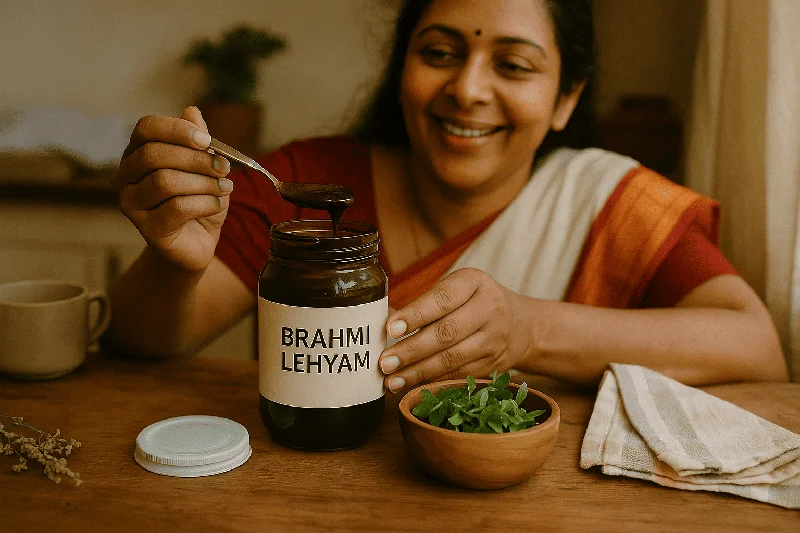
Brahmi Lehyam is a traditional Ayurvedic herbal jam (lehyam or rasayana) made primarily from Brahmi (Bacopa monnieri), combined with ghee, honey or jaggery, and a synergistic blend of medicinal herbs. It is specifically formulated to enhance memory, sharpen concentration, reduce stress, and support overall brain health. Used for centuries in classical Ayurvedic medicine, Brahmi Lehyam remains one of the most trusted cognitive tonics for children, students, working professionals, and elderly adults alike.
But what exactly makes this lehyam different from Brahmi capsules or powder? Why does its specific formulation matter? And what does modern research actually say about its key ingredient?
This guide covers everything — from ingredient breakdown and manufacturing process to scientific evidence, dosage recommendations, and how to choose a quality product. Let's dive in.
What Is Brahmi Lehyam and Why Is It Special?
Brahmi Lehyam belongs to the category of lehyams (also called avaleha or prash) — semi-solid herbal preparations that combine medicinal herbs with jaggery, honey, or sugar as a base, and ghee or oil as a lipid medium. This format is not arbitrary. In Ayurveda, ghee acts as a yogavahi (catalytic agent) that carries the active compounds of herbs across the blood-brain barrier more efficiently than water-based extractions alone.
The primary herb, Brahmi (Bacopa monnieri), has been classified by Acharya Charaka under three critical categories: Medhya Rasayana (intellect-promoting rejuvenator), Prajasthapana (promoting fertility and fetal health), and Balya (strength-promoting). The herb's name itself derives from Lord Brahma, the Hindu deity of creation and knowledge — reflecting how ancient scholars viewed its potential to expand consciousness and support deep meditation.
How Brahmi Lehyam Differs from Other Brahmi Forms
Many people wonder whether they should take Brahmi as a powder, capsule, ghritam, or lehyam. Each form has its place, but the lehyam format offers distinct advantages:
| Form | Bioavailability | Ease of Use | Shelf Life | Best For |
|---|---|---|---|---|
| Brahmi Lehyam | High (ghee + honey enhance absorption) | Pleasant taste, easy to swallow | 12–24 months | Daily cognitive support, children, elderly |
| Brahmi Powder (Churna) | Moderate (needs fat medium for optimal absorption) | Bitter taste, must be mixed | 6–12 months | Those who prefer custom formulations |
| Brahmi Capsules | Moderate-High (standardized extracts) | Very convenient | 24–36 months | Travel, precise dosing |
| Brahmi Ghritam | Very High (ghee-based, excellent for brain) | Oily texture may not suit everyone | 12–18 months | Severe cognitive concerns, Panchakarma protocols |
| Brahmi Oil (Tailam) | Topical only | External application | 12–24 months | Scalp massage, hair health, headaches |
The lehyam format stands out because it combines high bioavailability with palatability. The jaggery or honey base makes it especially suitable for kids who won't tolerate bitter powders, while the ghee ensures fat-soluble bacosides — Brahmi's active compounds — are absorbed effectively.
Key Ingredients in Brahmi Lehyam and Their Roles
One of the biggest gaps in existing information online is that nobody actually explains why each ingredient is included. Here's a detailed breakdown of what goes into a quality Brahmi Lehyam and the specific purpose each component serves:
Primary Herb: Brahmi (Bacopa monnieri)
The star ingredient. Brahmi contains bacosides A and B, which are the primary bioactive compounds responsible for its nootropic effects. These bacosides facilitate nerve impulse transmission by enhancing the synthesis of proteins in the hippocampus — the brain region responsible for memory formation.
Supporting Herbs and Ingredients
| Ingredient | Role in the Formulation | Ayurvedic Action |
|---|---|---|
| Shankhpushpi (Convolvulus pluricaulis) | Synergistic cognitive enhancer; amplifies Brahmi's memory-boosting action | Medhya (intellect-promoting) |
| Vacha (Acorus calamus) | Improves speech, clarity of thought; helps in neurological disorders | Vata-pacifying, medhya |
| Ghee (clarified butter) | Lipid carrier for fat-soluble bacosides; crosses blood-brain barrier | Yogavahi (catalytic vehicle) |
| Honey / Jaggery | Preservative and base; enhances palatability; aids quick absorption | Yogavahi, natural preservative |
| Black Pepper (Piper nigrum) | Contains piperine which increases bioavailability of all other herbs by up to 2,000% (Shoba et al., 1998) | Deepana (digestive stimulant) |
| Cardamom (Elettaria cardamomum) | Digestive support, prevents gastric irritation from potent herbs | Tridosha-balancing, aromatic |
| Long Pepper (Pippali) | Enhances absorption, supports respiratory health | Kapha-reducing, bioenhancer |
| Ashwagandha (in some formulations) | Adaptogenic support, reduces cortisol, complements Brahmi's anti-anxiety action | Balya, Vata-pacifying |
| Sugar / Mishri | Preservative base in lehyam preparation | Carrier medium |
The combination isn't random — it follows the Ayurvedic principle of Bheshaja Kalpana (pharmaceutical science), where each ingredient either enhances the primary herb's action, improves its absorption, or counteracts potential side effects.
What Does Brahmi Lehyam Do for the Brain?
This is probably the most searched question, and for good reason. The cognitive benefits of Brahmi Lehyam are both extensive and well-documented — though the degree of evidence varies.
Memory Enhancement and Learning
A landmark 2002 study published in Neuropsychopharmacology by Roodenrys et al. demonstrated that participants taking 300 mg of Bacopa monnieri extract daily showed significant improvement in verbal learning, memory consolidation, and speed of early information processing after 12 weeks. Another randomized controlled trial (Calabrese et al., 2008, published in the Journal of Alternative and Complementary Medicine) confirmed improved working memory and attention in healthy adults.
In Ayurvedic terms, Brahmi acts as a Medhya Rasayana — it sharpens dhi (learning), dhriti (retention), and smriti (recall). The lehyam format amplifies this by providing the herb in a ghee-based medium that specifically nourishes Majja Dhatu (nerve tissue).
Concentration and Focus
Brahmi's effect on concentration works through modulation of acetylcholine, the neurotransmitter most critical for sustained attention. A 2014 meta-analysis published in the Journal of Ethnopharmacology (covering nine randomized controlled trials with 518 subjects) concluded that Bacopa monnieri significantly improved attention and cognitive processing speed.
For students during exam season and professionals facing cognitively demanding work, this is where Brahmi Lehyam really shines.
Neuroprotective Properties
Perhaps the most exciting area of ongoing research.
Bacosides have demonstrated the ability to:
- Reduce beta-amyloid accumulation — the protein plaques associated with Alzheimer's disease (Limpeanchob et al., 2008)
- Promote neuronal regeneration — particularly in the hippocampus and prefrontal cortex
- Protect against oxidative damage to neurons — a 2013 study in Evidence-Based Complementary and Alternative Medicine showed Brahmi significantly reduced MDA (malondialdehyde) levels, a marker of oxidative stress, in brain tissue
This makes Brahmi Lehyam particuarly relevant for age-related cognitive decline prevention — not just acute cognitive enhancement.
How Brahmi Lehyam Reduces Stress, Anxiety, and Sleep Problems
Adaptogenic and Anti-Anxiety Action
Brahmi is a potent adaptogen. A 2014 study by Benson et al. in the Journal of Ethnopharmacology found that Bacopa monnieri extract reduced cortisol levels significantly in chronically stressed adults. The mechanism works through modulation of serotonin and dopamine pathways — the same neurotransmitters targeted by conventional antidepressants and anxiolytics.
From the Ayurvedic perspective, Brahmi pacifies aggravated Vata dosha (responsible for anxiety, racing thoughts, and restlessness) and calms excessive Pitta (which manifests as irritability and mental burnout). This dual-dosha balancing makes it effective for a wide range of stress presentations.
Improving Sleep Quality
- Many users report improved sleep as one of the first noticeable benefits.
- This is not because Brahmi is a sedative — it's because it calms the nervous system and reduces the mental chatter that keeps people awake. By modulating GABA (gamma-aminobutyric acid) receptors, Brahmi helps induce natural, restful sleep without morning grogginess.
Brahmi Lehyam for ADHD
This is an area where parental interest has surged. A 2014 study published in Advances in Mind-Body Medicine evaluated Brahmi supplementation in children with ADHD and found statistically significant reductions in restlessness, impulsivity, and inattention over a 6-month period. The children also showed improvement in self-control and attention span without the side effects commonly associated with conventional ADHD medications.
However — and this is important — Brahmi Lehyam should be used as a complementary approach, not a replacement for professional ADHD management. Always consult a qualified practitioner before using it for children with diagnosed ADHD.
Beyond the Brain: Other Health Benefits of Brahmi Lehyam
While cognitive enhancement is the primary use, Brahmi Lehyam offers several additional benefits that most sources don't discuss in depth.
Antioxidant and Anti-Inflammatory Properties
Brahmi is rich in polyphenols and saponins. Quality-tested Brahmi Lehyam products have shown polyphenol content of approximately 492 mg/kg compared to around 290 mg/kg in lower-quality alternatives. High polyphenol content correlates with stronger antioxidant activity, which protects cells throughout the body — not just in the brain.
MDA (malondialdehyde) levels, a marker of lipid peroxidation and cellular damage, have been measured at 4.7 mg/kg in well-manufactured Brahmi Lehyam versus 6.1 mg/kg in inferior products. Lower MDA means less oxidative damage.
Liver Support and Detoxification
Brahmi has hepatoprotective properties that are rarely discussed. Animal studies have shown that Bacopa monnieri extract can reduce liver enzyme elevation caused by toxic substances and promote hepatocyte regeneration. For people living in polluted urban environments or those with regular exposure to processed foods and medications, this is a relevent secondary benefit.
Blood Pressure Regulation
Research indicates that Brahmi enhances endothelial function and promotes the release of nitric oxide, a vasodilator. This can contribute to mild blood pressure reduction in hypertensive individuals. A 2011 study in Phytotherapy Research observed modest but clinically meaningful reductions in systolic blood pressure among participants taking Bacopa extract for 12 weeks.
Skin and Hair Benefits
Brahmi's antioxidant profile supports collagen integrity and reduces premature aging signs. When applied topically as part of a hair mask (mixed with coconut oil and amla), Brahmi strengthens hair follicles, reduces premature greying, and nourishes the scalp. Internally, the lehyam's antioxidant action supports skin radiance from within.
Don't wait or self medicate. Start chat with Doctor NOW
How Is Brahmi Lehyam Made? (Manufacturing Process)
- Understanding the preparation process helps you appreciate why quality varies so dramatically between products.
- Here's what traditional manufacturing looks like:
- 1.Herb Decoction (Kashaya) — Brahmi and supporting herbs are boiled in water (typically 4:1 or 8:1 ratio) until reduced to one-quarter volume. This concentrates the water-soluble compounds.
- 2.Jaggery/Sugar Base Preparation — Jaggery or sugar is heated to paka (specific consistency stages measured by thread tests).
- Getting this right is critical — undercooking causes fermentation, overcooking destroys active compounds.
- 3.Combining Kalka and Kashaya — The herbal paste (kalka) is mixed into the sugar base while stirring continuously at controlled temperature.
- 4.Addition of Ghee — Ghee is incorporated during a specific cooling phase. Adding it too early burns the lipids; too late prevents proper emulsification. This step is what makes the fat-soluble bacosides bioavailable.
- 5.Honey Addition — Honey is always added last, after the lehyam cools below 40°C. Ayurveda strictly prohibits heating honey (Ashtanga Hridaya warns that heated honey produces ama, or toxins).
- 6.Prakshepa Dravya — Finally, fine powders of cardamom, black pepper, and other spices are folded in for their bioenhancing and preservative properties.
The entire process can take 8–12 hours for a single batch. This is why genuine, traditionally prepared Brahmi Lehyam costs more than mass-produced alternatives.
Dosage and How to Take Brahmi Lehyam
Standard Dosage Guidelines
| Age Group | Recommended Dose | Frequency | Best Time |
|---|---|---|---|
| Children (3–6 years) | ¼ to ½ teaspoon (2–3 g) | Once daily | Morning, before breakfast |
| Children (6–12 years) | ½ to 1 teaspoon (3–5 g) | Once daily | Morning, before breakfast |
| Adolescents (12–18 years) | 1 teaspoon (5–6 g) | Once or twice daily | Morning and/or evening |
| Adults | 1–2 teaspoons (5–12 g) | Once or twice daily | Morning on empty stomach |
| Elderly | 1 teaspoon (5–6 g) | Once or twice daily | Morning and evening |
How Long Does It Take to See Results?
This is where most online sources are frustratingly vague.
Based on clinical studies and traditional Ayurvedic practice:
- Stress reduction and sleep improvement: Often noticeable within 2–3 weeks
- Memory and concentration improvement: Typically 4–8 weeks of consistent use
- Significant cognitive enhancement: 8–12 weeks (consistent with the Roodenrys 2002 and Calabrese 2008 study durations)
- Neuroprotective benefits: Require 3–6 months of sustained use, ideally as part of a broader lifestyle approach
- Ayurvedic practitioners traditionally recommend a minimum 3-month course (mandala kala) for rasayana therapies to achieve full benefit.
- Some practitioners suggest cyclic use — 3 months on, 1 month off — to prevent tolerance, though clinical evidence for tolerance development with Brahmi is actually quite limited.
Who Should Take Brahmi Lehyam — and Who Should Be Careful?
Ideal Candidates
- Students preparing for competitive exams (UPSC, JEE, NEET, board exams)
- Working professionals dealing with cognitive fatigue and burnout
- Children with learning difficulties, poor concentration, or mild ADHD symptoms
- Elderly adults concerned about age-related memory decline
- Anyone experiencing chronic stress, anxiety, or sleep disturbances
Contraindications and Drug Interactions
This is a critical section that almost no competitor covers adequately. While Brahmi Lehyam is generally considered safe, certain groups should exercise caution:
Potential Drug Interactions:
- Antidepressants (SSRIs, SNRIs) — Brahmi modulates serotonin; combining with SSRIs may increase serotonin activity excessively (serotonin syndrome risk, though reported cases are extremely rare)
- Sedatives and benzodiazepines — Brahmi's calming effect may potentiate sedation
- Anticoagulants (warfarin, aspirin) — Some evidence suggests Brahmi may have mild blood-thinning properties
- Thyroid medications — Bacopa has been shown to increase T4 thyroid hormone levels in animal studies (Kar et al., 2002); individuals with hyperthyroidism should consult their endocrinologist
Pregnancy and Lactation: While Charaka classifies Brahmi as Prajasthapana, modern safety data during pregnancy is insufficient. Most Ayurvedic practitioners recommend avoiding Brahmi Lehyam during pregnancy unless specifically prescribed by a qualified vaidya. Diabetic patients should check whether the lehyam uses jaggery or sugar, as carbohydrate content may affect blood glucose levels.
How to Choose a Quality Brahmi Lehyam (Buyer's Guide)
Not all Brahmi Lehyam products are equal.
Here's a practical checklist:
Quality Indicators to Look For
- 1.GMP Certification — Ensures the manufacturing facility follows Good Manufacturing Practices as mandated by AYUSH Ministry
- 2.FSSAI License — Mandatory food safety certification for any ingestible product sold in India
- 3.Third-Party Lab Testing — Look for products that display test results for heavy metals (lead, mercury, arsenic), microbial contamination, and active compound content
- 4.Classical Reference — Quality products cite the specific Ayurvedic text their formulation follows (e.g., Sahasrayogam, Ashtanga Hridayam)
- 5.Organic or Sustainably Sourced Herbs — Brahmi grown in contaminated soil accumulates heavy metals; organic certification matters
- 6.Batch Number and Expiry Date — Sounds basic, but some products in the market lack these
Red Flags
- Extremely low prices (quality Brahmi Lehyam cannot be manufactured cheaply due to the labor-intensive process)
- No ingredient list or vague labeling ("proprietary herbal blend")
- Artificial colors or synthetic preservatives — a traditionally made lehyam should not need these
- No manufacturer address or contact information
How to Store Brahmi Lehyam Properly
- Store in a cool, dry place away from direct sunlight
- Always use a clean, dry spoon — introducing moisture causes fungal growth
- Do not refrigerate unless the manufacturer specifically recommends it (cold temperatures can alter the lehyam's consistency and affect ghee crystallization)
- Typical shelf life is 18–24 months from the date of manufacture when stored correctly
- If you notice any unusual smell, mold, or extreme separation of ghee, discontinue use
Homemade Brahmi Lehyam Recipe
For those who prefer to make it at home — here's a simplified traditional recipe:
Ingredients:
- Fresh Brahmi leaves or dried Brahmi powder: 100 g
- Jaggery (gud): 200 g
- Ghee: 50 g
- Honey: 2 tablespoons
- Black pepper powder: ¼ teaspoon
- Cardamom powder: ½ teaspoon
- Long pepper (pippali) powder: ¼ teaspoon
Method:
- If using fresh leaves, make a decoction by boiling in 800 ml water until reduced to 200 ml. Strain.
- Add jaggery to the decoction and heat until it reaches a thick, string-like consistancy.
- Add Brahmi powder (kalka) and stir continuously on low heat for 10–15 minutes.
- Add ghee and mix thoroughly until fully incorporated.
- Allow the mixture to cool to room temperature.
- Add honey and spice powders. Mix well.
- Store in a clean, dry glass jar.
Note: Homemade lehyam lacks standardized dosing and the controlled quality of commercially manufactured products. It's best for occasional use or as a supplement to a purchased product.
Frequently Asked Questions (FAQ)
Can I Take Brahmi Lehyam Daily?
Yes. Brahmi Lehyam is designed for daily use as a rasayana (rejuvenation therapy). Most clinical studies demonstrating cognitive benefits used daily supplementation over 8–12 weeks. Ayurvedic tradition supports daily use in 3-month cycles.
Can I Take Brahmi Lehyam Alongside Other Cognitive Supplements?
Generally yes, but with precautions. Brahmi Lehyam pairs well with Ashwagandha, Shankhpushpi, and other Ayurvedic nootropics. However, combining it with synthetic nootropics (racetams, modafinil) or prescription medications should only be done under professional guidance.
Is Brahmi Lehyam Safe for Everyone?
It is safe for most healthy individuals when taken in recommended doses. Exceptions include those on antidepressants, anticoagulants, thyroid medication, pregnant or lactating women, and individuals with known allergies to any ingredient. When in doubt, consult an Ayurvedic practitioner or your physician.
What Are the Immediate Effects of Brahmi?
Unlike stimulants such as caffeine, Brahmi does not produce immediate cognitive effects. Some users report a subtle sense of calm within 30–60 minutes of taking it. However, true cognitive benefits build over weeks of consistent use. Expect noticeable changes starting around week 3–4.
Can Brahmi Lehyam Help Prevent Age-Related Cognitive Decline?
- Evidence suggests yes.
- Brahmi's antioxidant and neuroprotective properties — particularly its ability to reduce beta-amyloid aggregation and protect hippocampal neurons — make it a promising candidate for preventive cognitive care. A 2016 systematic review in Rejuvenation Research concluded that Bacopa monnieri shows "consistent and significant" potential for supporting cognitive function in aging populations.
How Effective Is Brahmi Compared to Modern Nootropics?
- Brahmi works differently from synthetic nootropics. It doesn't produce the dramatic, immediate effects of stimulants. Instead, it offers gradual, sustained improvement with a far superior safety profile.
- For long-term brain health — rather then short-term performance spikes — Brahmi Lehyam is arguably the better choice.
Can Children Use Brahmi Lehyam for Cognitive Support?
Yes, Brahmi Lehyam is traditionally considered one of the safest Ayurvedic formulations for children above 3 years. The lehyam format is particularly child-friendly due to its sweet taste. Start with a lower dose (¼ teaspoon) and increase gradually. For children with diagnosed conditions (ADHD, learning disabilities), consult a pediatrician or Ayurvedic practitioner first.
Final Thoughts: Is Brahmi Lehyam Worth It?
Brahmi Lehyam represents one of Ayurveda's most well-validated formulations. It's backed by centuries of traditional use and a growing body of modern clinical evidence. Whether you're a student facing exam pressure, a professional battling cognitive fatigue, a parent looking for safe cognitive support for your child, or someone proactively investing in long-term brain health — Brahmi Lehyam deserves serious consideration.
The key is consistency and quality. Choose a reputable, GMP-certified product with transparent labeling. Take it daily for at least 3 months. And combine it with good sleep, regular exercise, and a balanced diet for best results.
Your brain is your most valuable asset. Nourish it wisely.
Disclaimer: This article is for informational purposes only and should not be considered medical advice. Always consult a qualified Ayurvedic practitioner or healthcare professional before starting any new supplement, especially if you are pregnant, nursing, taking medications, or managing a chronic health condition. Individual results may vary.
Scientific Sources
- Editorial: complementary and Alternative Medicine (CAM), Ayurvedic medicine, and research into behavioral and mind/body interventions in headache — Tepper SJ, 2014, Headache
- In defence of Ayurvedic medicine — Lovell-Smith HD, 2006, The New Zealand medical journal
- Alternative therapeutic modalities.Alternative medicine — Kaul PN, 1996, Progress in drug research. Fortschritte der Arzneimittelforschung. Progres des recherches pharmaceutiques
- Ayurvedic medicine: it is "time" for scientifically sound studies — Khanna D, 2005, Seminars in arthritis and rheumatism
- Nano-ayurvedic medicine and its potential in cancer treatment — Lopus M, 2023, Journal of integrative medicine
- Ripe and unripe: concepts of health and sickness in Ayurvedic medicine — Tabor DC, 1981, Social science & medicine. Part B, Medical anthropology
- Misleading herbal Ayurvedic brand name — Kshirsagar NA, 1993, Lancet (London, England)
- Ayurvedic medicine in Sri Lanka. Enjoying a thousand year old healing art at the source(https://pubmed.ncbi.nlm.nih.gov/12619242/) — Seydel W, 2003, MMW Fortschritte der Medizin
- Ayurvedic interventions for diabetes mellitus: a systematic review — Hardy ML et al., 2001, Evidence report/technology assessment (Summary)
- Ayurvedic medicine(https://pubmed.ncbi.nlm.nih.gov/23304784/) — Uldry EF, 2012, Krankenpflege. Soins infirmiers
- Recommendations of the committee on complementary medicine and nutrition in ayurvedic medicine, homeopathy, nutrition and Mediterranean diet(https://pubmed.ncbi.nlm.nih.gov/37212842/) — Keyßer G et al., 2023, Zeitschrift fur Rheumatologie
- Mind-body medicine.A cautionary note — Mathew RJ, 1998, North Carolina medical journal
- Evaluation of Na and K in anti-diabetic ayurvedic medicine using LIBS — Kumari R et al., 2022, Lasers in medical science
- Factors that influence patients in Sri Lanka in their choice between Ayurvedic and Western medicine — Jeyarajah R, 1985, British medical journal (Clinical research ed.)
- Upama - Analogies in Ayurveda — Rashmi TM et al., 2020, Breast (Edinburgh, Scotland)
- Ayurvedic medicine.Conceptual and philosophical aspects]](https://pubmed.ncbi.nlm.nih.gov/3293188/) — Peny JM et al., 1988, La Revue du praticien
- Leeches and hepatitis B — Narendranathan M, 1992, Lancet (London, England)
- Not recommended — Ravikumar N et al., 2009, British dental journal
- Experiences with ayurvedic psychotherapy — Nespor K et al., 1986, International journal of psychosomatics : official publication of the International Psychosomatics Institute
- Family planning and indigenous medicine practitioners — Neumann AK et al., 1973, Social science & medicine
Questions from users
What are the side effects of taking Brahmi Lehyam?
Client_244f65
2 days ago
Brahmi Lehyam is generally considered safe, but some people may experience side effects like gastrointestinal issues (bloating, cramping, nausea), dry mouth, or fatigue. These side effects are typically mild and may diminish as your body adjusts. If you notice persistent or severe symptoms, it’s advisable to seek guidance from a healthcare provider. Importantly, always consult a doctor before starting Brahmi Lehyam, especially if you are pregnant, nursing, or taking other medications. Ayurveda emphasizes balance, so using Brahmi Lehyam as part of a broader health approach may be beneficial.
How long does it take to notice memory improvement with Brahmi Lehyam?
Client_f103cd
12 days ago
You can typically expect to notice memory improvements with Brahmi Lehyam after consistent use for about 8 to 12 weeks. The effects build gradually over this time as the active compounds in Brahmi support cognitive functions. Individual responses may vary, so patience is key. Watch for enhanced recall and learning capacity as indicators of improvement. If after 12 weeks there are no noticeable changes, or if side effects occur, consult a healthcare professional for personalized advice.
How does Brahmi Lehyam compare to other cognitive health supplements?
Client_fe39ce
22 days ago
Brahmi Lehyam stands out in the realm of cognitive health supplements due to its focus on long-term brain health rather than immediate performance boosts. Unlike some supplements that aim for quick effects, Brahmi Lehyam offers gradual improvement with benefits becoming noticeable around 3 to 4 weeks. Its neuroprotective properties, including the reduction of beta-amyloid aggregation and protection of neurons, make it especially promising for preventing age-related cognitive decline. Always consult a healthcare professional before use, particularly in specific populations such as pregnant individuals or those with chronic conditions.
What diet should I follow while taking Brahmi Lehyam for best results?
Client_1b45fc
32 days ago
While taking Brahmi Lehyam, a balanced diet rich in whole foods typically complements its effects. Focus on consuming fruits, vegetables, whole grains, and lean proteins to support your mental and physical health. Specific foods like leafy greens, nuts, and seeds are beneficial as they provide essential nutrients that support brain health. Limit intake of processed foods, caffeine, and alcohol, as they may counteract the calming effects of Brahmi. Consistency is key, and lifestyle factors like hydration and sleep also play crucial roles. Consult a healthcare provider for personalized advice, especially if you have existing health conditions.
How should I store Brahmi Lehyam to maintain its potency?
Client_e25622
41 days ago
To maintain the potency of Brahmi Lehyam, store it in a cool, dry place, away from direct sunlight and moisture. Keep it in its original airtight container to prevent exposure to air and contaminants. Avoid storing it in damp areas like bathrooms. Typically, Brahmi Lehyam should be consumed within a few months after opening; always check the expiration date. If the lehyam changes in color, texture, or odor, or if you experience any adverse effects, discontinue use and consult a healthcare professional.
Can Brahmi Lehyam help with improving mood and emotional well-being?
Client_d69ff0
51 days ago
Sure, Brahmi Lehyam can help with mood and emotional well-being! Its main herb, Brahmi, is known for calming the mind and reducing stress over time. It can support emotional balance by modulating GABA receptors—which plays role in relaxation. However, everyone's different, so it's wise to consult an ayurvedic doc to see if it's right for you!
Can I use Brahmi Lehyam during pregnancy, and what are the risks?
Client_aff15c
60 days ago
It’s generally best to avoid Brahmi Lehyam during pregnancy unless prescribed by a qualified ayurvedic doctor. There’s not tons of info on safety for pregnant folks out there, so it's a good idea to chat with a professional before using it. Each pregnancy is unique and an expert can help weigh benefits against any potential risks.
Can I use Brahmi Lehyam in my hair care routine for stronger hair?
Client_cfa502
70 days ago
You can totally use Brahmi Lehyam in your hair care routine! Mixing it in a hair mask with coconut oil or amla can be great for strengthening hair follicles and nourishing the scalp. Just make sure you don't overdo it since Brahmi can have other effects too. If it’s your first time using it for hair, try a small amount initially to see how your hair and scalp react.
What are the key benefits of using Brahmi Lehyam for overall brain health?
Client_cf4bbc
79 days ago
Brahmi Lehyam is awesome for brain health! It supports cognitive functions like memory and focus, thanks to its neuroprotective properties. Regular use can help prevent cognitive decline. Plus, it balances Vata, which is linked to mental processes. Just remember, consistent use for a few months is key!
What are the historical uses of Brahmi Lehyam in traditional Ayurvedic medicine?
Client_73e132
88 days ago
Brahmi Lehyam has been historically used in Ayurveda for boosting memory, enhancing cognitive functions, and supporting mental health. Traditionally, it's been favored for its adaptogenic, stress-reducing properties, helping maintain emotional balance and brain health. It's all about keeping your mind sharp and calm, really!
Related articles
Mental Disorders
Psychological Illnesses
Mental illness is a condition that affects an individual’s thinking, feelings, mood, and behavior. They can be occasional or long-term (chronic).
3,115
Mental Disorders
Manasamitra Vati Ingredients: A Comprehensive, Evidence-Based Overview
Discover the key Manasamitra Vati ingredients, their Ayurvedic origins, scientific research, and potential health benefits in this in-depth, expert article.
6,950

Mental Disorders
Brahmi Drakshadi Kashayam: Improve Mental Clarity with Brahmi Drakshadi Kashayam
Explore Brahmi Drakshadi Kashayam, its benefits, proper dosage, uses, and the scientific evidence supporting this Ayurvedic remedy for cognitive health, stress relief, and overall well-being.
3,356

Mental Disorders
Ashtamurti Rasayan: The Ayurvedic Elixir for Holistic Wellness
Ashtamurti Rasayan is an ancient Ayurvedic formulation that combines the essence of eight ("ashta") powerful ingredients known to rejuvenate the mind and body. This rasayana is particularly celebrated for its ability to combat stress, enhance immunity, an
3,835

Mental Disorders
ADHD Treatment in Ayurveda – Natural Ayurvedic Approaches for Managing ADHD Symptoms
Discover the Ayurvedic treatments for ADHD, focusing on natural remedies, herbal solutions, and lifestyle changes to help manage symptoms and enhance focus, behavior, and emotional balance.
5,138

Mental Disorders
Stress Management through Ayurveda
Stress is one of the biggest antagonists of modern society. It plays an important role in reducing one’s productivity and affects both the physical and mental health of an individual.
3,212

Mental Disorders
Atatvabhinivesha – Understanding the Concept & Significance in Ayurveda
Explore the Ayurvedic concept of Atatvabhinivesha, its meaning, significance, and how it relates to mental health, emotions, and overall well-being in Ayurvedic philosophy.
3,597

Mental Disorders
Hamsapathyadi Kashayam: Ayurvedic Cognitive Boost
Discover the uses, benefits, proper dosage, and scientific research behind Hamsapathyadi Kashayam, a potent Ayurvedic decoction for respiratory and cognitive health.
2,923

Mental Disorders
How to Manage Stress with Ayurveda
Everybody has dealt with stress in one way or another daily.
2,940

Mental Disorders
Ayurvedic Medicine for Sleep Apnea: Natural Relief for Restful Sleep
Find natural relief from sleep apnea symptoms with Ayurvedic medicine. Learn how herbal formulations improve respiratory function and promote deep, restorative sleep.
4,830
Related consultations on the topic
Legal
Additional Documents
© 2024 Ask Ayurveda. All rights reserved.