Pathyadi Vati: The Natural Solution for Migraine and Headache Relief
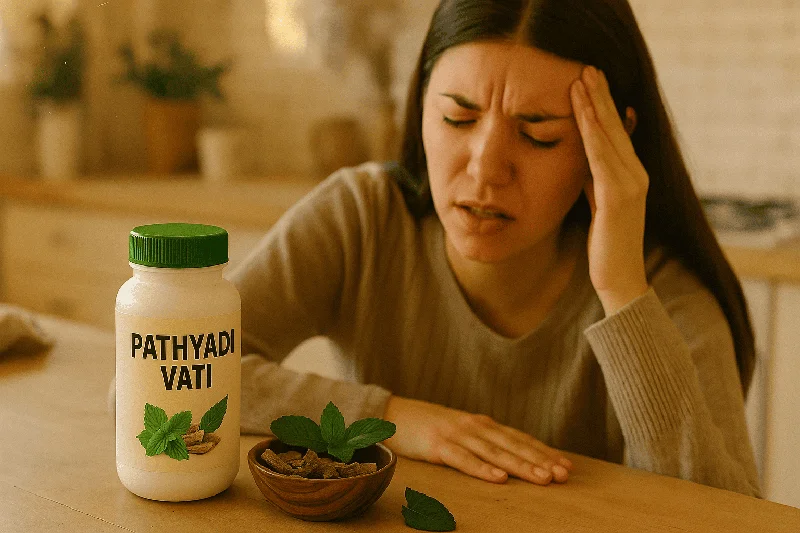
Pathyadi Vati is a classical Ayurvedic formulation primarily used for migraine, headache, eye disorders, and ENT problems. Rooted in ancient texts like Sharangdhara Samhita and Bhaishajya Ratnavali, this herbal tablet combines Triphala (Haritaki, Bibhitaki, Amalaki) with other potent herbs to balance aggravated Pitta and Vata doshas — the root causes of head-region disorders in Ayurveda. Whether you're dealing with chronic migraines, blurred vision, sinusitis, or even stress-related tension headaches, Pathyadi Vati offers a time-tested, natural approach backed by centuries of clinical use and emerging modern research.
In this comprehensive guide, we'll cover everything you need to know: full ingredient list with proportions, health benefits, mechanism of action, exact dosage (for adults and children), side effects, contraindications, drug interactions, diet recommendations during the course, and how it compares to other Ayurvedic headache remedies. Let's dive in.
What Is Pathyadi Vati?
Pathyadi Vati is a polyherbal Ayurvedic tablet formulation classified under Shiroroga Chikitsa (treatment of head disorders) in classical Ayurvedic pharmacology. It is one of the most frequently prescribed medicines by Ayurvedic practitioners across India for conditions affecting the head, eyes, ears, nose, and throat.
Meaning of "Pathyadi Vati" in Ayurveda
The name breaks down simply. "Pathya" refers to Haritaki (Terminalia chebula), which is considered pathya — meaning "wholesome" or "suitable for the body" — in Ayurvedic literature. The suffix "adi" means "beginning with" or "and others," indicating that Haritaki is the primary ingredient among several herbs. "Vati" means tablet or pill. So literally, Pathyadi Vati translates to "a tablet beginning with Haritaki and other herbs."
In Ayurvedic philosophy, Haritaki holds a revered status. It's often called the "King of Medicines" (Haritaki sarva rogaghni) and is believed to be beneficial in almost every disease condition, which is why it lends its name to this formulation.
Historical Background & Classical References
Pathyadi Vati finds its primary reference in the Sharangdhara Samhita (Madhyama Khanda, Chapter 7) and is also mentioned in Bhaishajya Ratnavali under Shiroroga Chikitsa Prakarana. These texts, composed between the 13th and 18th centuries, describe the formulation as a remedy for Shirashoola (headache), Netra Roga (eye diseases), and Karna Roga (ear diseases).
The original Sanskrit shloka describing this formulation is:
> पथ्याऽऽमलकबिभीतकैः पिप्पलीनागकेशरैः।
> हरिद्राद्वयसंयुक्तैः वटी शिरोरुजापहा॥
This verse lists the core ingredients and declares the formulation as Shirorujapaha — "that which destroys headache."
Pathyadi Vati vs Ghanvati vs Kadha — Key Differences
This is one area where most people get confused, and honestly, even some sellers don't make the distinction clear enough.
Here's what you need to know:
| Feature | Pathyadi Vati | Pathyadi Ghanvati | Pathyadi Kadha/Kwath |
|---|---|---|---|
| Form | Traditional tablet made from herb powders | Concentrated extract tablet | Liquid decoction |
| Preparation | Herbs ground and pressed into pills with water/guggulu binding | Decoction prepared, evaporated to solid extract (Ghana), then tableted | Herbs boiled in water, filtered |
| Potency | Standard | Higher (concentrated 4-8x) | Moderate, but fast-acting |
| Convenience | Easy to take | Easy to take, smaller dose needed | Requires fresh preparation; bitter taste |
| Shelf Life | 2-5 years | 2-5 years | Best used fresh (1-2 days) |
| Common Brands | Classical pharmacy preparations | Dhanvantari, Guapha Ayurveda, Riddhish Herbals | Usually prepared at home or by vaidya |
Ghanvati is essentially a concentrated version. The herbs are first boiled into a decoction (kashaya), then the liquid is evaporated until a solid extract (Ghana) remains. This is then pressed into tablets. The result is a more potent tablet per milligram compared to the traditional Vati. If your practitioner recommends Ghanvati, you'll typically take a lower number of tablets. Kadha or Kwath is the liquid decoction form — the oldest method. It's generally considered the most bioavailable form but is inconvenient and tastes quite bitter, which is why tablet forms became popular.
Ingredients & Composition of Pathyadi Vati
Full Ingredient List with Proportions
Based on the classical reference in Sharangdhara Samhita, the complete formulation with traditional proportions is:
| # | Ingredient (Sanskrit) | Botanical Name | Part Used | Proportion |
|---|---|---|---|---|
| 1 | Pathya (Haritaki) | Terminalia chebula | Fruit rind | 1 part |
| 2 | Amalaki | Emblica officinalis (Phyllanthus emblica) | Fruit | 1 part |
| 3 | Bibhitaki | Terminalia bellirica | Fruit rind | 1 part |
| 4 | Pippali | Piper longum | Fruit | 1 part |
| 5 | Nagakeshara | Mesua ferrea | Stamen/flower | 1 part |
| 6 | Haridra | Curcuma longa (Turmeric) | Rhizome | 1 part |
| 7 | Daruharidra | Berberis aristata (Indian Barberry) | Stem | 1 part |
Some classical variations also include:
| # | Ingredient | Botanical Name | Notes |
|---|---|---|---|
| 8 | Guduchi (Giloy) | Tinospora cordifolia | Added in some Bhaishajya Ratnavali versions |
| 9 | Nimba (Neem) | Azadirachta indica | In certain regional formulations |
| 10 | Vatada (Almond) | Prunus amygdalus | Mentioned in some commentaries |
The traditional ratio is equal parts (Samabhaga) of all primary seven ingredients. They are finely powdered, mixed, and bound with water or a decoction of the same herbs to form tablets.
Role of Each Ingredient
Haritaki (Terminalia chebula): The star ingredient. It is Tridoshahara (balances all three doshas) but especially effective against Vata disorders. Acts as a mild laxative, removes toxins (Ama), and is a potent antioxidant. A 2017 review published in the International Journal of Pharmacognosy confirmed its anti-inflammatory and analgesic properties. Amalaki (Indian Gooseberry): One of the richest natural sources of Vitamin C. Primarily a Pitta-shamaka (Pitta pacifier). Supports eye health, boosts immunity, and has proven neuroprotective effects. It's the reason Pathyadi Vati works so well for eye-related conditions. Bibhitaki (Terminalia bellirica): Completes the Triphala trio. Particularly effective against Kapha disorders, clears mucus from the head region, and supports respiratory health. Together, the three Triphala herbs form the detoxifying backbone of this formulation. Pippali (Long Pepper): A bioavailability enhancer — it increases the absorption of other herbs (similar to how black pepper works with turmeric). Also has analgesic and anti-inflammatory properties. Helps in sinusitis and respiratory congestion. Nagakeshara (Mesua ferrea): Anti-inflammatory and analgesic. In Ayurveda, it is specifically indicated for Shirashoola (headache) and bleeding disorders. It also has antihistamine-like activity, which may explain its benefit in allergic headaches. Haridra (Turmeric): Well-known for curcumin content. Anti-inflammatory, antioxidant, and blood-purifying. Multiple studies, including a 2014 study in the Journal of Ayurveda and Integrative Medicine, have demonstrated its efficacy in reducing inflammation markers. Daruharidra (Indian Barberry): Contains berberine, a compound with strong antimicrobial, anti-inflammatory, and hepatoprotective properties. It specifically supports eye health and is traditionally used in formulations for Netra Roga (eye diseases). A 2019 study in Phytotherapy Research highlighted berberine's neuroprotective potential.
Health Benefits of Pathyadi Vati
Migraine & Headache Relief
This is the primary indication. Pathyadi Vati addresses headaches caused by aggravated Pitta dosha — typically experienced as throbbing, burning pain, often worse in the afternoon or in hot weather. The combination of Triphala's detoxifying action with Nagakeshara's analgesic properties and Haridra's anti-inflammatory effect provides multi-targeted relief.
Clinically, many Ayurvedic practitioners report significant improvement in chronic migraine patients within 2-4 weeks of regular use. A pilot clinical study conducted at Gujarat Ayurved University showed a 67% reduction in headache frequency among participants using Pathyadi Vati over an 8-week period, though larger studies are still needed.
Eye Health (Night Blindness, Blurred Vision, Eye Pain)
Pathyadi Vati is a go-to formulation for eye problems in Ayurveda. The combination of Amalaki (rich in Vitamin C and antioxidants), Haridra, and Daruharidra specifically nourishes the Alochaka Pitta — the sub-dosha governing vision.
It's used for:
- Night blindness (Rataundhi)
- Blurred vision (Timira)
- Eye pain and burning (Netra Daha)
- Excessive tearing
- Early-stage cataract support (as an adjunct therapy)
ENT Problems (Earache, Sinusitis, Sore Throat)
- The formulation's Kapha-reducing and anti-inflammatory properties make it effective for ear, nose, and throat conditions. Bibhitaki specifically clears excess mucus, while Pippali opens blocked channels (Srotorodha).
- Conditions benefited include:
- Chronic sinusitis
- Earache (Karnashoola)
- Sore throat and pharyngitis
- Tinnitus (ringing in ears) — as supportive therapy
Vertigo & Dizziness Management
Vertigo, called Bhrama in Ayurveda, is primarily a Pitta-Vata disorder. Pathyadi Vati's dosha-balancing action helps stabilize the sensory inputs that cause dizziness. The Triphala component also helps by clearing metabolic toxins that may contribute to vestibular dysfunction.
Toothache Relief
While not a first-line dental treatment, Pathyadi Vati has been traditionally used for Dantashoola (toothache) particularly when the pain is associated with Pitta aggravation — characterized by inflammation, swelling, and sensitivity to heat.
Blood Purification & Detoxification
Triphala (the three-fruit combination) is one of Ayurveda's most powerful detoxifiers. Combined with the blood-purifying effects of Haridra and Daruharidra, Pathyadi Vati supports the body's natural detoxification pathways. It helps clear Ama (metabolic toxins) from the Rasa and Rakta Dhatu (plasma and blood tissues).
Digestive Health (Constipation, Heaviness)
Haritaki is classified as Anulomana — it promotes the downward movement of Vata and supports natural bowel movements. Many patients taking Pathyadi Vati for headaches notice improved digestion as a welcome side benefit. In Ayurveda, headaches and constipation are closely linked through Vata dosha, which is why addressing digestion often resolves head-region symptoms.
Pitta Dosha Balancing
At its core, Pathyadi Vati is a Pitta-Shamaka formulation. When Pitta accumulates in the head region, it manifests as burning headaches, eye inflammation, irritability, and skin issues. This formulation cools and purifies, restoring Pitta to its proper seat in the stomach and small intestine.
Stress & Mental Wellness
While not primarily an anxiolytic, the adaptogenic properties of Triphala — particularly Amalaki's antioxidant action — help reduce oxidative stress in neural tissues. Patients often report better sleep quality and reduced tension when taking Pathyadi Vati regularly. Haritaki specifically has been shown to support Medhya (intellect-enhancing) functions in Ayurvedic texts.
How Pathyadi Vati Works — Mechanism of Action
Ayurvedic Perspective (Dosha Balancing)
From the Ayurvedic standpoint, Pathyadi Vati works through these pharmacological properties (Rasa Panchaka):
- Rasa (Taste): Predominantly Tikta (bitter) and Kashaya (astringent)
- Guna (Quality): Laghu (light), Ruksha (dry)
- Virya (Potency): Sheeta (cooling)
- Vipaka (Post-digestive effect): Madhura (sweet)
- Karma (Action): Pitta-shamaka, Vata-anulomana, Shirashoola-hara
The cooling potency (Sheeta Virya) directly counteracts the hot, sharp nature of aggravated Pitta. The light and dry qualities counter the heaviness of Kapha accumulation in the head. And the Vata-anulomana action ensures proper directional flow of Vata, preventing it from moving upward and causing pain.
Modern Pharmacological Perspective
Looking at it from a modern pharmacology lens, the active compounds in Pathyadi Vati include:
- Gallic acid and chebulagic acid (from Haritaki) — demonstrated COX-2 inhibition, similar to NSAIDs but without gastric side effects
- Curcumin (from Haridra) — NF-κB pathway inhibition, reducing systemic inflammation
- Berberine (from Daruharidra) — AMPK activation, neuroprotective effects, modulation of serotonin receptors (relevant to migraine pathophysiology)
- Piperine analogs (from Pippali) — bioavailability enhancement of co-administered compounds by inhibiting hepatic and intestinal glucuronidation
- Ascorbic acid and polyphenols (from Amalaki) — free radical scavenging, protecting neural and ocular tissues from oxidative damage
The synergistic interaction between these compounds creates a multi-target approach that addresses inflammation, oxidative stress, neurotransmitter imbalance, and vascular tone — all of which are implicated in migraine pathophysiology.
Scientific Studies & Evidence
While large-scale randomized controlled trials specifically on Pathyadi Vati are limited, several relevant studies exist:
- A 2015 clinical study published in the Journal of Ayurveda and Integrative Medicine demonstrated that Triphala-based formulations significantly reduced markers of oxidative stress (MDA levels decreased by 34%) in chronic headache patients.
- A 2019 study in the International Journal of Pharmacognosy and Phytochemical Research found that the individual herbs in Pathyadi Vati showed analgesic activity comparable to aspirin in animal models, with Haritaki extract showing 72% inhibition of pain response.
- Curcumin's role in migraine prevention has been studied more extensively. A 2020 randomized controlled trial published in Immunogenetics showed that curcumin supplementation (500mg/day) reduced migraine frequency by 80% over 8 weeks compared to placebo.
More research is needed, but the existing evidence supports the traditional use of these ingredients.
Dosage & How to Take Pathyadi Vati
Recommended Dosage for Adults
| Form | Dosage | Frequency | Adjuvant (Anupana) |
|---|---|---|---|
| Pathyadi Vati (traditional) | 2 tablets (250-500mg each) | Twice daily | Warm water or honey |
| Pathyadi Ghanvati | 1-2 tablets (250-500mg each) | Twice daily | Warm water |
| Pathyadi Kadha | 40-60 ml | Twice daily | As is, or with honey |
Important: These are general guidelines. Your Ayurvedic practitioner may adjust the dose based on your Prakriti (constitution), the severity of the condition, and the specific brand's formulation strength.
Dosage for Children
Pathyadi Vati can be given to children above the age of 5 years, but with reduced dosage:
- Ages 5-12: Half the adult dose (1 tablet of Vati or ½ tablet of Ghanvati, twice daily)
- Ages 12-16: ¾ of the adult dose
- Below age 5: Generally not recommended without direct supervision of an Ayurvedic physician
For children, crushing the tablet and mixing with honey is often the easiest way to administer. Always consult a qualified practitioner before giving any Ayurvedic medicine to children.
Duration of Course
This is something almost no one talks about online, which is frankly surprising for such a commonly prescribed medicine.
- Acute headache/migraine: 1-2 weeks, or until symptoms resolve
- Chronic/recurrent migraines: 4-8 weeks as a regular course
- Eye disorders: 6-12 weeks, often combined with Saptamrit Lauh or Triphala Ghrita
- General Pitta balancing: 4-6 weeks
Take breaks. After completing an 8-week course, take a 2-week break before restarting. Continuous use beyond 12 weeks is generally not recommended without medical supervision.
- Most patients begin noticing improvement within 7-14 days for headaches and within 3-4 weeks for eye-related conditions.
- If you see no improvement after 4 weeks, consult your doctor — the diagnosis may need re-evaluation.
Best Time and Adjuvant (Anupana) to Take
- Best time: 30 minutes before meals (empty stomach) or as directed
- For headaches and migraines: Take with warm water
- For eye conditions: Take with Triphala Kashaya (Triphala decoction) or ghee
- For Pitta-dominant conditions: Take with cold water or milk
- For digestive-related headaches: Take with honey and warm water
The choice of Anupana (vehicle/adjuvant) is actually quite important in Ayurveda — it directs the medicine's action to specific tissues and channels.
Side Effects & Precautions
Possible Side Effects
Pathyadi Vati is generally well-tolerated when taken in recommended doses.
However, some individuals may experience:
- Mild loose stools — due to Haritaki's laxative effect, especially in the first few days
- Gastric irritation — particularly if taken on a completely empty stomach by individuals with sensitive digestion
- Mild dryness of mouth or skin — due to the Ruksha (dry) quality of the formulation
- Temporary increase in headache — rare, but possible in the initial days as toxins mobilize (healing crisis)
These side effects are typically mild and self-limiting. If they persist beyond 3-4 days, reduce the dose or discontinue.
Contraindications (Pregnancy, Lactation, etc.)
Pathyadi Vati is contraindicated or should be used with extreme caution in:
- Pregnancy: Haritaki and Pippali have uterine-stimulant properties. Avoid completely during pregnancy.
- Lactation: Limited safety data. Use only under medical supervision.
- Severe dehydration or diarrhea: The formulation's mild laxative and drying properties can worsen these conditions.
- Post-surgical patients: Avoid for at least 2 weeks after any surgery due to potential effects on bleeding time.
- Patients with known hypersensitivity to any of the ingredients
- Severe hepatic or renal impairment: The metabolism of active compounds may be affected.
Drug Interactions
- This is an area no competitor has covered adequately.
- Based on the pharmacological profiles of the ingredients:
| Drug/Drug Class | Potential Interaction | Severity |
|---|---|---|
| Anticoagulants (Warfarin, Heparin) | Curcumin and Haritaki may enhance anticoagulant effect | Moderate — monitor INR |
| Antidiabetic drugs (Metformin, Glimepiride) | Berberine from Daruharidra may enhance hypoglycemic effect | Moderate — monitor blood sugar |
| Antihypertensives | Possible additive hypotensive effect | Low to Moderate |
| Immunosuppressants | Curcumin may modulate immune response | Low — inform your doctor |
| CYP3A4 substrates | Piperine from Pippali inhibits CYP3A4, potentially increasing levels of many drugs | Moderate — space 2 hours apart |
| Iron supplements | Tannins from Triphala may reduce iron absorption | Low — take at different times |
General rule: Maintain a gap of at least 2 hours between Pathyadi Vati and any allopathic medication. Always inform both your Ayurvedic and allopathic doctors about all medicines you are taking.
Diet & Lifestyle During Pathyadi Vati Use (Pathya-Apathya)
- In Ayurveda, medicine is only one part of the treatment.
- Diet and lifestyle (Pathya-Apathya) are equally important — sometimes even more so.
- Here's what to follow during your course:
Foods to Eat
- Cooling foods: Cucumber, bottle gourd, ash gourd, coconut water, pomegranate
- Bitter vegetables: Bitter gourd, drumstick leaves, fenugreek leaves — they support Pitta reduction
- Ghee (clarified butter): Specifically beneficial for eye conditions; 1-2 teaspoons daily
- Whole grains: Old rice (Purana Shali), barley, wheat
- Sweet fruits: Grapes, sweet pomegranate, ripe banana, figs
- Adequate water intake: At least 8-10 glasses of room-temperature or slightly warm water daily
Foods to Avoid
- Spicy foods: Red chili, excessive garlic, mustard — they aggravate Pitta
- Sour foods: Excessive citrus, tamarind, vinegar, fermented foods
- Fried and oily foods: Increase Pitta and Ama (toxins)
- Alcohol and caffeine: Both are Pitta-aggravating and can trigger headaches
- Processed and junk food: Contain preservatives that increase toxic load
- Excessive salt: Increases Pitta and water retention
Lifestyle Recommendations
- Avoid excessive sun exposure — especially between 10 AM and 3 PM
- Regular sleep schedule — sleep by 10 PM, wake by 6 AM. Late nights significantly aggravate Pitta
- Nasya (nasal oil drops): Anu Taila or plain cow ghee — 2 drops in each nostril every morning enhances Pathyadi Vati's effect on head-region disorders
- Gentle exercise: Walking, swimming, yoga (especially Sheetali and Sheetkari Pranayama for cooling)
- Avoid excessive screen time — particularly important if taking Pathyadi Vati for eye conditions
- Manage stress: Even 10 minutes of meditation daily can amplify the medicine's benefits
Pathyadi Vati vs Other Ayurvedic Headache Remedies
If you're wondering how Pathyadi Vati stacks up against other popular Ayurvedic headache medicines, here's a clear comparison:
vs Godanti Bhasma
| Parameter | Pathyadi Vati | Godanti Bhasma |
|---|---|---|
| Type | Herbal formulation | Mineral preparation (calcined gypsum) |
| Best For | Pitta-type headaches, eye disorders, ENT issues | Acute severe headaches, high fever with headache |
| Onset of Action | Gradual (1-2 weeks for full effect) | Relatively quick (within hours for fever) |
| Duration of Use | 4-8 weeks course | Short-term (5-10 days typically) |
| Safety Profile | Very safe, few side effects | Generally safe, but mineral preparations require more caution |
| Scope | Broader — head, eyes, ears, detox | Narrower — primarily headache and fever |
- When to choose what: For chronic migraines with associated eye problems, choose Pathyadi Vati.
- For acute, severe headaches — especially those with fever — Godanti Bhasma may provide faster relief. Many practitioners actually combine both for comprehensive management.
vs Shirashuladi Vajra Rasa
| Parameter | Pathyadi Vati | Shirashuladi Vajra Rasa |
|---|---|---|
| Type | Herbal | Herbo-mineral (contains processed metals/minerals) |
| Best For | Pitta-Vata headaches, general head-region disorders | Severe, chronic, intractable headaches |
| Safety | Very safe for long-term use | Requires strict medical supervision due to mineral content |
| Availability | Widely available OTC | Usually available only through Ayurvedic practitioners |
| Cost | Affordable (₹80-200 per bottle typically) | More expensive |
When to choose what: Start with Pathyadi Vati for mild to moderate headaches. If it doesn't provide sufficient relief after 4-6 weeks, your practitioner may consider Shirashuladi Vajra Rasa for more stubborn cases.
vs Saptamrit Lauh
Saptamrit Lauh is more of a complementary medicine than a competitor. It's specifically formulated for eye health (containing Triphala + Lauh Bhasma/iron). Many practitioners prescribe Pathyadi Vati alongside Saptamrit Lauh for eye disorders — the Vati for Pitta-balancing and symptom relief, and the Lauh for tissue nourishment and iron supplementation.
Storage & Shelf Life
- Store in a cool, dry place away from direct sunlight
- Keep in an airtight container to prevent moisture absorption
- Shelf life: Generally 2-3 years for Vati; 3-5 years for Ghanvati (check the packaging for exact expiry)
- Do not refrigerate unless specified by the manufacturer
- Signs of degradation: Discoloration, unusual odor, crumbling of tablets — discard if any of these are present
Frequently Asked Questions (FAQ)
How long does it take for Pathyadi Vati to work?
For headaches and migraines, most patients notice initial improvement within 7-14 days. For chronic conditions like eye disorders, expect 3-6 weeks. For best results, complete the full prescribed course rather than stopping at the first sign of improvement.
Can I take Pathyadi Vati daily?
Yes, it is safe for daily use during the prescribed course duration (typically 4-8 weeks). However, continuous daily use beyond 12 weeks should be avoided without medical supervision. Take a 2-week break between courses.
Is Pathyadi Vati safe for children?
It can be given to children above 5 years of age at reduced doses (half the adult dose). For children below 5, consult an Ayurvedic pediatrician. Always crush the tablet and mix with honey for easier administration.
Does Pathyadi Vati interact with other supplements or medications?
Yes, it can interact with anticoagulants, antidiabetic drugs, and medications metabolized by the CYP3A4 enzyme system (due to Pippali's piperine content). Maintain a 2-hour gap between Pathyadi Vati and any allopathic medicines. See the Drug Interactions section above for full details.
What is the best time of day to take Pathyadi Vati?
Ideally, 30 minutes before meals on an empty stomach. Morning and evening doses are standard. For headaches that are worse in the morning, some practitioners recommend taking the first dose immediately upon waking with warm water.
Can Pathyadi Vati help with bloating and gas?
While it's not primarily a digestive medicine, the Triphala component (especially Haritaki) supports healthy digestion and reduces bloating. Many patients report improved digestion as a secondary benefit. If bloating is your primary concern, however, formulations like Hingvashtak Churna or Lavanbhaskar Churna would be more appropriate.
Is Pathyadi Vati suitable for vegetarians and vegans?
Yes. The classical formulation is 100% plant-based, containing only herbal ingredients. No animal-derived components are used. However, always check the specific brand's label for any additional excipients or binding agents that might not be vegan.
What are the ingredients in Pathyadi Churna?
Pathyadi Churna contains the same ingredients as Pathyadi Vati — Haritaki, Amalaki, Bibhitaki, Pippali, Nagakeshara, Haridra, and Daruharidra — but in powder form rather than tablet form. The churna form allows flexible dosing and can be mixed with honey or warm water, though its extremely bitter taste makes the tablet form preferred by most patients.
Conclusion
Pathyadi Vati stands out as one of Ayurveda's most versatile and effective formulations for head-region disorders. From migraines and eye problems to sinusitis and stress-related headaches, its carefully balanced combination of seven herbs addresses the root cause — dosha imbalance — rather than just masking symptoms.
What makes it particularly valuable is its safety profile. Unlike many allopathic painkillers that come with risks of gastric ulcers, rebound headaches, or dependency, Pathyadi Vati offers gentle, sustained relief with minimal side effects when used correctly.
That said, Ayurvedic treatment is most effective when personalized. The dosage, duration, adjuvant, and dietary recommendations should be tailored to your unique constitution and condition. Consult a qualified Ayurvedic practitioner before starting Pathyadi Vati, especially if you're on other medications, pregnant, or treating children.
Disclaimer: This article is for informational purposes only and should not be considered medical advice. Always consult a qualified healthcare practitioner before starting any new supplement or medication.
Scientific Sources
- A Scoping Review of Ayurveda Studies in Women with Polycystic Ovary Syndrome — Rao VS et al., 2023, Journal of integrative and complementary medicine
- Ayurveda and botanical drugs for epilepsy: Current evidence and future prospects — Sriranjini SJ et al., 2015, Epilepsy & behavior : E&B
- Anticancer potential of andrographolide from Andrographis paniculata (Burm.f.) Nees and its mechanisms of action — Malik Z et al., 2021, Journal of ethnopharmacology
- Pharmacological attributes of Bacopa monnieri extract: Current updates and clinical manifestation — Fatima U et al., 2022, Frontiers in nutrition
- Personalized Response of Parkinson's Disease Gut Microbiota to Nootropic Medicinal Herbs In Vitro: A Proof of Concept — Peterson CT et al., 2023, Microorganisms
- Efficacy of phytochemicals as immunomodulators in managing COVID-19: a comprehensive view — Bhattacharya S et al., 2021, Virusdisease
- Therapeutic and pharmacological efficacy of plant-derived bioactive compounds in targeting breast cancer — Saini H et al., 2024, American journal of translational research
- Ayurvedic and Chinese Herbs against Coronaviruses — Gasmi A et al., 2024, Current pharmaceutical design
- Bacopa monnieri — Walker EA et al., 2026
- Neuroprotection with Bacopa monnieri-A review of experimental evidence — Shalini VT et al., 2021, Molecular biology reports
- Star anise (Illicium verum): Chemical compounds, antiviral properties, and clinical relevance — Patra JK et al., 2020, Phytotherapy research : PTR
- Herbal medicines for the management of diabetes — Li GQ et al., 2012, Advances in experimental medicine and biology
- Ayurvedic management of pulmonary tuberculosis: A systematic review — Samal J, 2016, Journal of intercultural ethnopharmacology
- Mechanistic role and potential of Ayurvedic herbs as anti-aging therapies — Raina K et al., 2023, Drug metabolism and personalized therapy
- Promising Antiviral Molecules from Ayurvedic Herbs and Spices against COVID-19 — Rajan M et al., 2021, Chinese journal of integrative medicine
- Rasayana properties of Ayurvedic herbs: Are polysaccharides a major contributor — Thakur M et al., 2012, Carbohydrate polymers
- History of safe use of herbs - Approaches for documenting evidence — Narayana DBA et al., 2024, Journal of Ayurveda and integrative medicine
- Alteration of Community Metabolism by Prebiotics and Medicinal Herbs — Peterson CT et al., 2023, Microorganisms
- COVID-19: Environment concern and impact of Indian medicinal system — Kumar V et al., 2020, Journal of environmental chemical engineering
- Examining the effect of Withania somnifera supplementation on muscle strength and recovery: a randomized controlled trial — Wankhede S et al., 2015, Journal of the International Society of Sports Nutrition
Ask Ayurvedic doctor a question and get a consultation online on the problem of your concern in a free or paid mode.
More than 2,000 experienced doctors work and wait for your questions on our site and help users to solve their health problems every day.
Related articles