Ask Ayurvedic doctor a question and get a consultation online on the problem of your concern in a free or paid mode. More than 2,000 experienced doctors work and wait for your questions on our site and help users to solve their health problems every day.


Body DetoxEar, Nose, and Throat DisordersGeriatrics & RejuvenationImmunodeficiencyInfertility TreatmentNutritionOrthopedic DisordersPediatricsRespiratory DisordersSexually Transmitted Diseases (STDs)Surgery RecoveryUrological DisordersVascular DisordersDental DisordersEndocrinological DisordersGastrointestinal DisordersYoga TherapyGeneral MedicineAllergic DisordersCardio DisordersGynecology and ObstetricsCosmetologySkin and Hair DisordersEye DisordersInfectious DiseasesMental DisordersNeurological DisordersOncologyPanchakarmaSexual Health & DisordersSports Medicine
Published on 01/01/25
(Updated on 08/10/26)
3,420
Brahmi Drakshadi Kashayam: Improve Mental Clarity with Brahmi Drakshadi Kashayam
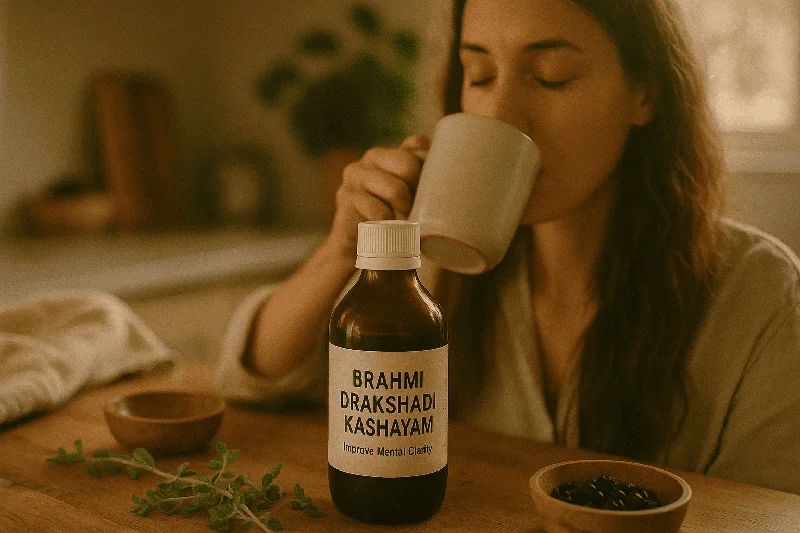
Brahmi Drakshadi Kashayam is a classical Ayurvedic herbal decoction (kashayam) primarily used to manage Vata disorders, neuropathic conditions, burning sensations, and cognitive decline. Rooted in the ancient text Sahasrayogam, this formulation combines the neuroprotective power of Brahmi (Bacopa monnieri) with the rejuvenative qualities of Draksha (Vitis vinifera) and a robust blend of over 25 supporting herbs — including the famed Dashamoola group of ten roots. It is widely prescribed by Ayurvedic practitioners across India and Kerala especially, for conditions ranging from peripheral neuropathy and burning paresthesia to anxiety, poor memory, and stress-related mental fatigue.
Unlike simple single-herb supplements, Brahmi Drakshadi Kashayam works as a compound formulation where multiple herbs act synergistically on the nervous system, musculoskeletal system, and circulatory pathways. Whether you're a student looking for cognitive support, a patient dealing with Vata vyadhi (neurological disorders), or someone exploring Ayurvedic alternatives to conventional neuropathy treatments — this guide covers everything you need to know.
What Is Brahmi Drakshadi Kashayam and Where Does It Come From?
Brahmi Drakshadi Kashayam is a polyherbal decoction (kwath or kashayam) belonging to the classical Kerala Ayurvedic tradition. The term "kashayam" itself refers to a water-based herbal decoction prepared by boiling coarsely powdered herbs in water until the liquid reduces to a specific ratio — traditionally one-fourth or one-eighth of the original volume.
Classical Textual Reference and Historical Background
The primary reference for this formulation is found in the Sahasrayogam, a comprehensive Kerala Ayurvedic text compiled during the medieval period that catalogs thousands of formulations. Some scholars also trace supporting references to concepts found in the Ashtanga Hridaya by Vagbhata and Bhavaprakasha Nighantu, particularly regarding the individual herbs used in the formulation.
The Sahasrayogam sloka for Brahmidrakshadi Kashayam lists the ingredients in Sanskrit verse form, which Ayurvedic pharmacies then interpret with slight regional variations. This is actually why you'll notice minor differences in ingredient lists across different manufacturers — something we'll address in detail below.
The formulation evolved within the Kerala Ayurvedic tradition (Keraliya Chikitsa Paddati), which is known for its emphasis on kashayam preparations and Panchakarma therapies. Over centuries, this particular kashayam became a go-to prescription for conditions involving Vata aggravation with burning sensations (daha) — a somewhat paradoxical combination that Ayurveda attributes to Vata pushing Pitta into abnormal pathways.
Doshic Classification: Balancing Vata and Pitta
- From an Ayurvedic pharmacodynamic perspective, Brahmi Drakshadi Kashayam primarily balances Vata dosha and secondarily pacifies Pitta dosha.
- Here's the detailed doshic profile:
| Parameter | Characteristic |
|---|---|
| Primary Dosha Action | Vata shamana (pacification) |
| Secondary Dosha Action | Pitta shamana |
| Agni Effect | Deepana (mildly stimulates digestive fire) |
| Srotas (Channels) | Majjavaha (nerve channels), Rasavaha, Mamsa-vaha |
| Dhatus Affected | Rasa, Rakta, Mamsa, Majja (nerve tissue) |
| Ama Status | Mild Ama pachana (toxin digestion) |
| Gati (Direction) | Both Urdhva (upward) and Adho (downward) |
This dual Vata-Pitta action makes it particularly suitable for conditions where nerve inflammation (a Pitta component) combines with degeneration or pain (a Vata component) — such as neuropathies, burning sensations in hands and feet, and stress-related cognitive disturbances.
Complete Ingredients List with Ayurvedic Pharmacology
One of the most clinically significant aspects of Brahmi Drakshadi Kashayam is its comprehensive ingredient profile. The classical formulation contains approximately 28 herbs, each contributing roughly 3.57% of the total composition. Below is the complete list with botanical names and the Ayurvedic pharmacological profile (Rasa, Guna, Virya, Vipaka) for the key ingredients.
Key Ingredients and Their Individual Pharmacology
| # | Sanskrit Name | Botanical Name | Part Used | Rasa (Taste) | Virya (Potency) | Key Action |
|---|---|---|---|---|---|---|
| 1 | Brahmi | Bacopa monnieri | Whole plant | Tikta, Kashaya | Sheeta (Cooling) | Medhya (nootropic), nervine tonic |
| 2 | Draksha | Vitis vinifera | Dried fruit | Madhura, Amla | Sheeta | Balya (strengthening), Raktaprasadana |
| 3 | Vacha | Acorus calamus | Rhizome | Katu, Tikta | Ushna (Hot) | Medhya, Vata-Kapha shamana |
| 4 | Bala | Sida cordifolia | Root | Madhura | Sheeta | Balya, nervine strength |
| 5 | Guduchi | Tinospora cordifolia | Stem | Tikta, Kashaya | Ushna | Rasayana, immunomodulator |
| 6 | Pippali | Piper longum | Fruit | Katu | Ushna | Deepana, bioavailability enhancer |
| 7 | Chandana | Santalum album | Heartwood | Tikta, Madhura | Sheeta | Pitta shamana, cooling |
| 8 | Musta | Cyperus rotundus | Rhizome | Tikta, Katu | Sheeta | Ama pachana, digestive |
| 9 | Twak | Cinnamomum zeylanicum | Bark | Katu, Madhura | Ushna | Circulatory stimulant |
| 10 | Ela | Elettaria cardamomum | Seed | Katu, Madhura | Sheeta | Digestive, aromatic |
| 11 | Chirata / Kiratatikta | Swertia chirayita / Andrographis paniculata | Whole plant | Tikta | Sheeta | Pitta shamana, antipyretic |
| 12 | Devadaru | Cedrus deodara | Heartwood | Tikta, Katu | Ushna | Vata shamana, anti-inflammatory |
| 13 | Koshataki | Luffa acutangula / Luffa echinata | Fruit/Seed | Tikta | Ushna | Expectorant, Kapha shamana |
The Dashamoola Group: Ten Roots Explained
A critical component that many sources gloss over is Dashamoola — a group of ten roots that serves as the backbone of anti-inflammatory and Vata-balancing action in this formulation. Some manufacturers list "Dashamoola" as a single ingredient, while others enumerate all ten roots separately. Here's what Dashamoola actually contains and why each root matters:
Brihat Panchamoola (Five Greater Roots):
- Bilva (Aegle marmelos) — Digestive, Vata-Kapha shamana
- Agnimantha (Premna mucronata) — Anti-inflammatory, deepana
- Shyonaka (Oroxylum indicum) — Anti-inflammatory, analgesic
- Patala (Stereospermum suaveolens) — Pitta-Vata shamana
- Gambhari (Gmelina arborea) — Rasayana, balya, nervine
Laghu Panchamoola (Five Lesser Roots):
- Shalaparni (Desmodium gangeticum) — Vata shamana, strengthening
- Prishnaparni (Uraria picta) — Vata-Pitta shamana
- Brihati (Solanum indicum) — Kapha-Vata shamana, expectorant
- Kantakari (Solanum surattense) — Kapha shamana, respiratory support
- Gokshura (Tribulus terrestris) — Mutrala (diuretic), Vata shamana
Together, Dashamoola provides potent anti-inflammatory, analgesic, and nervine support. In Brahmi Drakshadi Kashayam specifically, it amplifies the Vata-balancing action and provides musculoskeletal support that complements the neurological action of Brahmi and Vacha.
Why Ingredient Lists Differ Between Manufacturers
- If you compare the ingredient list from Arya Vaidya Sala Kottakkal with that of SKM Siddha and Ayurveda, you'll notice discrepancies.
- This is not a quality issue — it reflects legitimate textual interpretation differences.
| Variation Point | Interpretation A (e.g., Kottakkal) | Interpretation B (e.g., SKM/Others) |
|---|---|---|
| Kiratatikta | Swertia chirayita | Andrographis paniculata |
| Koshataki | Luffa acutangula | Luffa echinata |
| Dashamoola | Listed as single group ingredient | All 10 roots listed individually |
| Total herb count shown | ~18 named + Dashamoola group | 28 individual herbs |
Both interpretations are valid and trace back to regional commentary traditions on the original Sahasrayogam sloka. The therapeutic effect is largely equivalent, though practitioners in Kerala may have preferences based on their lineage training. When purchasing, look for GMP-certified manufacturers and choose reputable brands like Arya Vaidya Sala Kottakkal, SKM Siddha and Ayurveda, or AVP (Arya Vaidya Pharmacy, Coimbatore).
What Is Brahmi Drakshadi Kashayam Used For? Benefits and Indications
The clinical indications for Brahmi Drakshadi Kashayam span neurological, musculoskeletal, and psychological domains. In classical Ayurvedic terms, it is indicated for Vata Vyadhi (neurological disorders), Ruk (pain), and Daha (burning sensation).
Can Brahmi Drakshadi Kashayam Help with Anxiety and Depression?
Yes — and this is increasingly becoming one of its most sought-after applications. Brahmi (Bacopa monnieri) contains bacopasaponins (bacosides A and B) that have demonstrated anxiolytic and antidepressant properties in multiple studies. A 2014 meta-analysis published in the Journal of Ethnopharmacology found that Bacopa monnieri significantly improved attention, cognitive processing, and working memory while reducing anxiety scores.
The synergistic combination with Draksha (rich in resveratrol and proanthocyanidins) and Vacha (containing α-asarone and β-asarone) creates a multi-pathway approach to mental health:
- Bacopasaponins from Brahmi modulate serotonin and dopamine levels while enhancing acetylcholine transmission
- Resveratrol from Draksha provides neuroprotective antioxidant activity, reducing oxidative stress in neural tissue
- β-asarone from Vacha has shown neuroprotective effects against beta-amyloid toxicity in preclinical studies
- Piperine from Pippali enhances bioavailability of other active compounds by up to 30%
- Cinnamaldehyde from Twak (Cinnamon) modulates pro-inflammatory cytokines including TNF-α and IL-6
- This isn't merely symptomatic relief.
- The formulation works at multiple biochemical levels — supporting neurotransmitter synthesis, protecting existing neurons from oxidative damage, and reducing neuroinflammation.
Neurological and Neuropathic Conditions
The primary classical indication remains Vata vyadhi — which encompasses a broad range of neurological conditions:
- Peripheral neuropathy — numbness, tingling, burning in extremities
- Burning paresthesia — a hallmark symptom that combines Vata (abnormal sensation) with Pitta (burning)
- Sciatica and radiculopathy
- Sensory-neural hearing loss (partial benefit as adjunct therapy)
- Facial palsy and Bell's palsy (as supportive therapy)
Partial Usefulness in Complex Conditions
Ayurvedic practitioners have reported partial clinical benefit in several complex conditions when Brahmi Drakshadi Kashayam is used as part of a comprehensive treatment protocol:
- Avascular necrosis (AVN) — as adjunct to reduce nerve-related pain
- Hypothyroidism — supporting neurological symptoms like brain fog
- Ankylosing spondylitis — managing neuropathic components
- Systemic Lupus Erythematosus (SLE) — addressing neuropathic manifestations
These are not primary indications, and the kashayam should not replace conventional treatment for these conditions. It works best as an adjunct therapy under professional guidance.
Cognitive Enhancement and Memory Support
For students, professionals, and elderly individuals experiencing age-related cognitive decline, Brahmi Drakshadi Kashayam offers measurable benefits. A randomized controlled trial by Calabrese et al. (2008) in the Journal of Alternative and Complementary Medicine showed that Bacopa monnieri supplementation for 12 weeks significantly improved working memory, visual information processing speed, and reduced depression/anxiety scores compared to placebo.
The kashayam format may offer advantages over standardized Brahmi extracts alone, because the supporting herbs enhance absorption (Pippali as yogavahi), provide additional neuroprotective compounds, and balance any potential side effects.
How to Use Brahmi Drakshadi Kashayam: Dosage and Administration
Standard Dosage Guidelines
| Population | Dosage | Frequency | Timing |
|---|---|---|---|
| Adults (general) | 12–24 mL | Twice daily | Before food (empty stomach) |
| Elderly / mild symptoms | 12 mL | Twice daily | Before food |
| Severe Vata conditions | 24 mL | Twice daily | Before food |
| Children (5-12 years)* | 5–10 mL | Twice daily | Before food |
| Tablet form (if available) | 2 tablets | Twice daily | Before food |
\Children's dosage should only be determined by a qualified Ayurvedic practitioner.* Preparation method: Mix the prescribed dose with an equal quantity of lukewarm water. For example, if your dose is 15 mL kashayam, add 15 mL warm water, stir, and drink on an empty stomach — ideally 30 minutes before breakfast and 30 minutes before dinner.
How Long Should I Take Brahmi Drakshadi Kashayam to See Results?
This is a question that none of the major online sources adequately answer. Based on classical Ayurvedic prescribing principles and practitioner experience:
- Acute conditions (sudden onset neuropathy, burning): 2–4 weeks, with reassessment
- Chronic Vata conditions (long-standing neuropathy, chronic pain): 1–3 months
- Cognitive enhancement (memory, focus): 8–12 weeks minimum for noticeable results
- Anxiety/stress management: 4–8 weeks for sustained benefit
Most Ayurvedic practitioners prescribe in cycles — for example, 3 months on, 1 month off, then reassess. Continuous use beyond 3 months should be under direct medical supervision. Initial subtle improvements (better sleep, reduced burning) may appear within the first 1-2 weeks, but substantial neurological benefits typically require 6-8 weeks of consistent use.
Adjuvants (Anupana) — What to Take Alongside
Ayurvedic doctors often prescribe specific adjuvant medicines alongside Brahmi Drakshadi Kashayam to enhance its efficacy:
- Dhanwantaram Gulika — for Vata disorders with pain and stiffness
- Mahadhanwantaram Gulika — for severe Vata aggravation, especially post-partum
- Gorochanadi Gulika — for conditions involving fever with Vata symptoms
- Ksheerabala 101 Avartan Taila — for external application in neuropathy cases
- Dhanwantaram Taila — for Abhyanga (therapeutic massage) alongside internal kashayam
Optimal Time and Seasonal Considerations
According to Ayurvedic dinacharya (daily routine) principles, kashayam preparations are best taken during Vata-dominant hours — early morning (2-6 AM period, practically around 6 AM) and evening (2-6 PM period, practically around 5-6 PM). The pre-meal administration ensures maximum absorption without interference from food.
Seasonally, Vata-balancing formulations like this one are most needed during Varsha ritu (monsoon season, roughly July-September) and Shishira/Hemanta ritu (late autumn and winter), when Vata naturally aggravates. However, since Brahmi and Draksha are cooling herbs, this formulation remains safe even during summer months — unlike some purely heating Vata remedies.
How to Prepare Brahmi Drakshadi Kashayam from Raw Herbs at Home
If you prefer preparing fresh kashayam from raw churna (powder) rather than using ready-made liquid formulations, here's the traditional method:
Step 1: Take 1 part (approximately 10-15 grams) of Brahmi Drakshadi Kashayam churna (coarse powder). Step 2: Add 16 parts of water (approximately 160-240 mL). Step 3: Bring to a boil on medium flame, then reduce to a slow simmer. Step 4: Allow the decoction to reduce to one-fourth of the original water volume (approximately 40-60 mL). This typically takes 45-60 minutes. Step 5: Strain through a clean muslin cloth while still warm. Press the residue gently to extract maximum actives. Step 6: Drink while still lukewarm. Do not store fresh kashayam for more than 6-8 hours, even refrigerated.
The reduction ratio (1/4th or sometimes 1/8th) is critical — under-reduction yields a weak preparation, while over-reduction may concentrate certain compounds excessively. If you're new to this, starting with commercially prepared kashayam is definitely the safer route.
Don't wait or self medicate. Start chat with Doctor NOW
Brahmi Drakshadi Kashayam vs. Similar Kashayam Formulations
One of the most practical questions patients face is: when should I use Brahmi Drakshadi Kashayam versus other similar formulations? Here's a comparative analysis:
| Formulation | Primary Indication | Dosha Action | Best For |
|---|---|---|---|
| Brahmi Drakshadi Kashayam | Neuropathy with burning, cognitive decline, Vata-Pitta | Vata↓ Pitta↓ | Burning neuropathy, mental clarity, anxiety |
| Dhanwantaram Kashayam | Vata disorders, rheumatism, post-partum care | Vata↓ | Joint pain, muscular stiffness, post-delivery |
| Rasnadi Kashayam | Arthritis, sciatica, inflammatory joint conditions | Vata↓ Ama↓ | Inflammatory pain, Ama-associated Vata |
| Sahacharadi Kashayam | Lower limb Vata disorders, sciatica, numbness | Vata↓ | Leg pain, lower back, sciatic nerve |
| Kalyanaka Kashayam | Psychiatric conditions, unmada, epilepsy | Tridosha | Severe mental disorders, psychosis, epilepsy |
| Indukantham Kashayam | Digestive Vata, general debility | Vata↓ Kapha↓ | Weak digestion with Vata symptoms |
Key differentiator: Choose Brahmi Drakshadi Kashayam specifically when the primary complaint involves burning sensations combined with neurological symptoms (burning hands/feet + numbness + cognitive issues). If the complaint is primarily joint/muscular pain without burning, Dhanwantaram or Rasnadi Kashayam may be more appropriate.
Side Effects, Safety, and Drug Interactions
Known Side Effects
- Brahmi Drakshadi Kashayam is generally well-tolerated when taken in prescribed doses.
- However, possible side effects include:
- Mild gastrointestinal discomfort (nausea, loose stools) — especially in Pitta-dominant individuals
- Slight drowsiness initially, due to the calming effect of Brahmi
- Bitter taste may cause nausea in sensitive patients — mixing with honey (1 tsp) can help
No serious adverse effects have been documented in classical literature or modern pharmacovigilance databases for this specific formulation at standard doses.
Does Brahmi Drakshadi Kashayam Interact with Other Medications?
- This is where most online sources simply say "consult your doctor" and leave it at that.
- Let's be more specific — while still emphasising that professional guidance is essential:
| Medication Class | Potential Interaction | Risk Level | Recommendation |
|---|---|---|---|
| Anticoagulants (Warfarin, Heparin) | Brahmi and Guduchi may have mild blood-thinning properties | Moderate | Monitor INR; inform doctor |
| Antidepressants (SSRIs, SNRIs) | Brahmi modulates serotonin — theoretical additive effect | Moderate | Use under supervision; watch for serotonin syndrome signs |
| Antihypertensives | Mild hypotensive effect of some herbs | Low-Moderate | Monitor blood pressure regularly |
| Antidiabetic drugs | Guduchi and some ingredients may lower blood sugar | Low-Moderate | Monitor blood glucose |
| Thyroid medications | No significant known interaction | Low | Generally safe; maintain 2-hour gap |
| Homeopathic medicines | Generally compatible | Low | Can be taken alongside; maintain 30-minute gap |
| Dietary supplements (Omega-3, multivitamins) | Generally compatible | Low | Safe to combine |
Is Drakshadi Kashayam Safe During Pregnancy?
No — it is generally not recommended during pregnancy without explicit guidance from a qualified Ayurvedic practitioner. Several ingredients in the formulation (Vacha/Acorus calamus in particular, along with Pippali and some Dashamoola herbs) have uterine-stimulant properties that could potentially be harmful. During lactation, it may be used with caution under medical supervision.
Dietary Recommendations While Taking This Kashayam
To maximize the therapeutic benefit, follow these dietary guidelines:
Foods to favor:
- Ghee and coconut oil (support Vata pacification and nerve nourishment)
- Flaxseed and walnuts (omega-3 fatty acids support nerve health)
- Warm, cooked meals (easier on Agni)
- Broccoli, sweet potato, asparagus (nutrient-dense, Vata-balancing)
- Warm milk with turmeric at bedtime
Foods to avoid:
- Excessively spicy, deep-fried, and processed foods
- Cold beverages and ice cream (aggravate Vata)
- Excessive caffeine (counteracts the calming effect)
- Raw salads in large quantities (Vata-aggravating)
- Leftover or stale food (increases Ama)
How Should Brahmi Drakshadi Kashayam Be Stored?
Store the liquid kashayam in a cool, dry place away from direct sunlight. Commercially packed kashayam (like Kottakkal's 200 mL bottles) typically has a shelf life of 2-3 years when unopened. Once opened, refrigerate and consume within 2-3 months. Always check the expiry date on the packaging. Freshly prepared kashayam from raw herbs should be consumed the same day.
Differences Between Kashayam Liquid, Tablets, and Churna Forms
| Format | Bioavailability | Convenience | Taste | Shelf Life | Best For |
|---|---|---|---|---|---|
| Liquid Kashayam | Highest (traditional) | Low (measuring, taste) | Bitter, strong | 2-3 years sealed | Those who want maximum potency |
| Kashayam Tablet | Moderate-High | High (easy to carry) | Minimal taste | 3-5 years | Travel, taste-sensitive patients |
| Churna (Powder) | Depends on preparation | Moderate (needs fresh preparation) | Variable | 1-2 years | Purists; fresh preparation preferred |
The liquid kashayam form remains the gold standard in Kerala Ayurveda because the decoction process extracts water-soluble compounds most efficiently. Tablets are a modern convenience and are therapeutically effective, though traditionally trained vaidyas often prefer prescribing the liquid form for serious conditions.
Choosing the Right Product: Brands and Quality Criteria
When selecting a Brahmi Drakshadi Kashayam product, consider these criteria:
- GMP Certification — Essential. Ensures standardized manufacturing processes.
- AYUSH License — Required for all Ayurvedic medicines sold in India.
- Reputable manufacturer — Arya Vaidya Sala Kottakkal, SKM Siddha and Ayurveda, AVP Coimbatore, Vaidyaratnam are well-established.
- Organic sourcing — Preferable, though not all classical pharmacies carry organic certification.
- Batch number and expiry date — Always check before purchase.
- No added preservatives — Traditional kashayam are self-preserving due to the decoction process, though some manufacturers add permitted preservatives for longer shelf life.
Frequently Asked Questions (FAQ)
Can Brahmi Drakshadi Kashayam Be Taken Daily?
Yes, it can be taken daily as prescribed by your Ayurvedic doctor. Most treatment protocols involve daily intake for 1-3 months. However, indefinite daily use without periodic reassessment is not recommended. Cyclic dosing (e.g., 3 months on, 1 month break) is a common approach in clinical practice.
Is Brahmi Drakshadi Kashayam Safe for Children?
It may be used for children above 5 years of age at reduced doses (5-10 mL), but only under the supervision of a qualified Ayurvedic practitioner. It is generally not recommended for infants or toddlers. The bitter taste can also be a practical challenge with young children — mixing with a small amount of honey or jaggery water may help.
Is Brahmi Drakshadi Kashayam Suitable for Vegetarians and Vegans?
Yes. The formulation is entirely plant-based, containing only herbal ingredients. It is suitable for vegetarians and vegans. No animal-derived ingredients are used in any known manufacturer's formulation.
What Is the Reference Sloka for Brahmidrakshadi Kashayam?
The reference sloka is found in Sahasrayogam, Kashayam Prakaranam section. The verse begins with the listing of Brahmi, Draksha, and subsequent herbs in Sanskrit meter. Different editions of Sahasrayogam (e.g., Vidyarambham Publishers edition vs. Chaukhambha Sanskrit Sansthan edition) may have slightly different commentary, which accounts for the ingredient variations between manufacturers.
Which Ayurvedic Medicine Is Best for Depression and Anxiety?
There is no single "best" medicine — the choice depends on individual constitution (Prakriti), symptom presentation, and underlying cause. However, for Vata-type anxiety with burning sensations and neuropathic symptoms, Brahmi Drakshadi Kashayam is among the top recommendations. For Pitta-type anxiety with irritability and anger, Kalyanaka Kashayam or Manasamitra Vatakam might be more appropriate. For Kapha-type depression with lethargy, Saraswatharishtam could be preferred. Always consult a qualified practitioner for personalized recommendation.
What Is Draksharishta Used For, and How Is It Different?
- Draksharishta (Draksha Arishta) is a fermented herbal wine preparation with Draksha as the base, primarily used for digestive weakness, anemia, and general debility.
- It is fundamentally different from Brahmi Drakshadi Kashayam — which is a decoction (not fermented), targets neurological conditions, and contains Brahmi as the lead herb. The only similarity is the presence of Draksha (grapes) in both formulations.
Conclusion: Is Brahmi Drakshadi Kashayam Right for You?
Brahmi Drakshadi Kashayam stands out as one of the most comprehensive Ayurvedic formulations for managing neurological disorders, burning neuropathy, and cognitive decline. Its strength lies in the synergistic combination of neuroprotective herbs (Brahmi, Vacha), rejuvenative tonics (Draksha, Bala), anti-inflammatory roots (Dashamoola), and bioavailability enhancers (Pippali, Twak) — all working together in a time-tested classical framework.
If you're dealing with burning sensations in the extremities, numbness, tingling, poor memory, anxiety, or stress-related cognitive fatigue — this formulation deserves serious consideration as part of your treatment plan. The key is to use it under the guidance of a qualified Ayurvedic practitioner who can assess your Prakriti, determine the right dosage, identify appropriate adjuvant therapies, and monitor your progress over the recommended treatment duration.
Don't self-medicate for serious neurological conditions. Consult a certified Ayurvedic doctor who can create a personalized protocol — potentially combining Brahmi Drakshadi Kashayam with appropriate dietary modifications, lifestyle changes, and supportive therapies like Abhyanga or Shirodhara for optimal results.
Scientific Sources
- RESEARCH ARTICLE: Ayurveda and the medical knowledge in ancient India: Shadows and realities — Sebastian CD, 2022, Indian journal of medical ethics
- Pueraria tuberosa: a review on its phytochemical and therapeutic potential — Maji AK et al., 2014, Natural product research
- Effects of Ashwagandha (roots of Withania somnifera) on neurodegenerative diseases — Kuboyama T et al., 2014, Biological & pharmaceutical bulletin
- A brief introduction of Ayurvedic medical classics(https://pubmed.ncbi.nlm.nih.gov/35570355/) — Li XL et al., 2022, Zhonghua yi shi za zhi (Beijing, China : 1980)
- Ayurveda Detoxification Process Reduces Plumbagin from the Roots of Plumbago zeylanica L. - A RP-UFLC Analysis — Ankad GM et al., 2025, Journal of chromatographic science
- Ayurvedic medicine for the treatment of chronic rhinosinusitis: a systematic review of randomized and non-randomized trials — Schmale IL et al., 2023, Journal of complementary & integrative medicine
- The scientific value of Ayurveda — Hankey A, 2005, Journal of alternative and complementary medicine (New York, N.Y.)
- Triphala in prevention of dental caries and as an antimicrobial in oral cavity- a review — Shanbhag VK, 2015, Infectious disorders drug targets
- Ayurveda — Fleischman PR, 1976, The International journal of social psychiatry
- Diabetes mellitus, Ayurveda, and yoga — Manyam BV, 2004, Journal of alternative and complementary medicine (New York, N.Y.)
- Therapeutic plants of Ayurveda: a review of selected clinical and other studies for 166 species — Khan S et al., 2001, Journal of alternative and complementary medicine (New York, N.Y.)
- Dentistry and Ayurveda--II.Basic principles — Amruthesh S, 2003, Indian journal of dental research : official publication of Indian Society for Dental Research
- Cancer--an ayurvedic perspective — Balachandran P et al., 2005, Pharmacological research
- The landscape of Ayurveda education in India: Current status and prospects — Kumar S et al., 2025, The National medical journal of India
- Ayurvedic herbal drugs with possible cytostatic activity — Smit HF et al., 1995, Journal of ethnopharmacology
- Network Pharmacology of Ayurveda Formulation Triphala with Special Reference to Anti-Cancer Property — Chandran U et al., 2015, Combinatorial chemistry & high throughput screening
- A Review of the Evolution of Ayurveda in the United States — Halpern M, 2018, Alternative therapies in health and medicine
- Concept of interactions between consumable substances in Ayurveda with special reference to foods and drugs — Sarkar PK et al., 2013, Drug metabolism and drug interactions
- Ayurveda in ankylosing spondylitis and low back pain — Falkenbach A et al., 2003, Annals of the rheumatic diseases
- Dentistry and Ayurveda - IV: classification and management of common oral diseases — Amruthesh S, 2008, Indian journal of dental research : official publication of Indian Society for Dental Research
Questions from users
What symptoms indicate I need to use Brahmi Drakshadi Kashayam?
Client_913dc7
3 days ago
Consider using Brahmi Drakshadi Kashayam if you experience symptoms such as burning sensations in the extremities, numbness, tingling, poor memory, anxiety, or cognitive fatigue related to stress. These symptoms may benefit from the formulation's blend of neuroprotective, rejuvenative, and anti-inflammatory ingredients. It's important to remember that while this herbal mix can provide support, persistent or severe symptoms should be evaluated by a healthcare professional. Consult a doctor if symptoms do not improve or if they worsen, and use the kashayam beyond three months only under medical supervision.
How does Brahmi Drakshadi Kashayam compare to other herbal supplements?
Client_6449af
8 days ago
Brahmi Drakshadi Kashayam is a polyherbal decoction primarily used in Ayurvedic medicine for cognitive support and neurological disorders, often compared to other herbal supplements for its specific focus on the mind and nervous system. While some herbal supplements may target physical health or holistic well-being, this blend specifically emphasizes cognitive function and may require 45-60 minutes for preparation. While other supplements like Ashwagandha might be more widely recognized for reducing stress or enhancing general vitality, Brahmi Drakshadi Kashayam is preferred for its targeted support in neurological health. Continuous use should be evaluated with a healthcare provider, especially if extending beyond three months.
What are the differences between liquid and tablet forms of Brahmi Drakshadi Kashayam?
Client_c75aa6
13 days ago
The primary difference between liquid and tablet forms of Brahmi Drakshadi Kashayam lies in their preparation and ease of use. The liquid form is traditionally preferred, as it is believed to be more potent due to its unaltered form, often recommended for serious conditions. Tablets offer convenience, standard dosing, and a longer shelf life, making them suitable for modern lifestyles. Both forms generally require a 1-3 month regimen. It's essential to purchase from GMP-certified brands to ensure quality and safety. Consult a healthcare provider before starting any new supplement, especially if you have pre-existing health conditions.
How long can I store unopened Brahmi Drakshadi Kashayam?
Client_fea058
18 days ago
You can store unopened Brahmi Drakshadi Kashayam for up to 3 years if it's kept in a cool, dry place away from direct sunlight. Ensure that the packaging is intact to maintain its potency. Always check for an expiration date on the label to ensure safety. Once opened, it’s typically recommended to refrigerate and consume within 2-3 months for best quality. If you notice any changes in color, smell, or consistency, discard it. If there are any storage concerns or if symptoms persist while using it, consult a healthcare professional for guidance.
How does Brahmi Drakshadi Kashayam support neurological health?
Client_2c49f0
28 days ago
Brahmi Drakshadi Kashayam is an Ayurvedic herbal decoction formulated to support neurological health by potentially managing cognitive decline, neurological disorders, and burning neuropathy. The primary ingredients, Brahmi and Draksha, are traditionally used for their potential neuroprotective and antioxidant properties, which may aid in improving memory and reducing stress. While some individuals might notice benefits within a few weeks, Ayurveda often suggests prolonged use for best results. However, it is not a substitute for conventional medical treatment. If symptoms persist or worsen, it's essential to consult a healthcare professional to explore personalized treatment options.
What are the benefits of using Draksharishta for health?
Client_b11162
38 days ago
Draksharishta offers several potential health benefits, primarily aiding in digestive weakness, treating anemia, and enhancing general debility. It is a fermented herbal wine made with Draksha (grapes) as the main ingredient. The fermentation process may help improve digestion and nutrient absorption. Users often report feeling better digestion within a few weeks, but individual results can vary. Watch for any allergic reactions or side effects like nausea. Consult with a healthcare provider if symptoms persist or worsen. Note, Ayurveda connections should be explored with a qualified practitioner for safe use.
What safety precautions should I consider before taking Brahmi Drakshadi Kashayam?
Client_d2bccc
47 days ago
Before taking Brahmi Drakshadi Kashayam, consider its safety precautions: it's not generally recommended for infants or toddlers. Consult a healthcare provider if you are pregnant, breastfeeding, or have ongoing health conditions. Regular, indefinite use without periodic reassessment can be unsafe, so follow treatment protocols that typically last 1-3 months and consult a healthcare professional before extending. If symptoms of anxiety or depression are severe, seek medical advice to explore whether alternative treatments might be more appropriate.
What are the storage instructions for Brahmi Drakshadi Kashayam after opening?
Client_81707c
57 days ago
After opening Brahmi Drakshadi Kashayam, it should be stored in the refrigerator and consumed within 2-3 months. Ensure that you always check the expiry date on the packaging before use. Keeping it refrigerated helps prevent the growth of bacteria and maintains the efficacy of the herbal preparation. If you notice any changes in color, consistency, or smell, it is best to discontinue use and consult a healthcare professional. For precise dosing and to maximize benefits, follow any dosing instructions provided by your healthcare provider.
Is it safe to combine Brahmi Drakshadi Kashayam with traditional Ayurvedic treatments?
Client_7c268a
66 days ago
Yeah, combining Brahmi Drakshadi Kashayam with other traditional Ayurvedic treatments can be safe, but it's always smart to check with a practitioner. They can look at your unique dosha balance and make sure nothing clashes. Since both Brahmi and Draksha have cooling properties, they might work well with certain treatments, especially if you need cooling. But always best to get advice to be sure!
Is it safe for breastfeeding mothers to use Brahmi Drakshadi Kashayam?
Client_2780bf
76 days ago
It's a good question. While Brahmi Drakshadi Kashayam is mostly plant-based, certain ingredients with uterine-stimulant properties might not be the best for breastfeeding mothers. It's best to talk to a qualified Ayurvedic practitioner who can check your personal dosha and needs before you try it. It is always a better thing to be on the safe side, right? 😊
Related articles
Mental Disorders
Manasamitra Vati Ingredients: A Comprehensive, Evidence-Based Overview
Discover the key Manasamitra Vati ingredients, their Ayurvedic origins, scientific research, and potential health benefits in this in-depth, expert article.
7,077

Mental Disorders
Ayurvedic Medicine for Sleep Apnea: Natural Relief for Restful Sleep
Find natural relief from sleep apnea symptoms with Ayurvedic medicine. Learn how herbal formulations improve respiratory function and promote deep, restorative sleep.
4,907

Mental Disorders
Sumenta Tablet
Exploration of Sumenta Tablet
4,311

Mental Disorders
Graha Chikitsa – Ayurvedic Treatment for Spiritual and Mental Well-being
Explore Graha Chikitsa, an ancient Ayurvedic treatment designed to address the effects of planetary influences on health, mental well-being, and emotional balance.
4,637
Mental Disorders
Naladadi Ghritam – Ayurvedic Remedy for ADHD, Aphasia, and Cognitive Health
Learn about Naladadi Ghritam, an Ayurvedic remedy for ADHD and aphasia. Discover how it improves cognitive skills, enhances mental functions, and promotes overall brain health.
4,657

Mental Disorders
Stress Management through Ayurveda
Stress is one of the biggest antagonists of modern society. It plays an important role in reducing one’s productivity and affects both the physical and mental health of an individual.
3,250

Mental Disorders
How to Reduce Anxiety Naturally with Ayurvedic and Home-Based Approaches
Discover how to reduce anxiety naturally with Ayurvedic herbs, calming foods, and home self-care. Learn effective anxiety treatments without side effects
4,007

Mental Disorders
Stress Management: Techniques and Tips to Help You Cope
Stress is a common experience that everyone goes through at some point in their lives.
2,952

Mental Disorders
Ayurvedic Insights on Bipolar Disorder
Ayurveda offers a unique perspective on bipolar disorder, viewing it as a mental imbalance and addressing it through ancient principles and practices.
3,713

Mental Disorders
Adhipati Marma: A Comprehensive Guide to the Science and Practice
Uncover the origins, scientific insights, and practical healthcare applications of Adhipati Marma for a holistic approach to mind-body wellness.
5,832
Related consultations on the topic
Legal
Additional Documents
© 2024 Ask Ayurveda. All rights reserved.