आयुर्वेदिक डॉक्टर से प्रश्न पूछें और निःशुल्क या भुगतान मोड में अपनी चिंता की समस्या पर ऑनलाइन परामर्श प्राप्त करें। 2,000 से अधिक अनुभवी डॉक्टर हमारी साइट पर काम करते हैं और आपके प्रश्नों का इंतजार करते हैं और उपयोगकर्ताओं को उनकी स्वास्थ्य समस्याओं को हल करने में प्रतिदिन मदद करते हैं।


Body DetoxEar, Nose, and Throat DisordersGeriatrics & RejuvenationImmunodeficiencyInfertility TreatmentNutritionOrthopedic DisordersPediatricsRespiratory DisordersSexually Transmitted Diseases (STDs)Surgery RecoveryUrological DisordersVascular DisordersDental DisordersEndocrinological DisordersGastrointestinal DisordersYoga TherapyGeneral MedicineAllergic DisordersCardio DisordersGynecology and ObstetricsCosmetologySkin and Hair DisordersEye DisordersInfectious DiseasesMental DisordersNeurological DisordersOncologyPanchakarmaSexual Health & DisordersSports Medicine
पर प्रकाशित 11/12/24
(को अपडेट 08/12/26)
star_border 5
5,710
Unlocking Cardamom's Health Secrets

Cardamom is a highly aromatic spice derived from the seeds of plants belonging to the family Zingiberaceae, primarily from the genera Elettaria and Amomum. Often called the "Queen of Spices," it ranks among the world's most expensive spices by weight — right behind saffron and vanilla. Native to the Indian subcontinent and Indonesia, cardamom has been used for over 4,000 years in cooking, traditional medicine, and perfumery. Whether you know it as elaichi in Hindi, hal in Arabic, or buah pelaga in Malay, this tiny green pod packs an extraordinary punch of flavor and wellness benefits that modern science is only beginning to fully understand.
- In this comprehensive guide, we cover everything you need to know about cardamom: its types, nutritional profile, proven health benefits, culinary uses, Ayurvedic significance, storage tips, and much more.
- If you've ever wondered what makes this spice so special — or how to get the most out of it — you're in the right place.
What Is Cardamom?
Cardamom is a perennial herbaceous plant that produces small, spindle-shaped seed pods containing aromatic black seeds. The plant thrives in tropical and subtropical climates, typically at elevations between 600 and 1,500 meters above sea level. It belongs to the ginger family (Zingiberaceae), which explains the warm, slightly pungent quality it shares with its botanical cousins.
Botanical Classification and Plant Family
The two main genera that produce what we call "cardamom" are:
- Elettaria — yields green or true cardamom (Elettaria cardamomum), native to southern India and Sri Lanka
- Amomum — produces black or brown cardamom (Amomum subulatum, Amomum compactum, and others), found across Nepal, Bhutan, and parts of China
- The plants grow as tall, leafy clumps with long, lance-shaped leaves.
- Cardamom flowers are strikingly beautiful — small, white with violet-streaked petals — and they emerge near the base of the plant on prostrate stems. After pollination, the flowers develop into the familiar three-sided pods that contain the precious seeds.
Etymology and Origin of the Name
The word "cardamom" traces back through Latin cardamomum to the Greek kardamomon, which may itself be a compound of kardamon (cress) and amomon (a kind of spice plant). Fascinatingly, scholars have found references that may link the spice to Mycenaean Linear B script tablets, suggesting its trade in the ancient Mediterranean world dates back to the Bronze Age.
In India, cardamom is most commonly known as elaichi (Hindi/Urdu), elakkai (Tamil), or elakka (Malayalam). The Indian name reflects the spice's deep cultural roots in the subcontinent — it's literally woven into the language of daily life and cuisine.
Global Production and Economic Significance
According to FAO data from 2022, the major cardamom-producing countries include India, Guatemala, and Indonesia. Guatemala has actually overtaken India as the largest exporter of green cardamom, though India remains the largest consumer.
| Country | Role in Global Market |
|---|---|
| India | Largest consumer, major producer (Kerala, Karnataka, Tamil Nadu) |
| Guatemala | Largest exporter of green cardamom |
| Indonesia | Major producer of Amomum compactum varieties |
| Nepal & Bhutan | Leading producers of black cardamom |
The spice commands premium prices on international markets — 1 kg of quality green cardamom can range from ₹1,500 to ₹4,000 or more in India depending on grade, season, and origin. This high value has made cardamom a crucial cash crop for smallholder farmers across southern India.
Types of Cardamom: Green, Black, and White Compared
Not all cardamom is created equal. Understanding the differences between varieties helps you choose the right one for your cooking, health goals, or aromatic preferences.
Green Cardamom (Elettaria cardamomum)
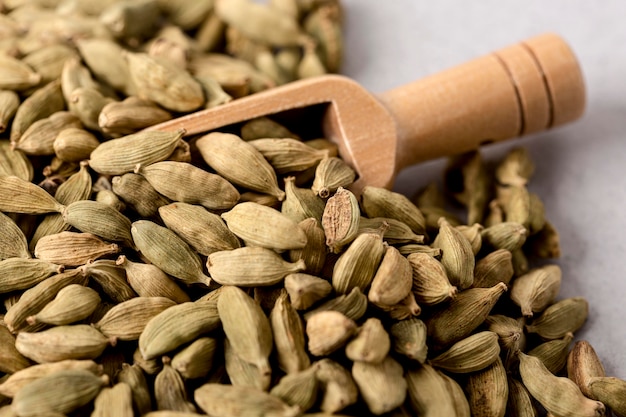
- This is the most widely used type globally and what most people mean when they simply say "cardamom." The pods are small (1–2 cm), bright green, and contain intensely aromatic seeds.
- The flavor profile is complex: warm, sweet, slightly minty, with citrus and herbal undertones.
Green cardamom is indispensible in Indian chai, Scandinavian baked goods (like Swedish kardemummabullar), Middle Eastern coffee (qahwa), and countless desserts from kheer to gulab jamun.
Black Cardamom (Amomum subulatum)
- Larger and darker than its green cousin, black cardamom has a distinctly smoky, camphor-like flavor because the pods are typically dried over open fires.
- It's used primarily in savory dishes — think hearty Indian curries, biryanis, and slow-cooked meat preparations. Black cardamom is a key ingredient in garam masala.
Other Varieties: White, Siam, and Ethiopian
White cardamom is simply green cardamom that has been bleached, resulting in a milder flavor. Siam cardamom (Amomum krervanh) is popular in Southeast Asian cuisine, while Ethiopian cardamom (Aframomum corrorima) serves a similar culinary role in East African cooking.
Detailed Comparison Table
| Feature | Green Cardamom | Black Cardamom | White Cardamom |
|---|---|---|---|
| Botanical Name | Elettaria cardamomum | Amomum subulatum | Bleached Elettaria |
| Pod Size | Small (1–2 cm) | Large (2–5 cm) | Small (1–2 cm) |
| Flavor | Sweet, floral, minty, citrusy | Smoky, earthy, camphor-like | Mild, delicate, less aromatic |
| Primary Use | Desserts, teas, coffees, sweet dishes | Curries, biryanis, stews, savory dishes | Baking, light-colored desserts |
| Origin | India, Sri Lanka, Guatemala | Nepal, Bhutan, northeast India | Same as green (processed) |
| Price Range | High (₹2,000–4,000/kg) | Moderate (₹800–1,500/kg) | High (similar to green) |
| Ayurvedic Properties | Cooling, tridoshic | Warming, reduces Kapha and Vata | Milder cooling effect |
What Does Cardamom Taste Like?
Cardamom's flavor is genuinely hard to pin down with a single description, and that's part of what makes it so versatile. Green cardamom offers a warm, aromatic sweetness with herbal and eucalyptus-like notes. There's a mild mintiness, a hint of lemon, and something almost resinous that lingers on the palate.
Does Cardamom Taste Like Cinnamon?
This is a surprisingly common question. While both spices are warm and aromatic, they taste quite differnet. Cinnamon is woody, sweet, and has a slight bark-like bitterness. Cardamom is more floral and mentholated. However, they complement each other beautifully in spice blends — which is probably why people associate them. In dishes like chai or biryani, they often appear together, creating a layered warmth that neither could achieve alone.
The Aroma Chemistry Behind the Flavor
The essential oil of cardamom contains several key compounds responsible for its distinctive taste and smell:
- 1,8-Cineole (eucalyptol): 20–50% — provides the cool, minty, eucalyptus note
- α-Terpinyl acetate: 30–40% — contributes the sweet, floral character
- Linalool and linalyl acetate: add delicate floral nuances
- Sabinene, limonene, and myrcene: contribute peppery and citrus tones
- Menthone: reinforces the cooling, minty quality
This chemical complexity is why cardamom works equally well in savory curries and sweet desserts — different compounds shine in different culinary contexts.
Health Benefits of Cardamom: What Does Science Say?
Cardamom isn't just a culinary delight — it has a long track record in traditional medicine systems, and modern research is providing solid evidence for many of these traditional uses.
Digestive Health and Stomach Ulcer Prevention
Cardamom has been used for centuries to ease digestive discomfort, and there's real science backing this up. A study published in the Journal of Ethnopharmacology found that cardamom extract protected rats against ethanol-induced gastric ulcers, showing significant antioxidant activity in the gastrointestinal tract. The spice stimulates bile secretion, which aids fat digestion, and its carminative properties help reduce bloating, gas, and indigestion.
In Ayurvedic practice, chewing a cardamom pod after meals is one of the simplest and most time-tested digestive remedies.
Antioxidant and Anti-Inflammatory Properties
Cardamom is rich in phytochemicals that fight oxidative stress and chronic inflamation. These include flavonoids, terpenoids, and phenolic acids. A 2019 clinical study found that cardamom supplementation significantly reduced inflammatory markers including C-reactive protein (CRP), tumor necrosis factor-alpha (TNF-α), and interleukin-6 (IL-6) in overweight and obese prediabetic women.
Heart Health and Blood Pressure
- Several studies suggest cardamom can support cardiovascular health. A 2009 study published in the Indian Journal of Biochemistry and Biophysics gave participants 3 grams of cardamom powder daily for 12 weeks and observed significant reductions in systolic and diastolic blood pressure, along with improved antioxidant status.
- Participants also reported enhanced fibrinolytic activity — meaning their blood's ability to dissolve clots improved.
Metabolic Syndrome and Diabetes Support
Emerging research highlights cardamom's potential role in managing metabolic syndrome. Studies have shown that it may help lower total cholesterol and triglycerides while improving insulin sensitivity. The anti-inflammatory effects (reducing CRP, TNF-α, IL-6 as mentioned above) are particularly relevant, since chronic low-grade inflammation is a hallmark of metabolic syndrome and type 2 diabetes.
Anticancer Potential
Some of the most exciting cardamom research involves its potential anticancer properties. Phytochemicals in cardamom have shown the ability to induce apoptosis (programmed cell death) in certain cancer cell lines. A 2012 study found that cardamom could help overcome multidrug resistance in cancer cells — potentially making chemotherapy more effective. Additionally, animal studies have demonstrated that cardamom extract may protect against the toxic side effects of certain chemotherapy drugs on healthy tissues.
Important caveat: these findings are primarily from laboratory and animal studies. Human clinical trials are still needed before cardamom can be recommended as a cancer treatment.
Oral Health Benefits
Cardamom has been chewed after meals across South Asia and the Middle East for centuries — not just for fresh breath but for genuine oral health benefits. Research shows its antibacterial properties are effective against common oral pathogens like Streptococcus mutans and Candida albicans, making it useful for preventing cavities and oral infections.
Liver Protection
Animal studies suggest that cardamom extract may protect the liver from damage caused by high-fat diets and other toxins. The hepatoprotective effect is attributed to its antioxidant compounds, which help neutralize free radicals that would otherwise damage liver cells.
Cardamom Nutrition: What's Inside the Pod?
For such a small spice, cardamom contains a surprisingly rich nutritional profile. Here's the breakdown per 1 tablespoon (approximately 6 grams) of ground cardamom, based on USDA data:
| Nutrient | Amount per 1 tbsp (6g) |
|---|---|
| Calories | 18 kcal |
| Carbohydrates | 4.0 g |
| Dietary Fiber | 1.6 g |
| Protein | 0.7 g |
| Fat | 0.4 g |
| Potassium | 64 mg |
| Calcium | 22 mg |
| Magnesium | 13 mg |
| Phosphorus | 10 mg |
| Iron | 0.81 mg |
| Manganese | 1.6 mg |
| Vitamin C | 1.3 mg |
- While you won't eat cardamom in large enough quantities to meet your daily nutritional needs from it alone, the micronutrient density is impressive.
- The manganese content is particularly notable — just one tablespoon provides a significant percentage of the daily recommended intake, supporting bone health and metabolic function.
स्वयं दवा न लें और प्रतीक्षा न करें। अभी डॉक्टर से चैट शुरू करें
Culinary Uses: How to Cook with Cardamom
Cardamom is one of those rare spices that bridges savory and sweet with ease. Here's how it's used across different culinary traditions and some practical tips.
In Indian Cuisine
Cardamom is foundational to Indian cooking. Green cardamom goes into chai masala, kheer, gulab jamun, lassi, and countless sweets. Black cardamom is essential in garam masala, biryani, and rich meat curries. The common method is to lightly crush pods and add them whole to dishes during cooking, removing them before serving — or grinding the seeds fresh for maximum potency.
In Middle Eastern and Scandinavian Cooking
In the Middle East, cardamom is almost synonymous with hospitality — qahwa (Arabic coffee) is prepared by grinding a few cardamom pods with the coffee beans. In Scandinavia, ground cardamom is a staple in pastries, breads, and holiday cookies. Sweden actually imports more cardamom per capita than almost any other Western nation.
Simple Recipes to Try at Home
Cardamom Chai (Elaichi Chai)
- Boil 2 cups water with 2 lightly crushed green cardamom pods, a small piece of ginger, and 1 tsp loose black tea leaves.
- Simmer for 3–4 minutes.
- Add 1 cup milk and sweeten to taste with sugar or jaggery.
- Bring to a boil, strain, and serve hot.
Cardamom Lassi
- Blend 1 cup yogurt, ½ cup cold water, 2 tbsp sugar, and seeds from 2 green cardamom pods.
- Blend until frothy. Serve over ice with a pinch of ground cardamom on top.
Quick Cardamom Cookies
- Mix 200g all-purpose flour, 100g softened butter, 80g powdered sugar, 1 tsp ground cardamom, and a pinch of salt.
- Form into small balls, flatten slightly, and bake at 175°C (350°F) for 12–15 minutes until edges are golden.
Cardamom Substitutes in Recipes
If you don't have cardamom on hand, here are the closest alternatives:
| Substitute | Ratio (per 1 tsp cardamom) | Best For |
|---|---|---|
| Cinnamon + Nutmeg | ½ tsp cinnamon + ¼ tsp nutmeg | Baking, desserts |
| Ginger + Clove | ½ tsp ginger + ¼ tsp clove | Curries, savory dishes |
| Allspice | ½ tsp | General purpose |
| Cinnamon + Ginger | ½ tsp each | Chai, warm beverages |
None of these will perfectly replicate cardamom's unique profile, but they'll get you reasonably close in a pinch.

Cardamom in Ayurveda and Traditional Medicine
Cardamom holds a revered place in Ayurvedic medicine, where it's been used for thousands of years — far longer than any modern clinical trial could track.
Ayurvedic Properties and Dosha Classification
- In Ayurveda, green cardamom is considered tridoshic, meaning it balances all three doshas (Vata, Pitta, and Kapha) when used in moderate amounts. Its virya (potency) is cooling despite its warm taste, which is why it doesn't aggravate Pitta the way most spices do.
- This makes it especially valuable — most warming spices can only be used by certain constitution types, but cardamom is safe and beneficial for nearly everyone.
Key Ayurvedic applications include:
- Agni (digestive fire) enhancement — stimulates appetite and improves nutrient absorption
- Pranavaha srotas (respiratory channel) support — opens airways, relieves congestion
- Manas (mind) calming — used to treat anxiety and restlessness
- Mukhashuddhikara — oral purification, freshening breath
Cardamom in Traditional Chinese Medicine (TCM)
In TCM, varieties of cardamom (particularly Amomum species, known as sha ren or bai dou kou) are used to warm the middle burner, resolve dampness, and promote Qi movement. It's commonly prescribed for nausea, abdominal distension, and loss of appetite.
How to Choose and Store Cardamom
This is something most guides overlook completely, but it matters enormously. Stale or poor-quality cardamom can be virtually flavorless.
Signs of High-Quality Cardamom
- Color: Look for vibrant green pods (for green cardamom). Pale, yellowish, or brownish pods indicate age or poor drying
- Aroma: Crack a pod open — it should release an immediate, strong, sweet-spicy scent. If you have to sniff hard, move on
- Texture: Pods should feel plump, not shriveled or papery
- Seeds: The seeds inside should be dark brown or black, sticky, and intensely fragrant
- Integrity: Pods should be intact, not split open (exposed seeds lose volatile oils quickly)
Proper Storage for Maximum Freshness
Whole cardamom pods, stored properly, retain their flavor for up to 12 months. Ground cardamom loses potency within 3–4 months.
- Store in an airtight container, away from direct sunlight and heat
- A cool, dark pantry shelf is ideal — avoid storing above or near the stove
- Glass jars with tight-fitting lids work better than plastic, which can absorb aromas
- For longest shelf life, keep pods whole and grind only when needed
- If pods become odorless, dry, and pale inside, they've lost their value — time to replace them
Cardamom in Perfumery, Cosmetics, and Beyond
Cardamom essential oil has a significant presence in the fragrance industry. Its warm, spicy-sweet, slightly camphorous character serves as a popular heart note in both men's and women's fragrances. Iconic perfumes like Yves Saint Laurent's La Nuit de l'Homme and Diptyque's Eau Duelle feature cardamom prominently.
In skincare, cardamom oil is valued for its antibacterial and antioxidant properties. It's used in face washes, toners, and spot treatments for acne-prone skin. Some hair care formulations include cardamom extract to stimulate scalp circulation and promote hair health.
Dosage, Safety, and Side Effects
Cardamom is generally recognized as safe when consumed in normal culinary amounts. But what about higher therapeutic doses?
Recommended Dosage
Research studies have used doses ranging from 500 mg to 3 grams of cardamom powder daily. The 2009 blood pressure study used 3 grams/day with positive results and no reported adverse effects over 12 weeks. However, there's no universally standardized therapeutic dose.
Practical guideline: 1–3 grams (approximately ½–1 teaspoon) of ground cardamom per day is a reasonable range for general wellness.
Side Effects and Precautions
- At culinary doses, side effects are virtually nonexistent
- Pregnant and breastfeeding women should stick to food-level amounts; high therapeutic doses haven't been adequately studied in these populations
- Individuals with gallstones should consult a doctor, as cardamom may trigger gallstone colic in susceptible individuals
Drug Interactions
This is a notable gap in the current literature. WebMD and other major health databases list "no known interactions" for cardamom. However, because cardamom may lower blood pressure and blood sugar, individuals taking antihypertensive or antidiabetic medications should monitor their levels and consult their healthcare provider before taking high-dose supplements.
Cardamom Allergy
True cardamom allergy is rare but documented. Symptoms may include contact dermatitis (skin rash when handling pods), respiratory irritation, or — in very rare cases — anaphylaxis. Cross-reactivity with other members of the Zingiberaceae family (ginger, turmeric) is theoretically possible. If you experience itching, swelling, or breathing difficulty after consuming cardamom, seek medical attention imediately.
Is Cardamom Safe for Children?
Cardamom in small culinary amounts is generally safe for children over 2 years of age. Many Indian families add a pinch of cardamom to milk or porridge for toddlers. However, concentrated supplements or essential oils should not be given to young children without medical guidance.
Cardamom for Weight Loss: Does It Work?
Interest in cardamom as a weight loss aid has been growing, and there's some scientific basis for the claims — though it's not a magic bullet by any means.
The potential mechanisms include:
- Metabolic boost: The thermogenic compounds in cardamom may slightly increase metabolic rate
- Anti-inflammatory action: Chronic inflammation drives weight gain and makes fat loss harder; cardamom's ability to lower CRP, TNF-α, and IL-6 may help break this cycle
- Improved digestion: Better nutrient absorption and gut motility support overall metabolic health
- Blood sugar regulation: Stable blood sugar means fewer cravings and less fat storage
A 2017 study on overweight and obese prediabetic women found that 3 grams of green cardamom daily for 8 weeks resulted in improvements in inflammatory markers and waist-to-hip ratio, though the weight loss itself was modest.
Bottom line: cardamom can be a helpful addition to a holistic weight management plan, but it won't replace proper diet and exercise.
Sustainability Challenges in Cardamom Farming
- This is an issue few people talk about, but it matters for the future of this spice.
- Cardamom is highly sensitive to climate variations — shifts in rainfall patterns, rising temperatures, and unpredictable monsoons are already affecting yields in Kerala and Karnataka.
Key challenges include:
- Monoculture risks: Many small farmers depend entirely on cardamom, making them vulnerable to crop failures
- Pest and disease pressure: Thrips, shoot borers, and the Katte virus disease are ongoing threats
- Deforestation concerns: Cardamom is traditionally shade-grown under forest canopy, but expansion of plantations can lead to forest degradation
- Organic certification: While demand for organic cardamom is growing, the transition is costly for small farmers
Supporting sustainably sourced cardamom — look for organic or fair-trade certified products — is one way consumers can make a difference.
Frequently Asked Questions
What Is the Indian Name of Cardamom?
In Hindi and Urdu, cardamom is called elaichi (इलायची / الائچی). Green cardamom is chhoti elaichi (small elaichi) and black cardamom is badi elaichi (big elaichi). Regional names include elakkai (Tamil), yelakulu (Telugu), elakka (Malayalam), and velachi (Marathi).
How Do You Pronounce Cardamom?
- The standard pronunciation is KAR-duh-muhm (British) or KAR-duh-mohm (American). The stress is on the first syllable.
- Some people say "cardamon" with an 'n' — that's an accepted variant spelling but less common.
What Is Cardamom Called in Arabic, Malay, and Chinese?
- Arabic: هال (hāl) or حبّ هال (habb hāl)
- Malay: Buah pelaga
- Chinese: 小豆蔻 (xiǎo dòu kòu) for green cardamom
How Much Does 1 kg of Cardamom Cost?
- Prices fluctuate significantly based on grade and market conditions. As of 2024–2025, green cardamom in India ranges from approximately ₹1,500 to ₹4,000 per kg retail. Premium Alleppey Green Extra Bold (AGEB) grade can command even higher prices.
- International prices vary — in the US and Europe, expect $30–$70 per kg depending on source and quality.
Can I Use Cardamom Powder Instead of Whole Pods?
Yes, but the flavor will be less vibrant. As a general rule, the seeds from about 6 green cardamom pods equal roughly ½ teaspoon of ground cardamom. Pre-ground cardamom looses potency faster, so whole pods are always preferable when possible.
What Is the Cardamom Plant Like?
The cardamom plant (Elettaria cardamomum) is a large, leafy herbaceous perennial that can grow 2–4 meters tall. It has long, dark green leaves and produces small, beautiful flowers near the base. The plant requires shade, consistent rainfall, and well-drained acidic soil. It typically begins bearing fruit 2–3 years after planting and can remain productive for 10–15 years under good conditions.
Final Thoughts: Why Cardamom Deserves a Place in Your Life
Cardamom is one of those remarkable natural ingredients that delivers on multiple fronts — flavor, aroma, health, and cultural richness. From supporting digestive health and managing blood pressure to adding depth to your morning chai, its versatility is unmatched among spices.
The key is quality. Buy whole green pods from a trusted source, store them properly, and grind fresh whenever possible. Whether you're drawn to cardamom for its Ayurvedic heritage, its scientifically-backed health benefits, or simply its extraordinary taste — this ancient spice has something to offer everyone.
Start small: add a crushed pod to your next cup of tea, sprinkle some ground cardamom on your oatmeal, or try the simple recipes we've shared above. Once you experience the depth of flavor and the subtle sense of well-being that comes with regular cardamom use, you'll understand why it's been treasured across civilizations for millennia.
Scientific Sources
- Ayurvedic Herbal Medicines: A Literature Review of Their Applications in Female Reproductive Health — Patibandla S et al., 2024, Cureus
- Cardamom — 2006
- Chyawanprash: A Traditional Indian Bioactive Health Supplement — Sharma R et al., 2019, Biomolecules
- Spices: Therapeutic Potential in Cardiovascular Health — Rastogi S et al., 2017, Current pharmaceutical design
- Acupuncture and Herbal Medicine for Nausea and Vomiting in Pregnancy: An Overview and Quality Assessment of Systematic Reviews — Choi SJ et al., 2025, International journal of women's health
- Deciphering the Potentials of Cardamom in Cancer Prevention and Therapy: From Kitchen to Clinic — Bano S et al., 2024, Biomolecules
- [Botany, traditional uses, phytochemistry and biological activities of cardamom [Elettaria cardamomum (L.) Maton] - A critical review](https://pubmed.ncbi.nlm.nih.gov/31541721/) — Ashokkumar K et al., 2020, Journal of ethnopharmacology
- Functional immune boosters; the herb or its dead microbiome? Antigenic TLR4 agonist MAMPs found in 65 medicinal roots and algae's — Mazzio E et al., 2023, Journal of functional foods
- The efficacy and safety of herbal medicines for glycaemic control and insulin resistance in individuals with type 2 diabetes: an umbrella review — Li E et al., 2025, BMC complementary medicine and therapies
- Critical Review on Nutritional, Bioactive, and Medicinal Potential of Spices and Herbs and Their Application in Food Fortification and Nanotechnology — Mandal D et al., 2023, Applied biochemistry and biotechnology
- The favorable impacts of cardamom on related complications of diabetes: A comprehensive literature systematic review — Nasimi Doost Azgomi R et al., 2024, Diabetes & metabolic syndrome
- An Overview of the Spices Used for the Prevention and Potential Treatment of Gastric Cancer — Kostelecka K et al., 2024, Cancers
- Health benefits of spices in individuals with chemotherapeutic drug-induced cardiotoxicity — Liu J et al., 2022, Current opinion in pharmacology
- Pharmacological interventions for clozapine-induced hypersalivation — Syed R et al., 2008, The Cochrane database of systematic reviews
- Production from both wild harvest and cultivation: The cross-border Swertia chirayita (Gentianaceae) trade — Cunningham AB et al., 2018, Journal of ethnopharmacology
- From kitchen to clinic: Pharmacotherapeutic potential of common spices in Indian cooking in age-related neurological disorders — Norouzkhani N et al., 2022, Frontiers in pharmacology
- Cardamom oil ameliorates behavioral and neuropathological disorders in a rat model of depression induced by reserpine — Abdel-Rasoul AA et al., 2023, Journal of ethnopharmacology
- Exploring the mechanism of action of Chinese medicine in regulating liver fibrosis based on the alteration of glucose metabolic pathways — Guo X et al., 2024, Phytotherapy research : PTR
- The effect of green cardamom on blood pressure and inflammatory markers among patients with metabolic syndrome and related disorders: A systematic review and meta-analysis of randomized clinical trials — Izadi B et al., 2023, Phytotherapy research : PTR
- On the Core Prescriptions and Their Mechanisms of Traditional Chinese Medicine in Hepatitis B, Liver Cirrhosis, and Liver Cancer Treatment — Wang Z et al., 2022, Journal of oncology
उपयोगकर्ताओं के प्रश्न
What types of dishes traditionally use black cardamom in cooking?
Client_12865d
28 दिनों पहले
Black cardamom is traditionally used in savory dishes in Indian and Southeast Asian cuisines. It is a key ingredient in spice blends like garam masala and is typically added to curries, stews, and rice dishes for its smoky and robust flavor. Black cardamom is not suited for desserts because of its strong, camphor-like flavor, unlike its green counterpart. When cooking, it is usually added whole and should be removed before serving. If you're unfamiliar with using black cardamom, start with one or two pods and adjust according to taste. If you're interested in new recipes or its health effects, various culinary and health websites offer detailed guidance.
How does cardamom enhance the flavor of savory dishes?
Client_b1cb0c
38 दिनों पहले
Cardamom enhances the flavor of savory dishes by adding a warm, complex, and slightly sweet-spicy aroma that complements a broad range of ingredients. It is often used in spice blends like garam masala and Curry powders, providing depth and complexity to curries, stews, and rice dishes. Cardamom pairs well with other spices such as cumin, coriander, and black pepper, enhancing their flavors while adding its signature aromatic notes. For best results, use whole pods or freshly ground seeds. Its unique flavor profile is utilized globally, transcending cultural culinary boundaries. If you are new to using cardamom, start with a small amount and adjust to taste, as its potency can easily overpower other flavors. If you have allergies or experience gastrointestinal discomfort, consult a healthcare provider.
What are the historical uses of cardamom in culinary traditions?
Client_49f484
47 दिनों पहले
Cardamom has been historically used in various culinary traditions across the globe, particularly in Indian, Middle Eastern, and Scandinavian cuisines. In Indian cooking, green cardamom is a staple in both sweet and savory dishes such as chai masala, kheer, gulab jamun, and biryani. Black cardamom is crucial for flavoring garam masala and rich meat curries. In the Middle East, cardamom often enhances coffee and desserts. Additionally, Scandinavian bread and pastries frequently include this spice. While cardamom does have potential health benefits, its culinary uses are primarily for flavor.
What are the potential benefits of cardamom for scalp health?
Client_985b37
57 दिनों पहले
The potential benefits of cardamom for scalp health primarily relate to its ability to stimulate scalp circulation. Improved circulation can support hair follicle health and promote stronger hair growth. Cardamom contains antioxidants and antimicrobial properties, which might help maintain a clean scalp environment and potentially reduce conditions that affect scalp health. However, more research is needed to fully substantiate these benefits. It's generally safe in normal culinary amounts, but you should consult a dermatologist if you experience scalp issues or before trying new treatments.
What is the best way to grow cardamom at home for optimal flavor?
Client_906aa6
67 दिनों पहले
For growing cardamom at home, make sure it has plenty of shade and consistent moisture, just like how it grows in nature. You'll need well-drained acidic soil for happy plants. Remember, it's a tropical plant so it loves humidity and warmth too. These conditions help boost its flavor by keeping the plant’s vital energy, or prana, in balance!
What is the best way to grind cardamom pods for cooking?
Client_43f9e3
76 दिनों पहले
Ah, great question! So for grinding cardamom pods, usually you'd want to first slightly crush them to release the seeds, then you can use a mortar and pestle or a spice grinder to make a fine powder. For the best flavor, grind just what you need right before cooking to keep its aroma fresh and strong! Sometimes the pod hulls get tough, so if you're using a grinder, keep an eye on it to make sure all parts are ground fine. Enjoy your cooking adventure with that awesome spice!
What is the nutritional value of cardamom and how does it support overall health?
Client_6fe9f7
85 दिनों पहले
The nutritional value of cardamom includes essential oils, fiber, calcium, iron, and manganese. It supports health by aiding digestion, reducing bloating, and its antioxidant properties help fight oxidative stress. Plus, it’s anti-inflammatory. It's great for overall well-being, especially for digestion! If you're interested in particular nutrients, though, checking resources like nutrition databases could be helpful!
What is the flavor profile of cardamom and how does it compare to other spices?
Client_dbef66
94 दिनों पहले
Cardamom's flavor is floral, sweet, with a hint of mint and lemon. Compared to cinnamon, which is woody and sweet with slight bitterness, cardamom is more complex, offering a spicy-sweet, camphorous kick. It's got an unique taste that really stands out in dishes and perfumes, quite distinct from cinnamon! So they're different but both wonderful!
What is cardamom known for in traditional medicine and how is it used?
Client_21b685
104 दिनों पहले
Cardamom in traditional medicine is known for its amazing digestive benefits— it helps soothe upset stomachs and improve digestion. It's often used in teas or dishes to take advantage of its antioxidant and anti-inflammatory properties. Besides being great for the stomach, it's thought to uplift mood! Try adding it to your tea or curry to see how it feels for you.
Can I use cardamom in smoothies for added health benefits?
Client_75998d
114 दिनों पहले
Absolutely, you can use cardamom in smoothies! It adds a lovely, aromatic flavor and comes with those great health benefits. Just a pinch can go a long way in aiding digestion and providing antioxidants. Give it a try next time you're blending up your favorite fruits or veggies! But remember, everyone's constitution is unique, so listen to how your body responds.
संबंधित आलेख

Nutrition
Triphala: The Complete Guide to Ayurveda's Most Powerful Herbal Formula
Triphala is a traditional Ayurvedic remedy made from three fruits, known for its cleansing and rejuvenating properties.
8,217

Nutrition
Why We Should Not Eat Curd at Night — A Deep Dive into Ayurveda’s Wisdom
In this guide, we’re not just going to repeat, “Don’t eat curd at night” like some kind of food police. We’re going into the why. We’ll explore what ancient Ayurvedic texts actually say about it, how your unique body type matters, and what modern science
11,177

Nutrition
ड्राक्षादी घृत: पित्त, वात और रक्त को संतुलित करना
जानें कैसे द्राक्षादि घृत, एक औषधीय घी, पित्त, वात और रक्त से जुड़ी बीमारियों का इलाज करता है। इसके फायदों, उपयोग के निर्देशों और समग्र स्वास्थ्य के लिए आयुर्वेदिक दृष्टिकोण के बारे में जानकारी प्राप्त करें।
5,272

Nutrition
Can We Eat Avocado Raw? Ayurvedic View and Recipes
Can we eat avocado raw and how? Discover raw avocado benefits, how to eat and use it, what to do with raw avocado, and easy raw avocado recipes
6,607

Nutrition
Mountain Garlic Benefits: Science & Health Applications
Explore the science-backed mountain garlic benefits, including potential cardiovascular support, antimicrobial properties, and tips on safe usage.
4,612

Nutrition
Mastering the Art of Drinking Water
Staying hydrated is essential for maintaining overall health, as water is vital for numerous bodily functions.
3,304

Nutrition
मधुस्नुही रसायन के उपयोग, खुराक, साइड इफेक्ट्स, और सामग्री
मधुस्नुही रसायन के उपयोग, खुराक, साइड इफेक्ट्स और सामग्री की खोज
2,341

Nutrition
How to Use Sunflower Seeds for Health, Hair, and Weight Management
Discover how to use sunflower seeds for weight loss, hair health, and more. Learn about sunflower seeds uses, recipes, and Ayurvedic benefits
5,071

Nutrition
Can Apple and Milk Be Taken Together? Ayurvedic Perspective
Can apple and milk be taken together safely? Discover Ayurvedic views, health benefits, and side effects of the apple and milk combination for daily diet
19,107

Nutrition
क्या हम केला और पपीता एक साथ खा सकते हैं? आयुर्वेदिक दृष्टिकोण और स्वास्थ्य लाभ
क्या हम केला और पपीता एक साथ खा सकते हैं? जानें आयुर्वेदिक दृष्टिकोण, स्वास्थ्य लाभ, जोखिम, और कैसे पपीता केला स्मूदी या जूस पाचन में मदद कर सकते हैं।
23,233
विषय से संबंधित परामर्श
अतिरिक्त दस्तावेज़
© 2024 Ask Ayurveda. सर्वाधिकार सुरक्षित।