आयुर्वेदिक डॉक्टर से प्रश्न पूछें और निःशुल्क या भुगतान मोड में अपनी चिंता की समस्या पर ऑनलाइन परामर्श प्राप्त करें। 2,000 से अधिक अनुभवी डॉक्टर हमारी साइट पर काम करते हैं और आपके प्रश्नों का इंतजार करते हैं और उपयोगकर्ताओं को उनकी स्वास्थ्य समस्याओं को हल करने में प्रतिदिन मदद करते हैं।


Body DetoxEar, Nose, and Throat DisordersGeriatrics & RejuvenationImmunodeficiencyInfertility TreatmentNutritionOrthopedic DisordersPediatricsRespiratory DisordersSexually Transmitted Diseases (STDs)Surgery RecoveryUrological DisordersVascular DisordersDental DisordersEndocrinological DisordersGastrointestinal DisordersYoga TherapyGeneral MedicineAllergic DisordersCardio DisordersGynecology and ObstetricsCosmetologySkin and Hair DisordersEye DisordersInfectious DiseasesMental DisordersNeurological DisordersOncologyPanchakarmaSexual Health & DisordersSports Medicine
पर प्रकाशित 10/09/24
(को अपडेट 08/06/26)
3,174
Dietary Pitfalls: Foods that Spike Bad Cholesterol (LDL) and Ayurvedic Insights
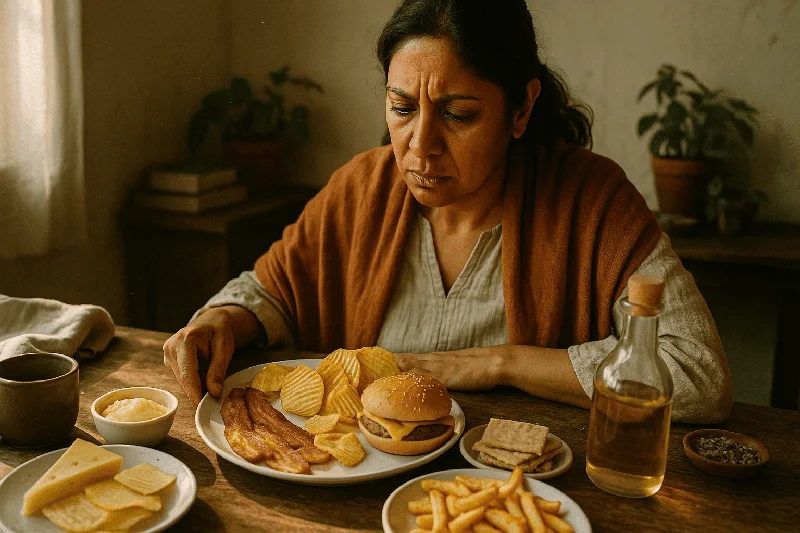
High cholesterol doesn't always announce itself with obvious symptoms — it builds silently, clogging arteries over years until a serious cardiac event forces you to pay attention. If you're reading this, you're already ahead. The single biggest dietary driver of elevated LDL ("bad") cholesterol isn't actually the cholesterol you eat — it's the saturated fats and trans fats hiding in everyday foods that push your liver to overproduce LDL particles.
Below, we break down every major food category that spikes bad cholesterol, explain the mechanisms most articles skip over, and give you practical swaps that actually work. We've also included a comparison table you won't find on competing pages, plus insights from both modern cardiology and Ayurvedic tradition.
What Is Cholesterol, and Is It Unhealthy?
- Cholesterol is a waxy, fat-like substance your liver produces naturally.
- You need it — for building cell membranes, producing hormones like estrogen and testosterone, and synthesizing vitamin D. The problem is never cholesterol itself. The problem is imbalance.
LDL vs HDL: Understanding the Difference
| Marker | Full Name | Role | Ideal Level |
|---|---|---|---|
| LDL | Low-Density Lipoprotein | Carries cholesterol to artery walls; excess builds plaque | Below 100 mg/dL |
| HDL | High-Density Lipoprotein | Carries cholesterol away from arteries to the liver for disposal | Above 60 mg/dL |
| Triglycerides | — | Fat stored from excess calories; high levels worsen LDL particle quality | Below 150 mg/dL |
| Total Cholesterol | — | LDL + HDL + 20% of triglycerides | Below 200 mg/dL |
- Think of LDL as delivery trucks dropping off packages (cholesterol) into your artery walls. HDL is the cleanup crew hauling the excess back to the liver.
- When LDL is too high and HDL too low, packages pile up — forming arterial plaque that narrows blood vessels and raises heart attack risk.
Is Dietary Cholesterol Harmful?
- Here's where most people get confused. For decades, we were told to avoid cholesterol-rich foods like eggs and shrimp.
- But research — including a 2020 review published in Circulation — has shown that dietary cholesterol has a modest effect on blood cholesterol for most people.
- Your body has a built-in compensation mechanism: when you eat more cholesterol, your liver dials down its own production to maintain equilibrium.
The real villains? Saturated fats and artificial trans fats. These override your body's balancing act and force LDL levels upward.
The Concept of Hyper-Responders
That said, genetics matter. Roughly 25% of the population are "hyper-responders" (also called non-compensators) — their bodies don't reduce endogenous cholesterol synthesis when dietary intake rises. For these individuals, eating cholesterol-rich foods does significantly raise LDL. If your LDL remains stubbornly high despite a reasonable diet, you may fall into this category, and it's worth discussing with your cardiologist.
Top Foods That Spike Bad Cholesterol (LDL)
Let's get specific. Below are the worst offenders, organized by category, with the exact mechanisms that make them harmful.
Fried Foods
French fries, fried chicken, pakoras, samosas, cheese sticks, and deep-fried snacks — they're everywhere, and they're a cholesterol disaster for two reasons:
- Deep frying increases saturated fat content dramatically, especially when palm oil or partially hydrogenated oils are reused (common in street food and fast-food outlets).
- Repeated heating of cooking oil generates trans fatty acids, even in oils that started trans-fat-free. A 2017 study in the Journal of Food Science and Technology found that reheated cooking oils can contain up to 4.2% trans fats.
One serving of commercially fried chicken (about 150 g) can deliver 5–7 g of saturated fat — nearly half the daily limit recommended by the American Heart Association.
Processed Meats
Bacon, sausages, hot dogs, salami, pepperoni, and deli meats are loaded with saturated fat, sodium, and preservatives. A 2020 meta-analysis in Critical Reviews in Food Science and Nutrition linked each 50 g daily serving of processed meat to a 17% increased risk of cardiovascular disease.
It's not just the fat content. Nitrates and sodium used in processing promote inflammation and endothelial dysfunction — which makes existing cholesterol plaques more dangerous.
Red Meat and Organ Meats
Beef, lamb, mutton, and pork contain significant saturated fat, particularly in fattier cuts. A 100 g serving of lamb chops provides roughly 8–9 g of saturated fat. Organ meats (liver, kidney, brain) are also extremely high in dietary cholesterol — goat brain, a delicacy in parts of India, contains over 2,500 mg of cholesterol per 100 g.
For hyper-responders, organ meats are best avoided entirely. For others, moderation and choosing lean cuts is key.
Commercial Baked Goods and Desserts
Cookies, cakes, pastries, donuts, muffins, and cream-filled biscuits are a triple threat: they combine refined flour, sugar, and unhealthy fats (often palm oil or partially hydrogenated vegetable oil) in a single package.
- Even products labeled "cholesterol-free" can be packed with saturated fat from tropical oils.
- Always check the nutrition label — the front of the package is marketing; the back is the truth.
Fast Food
Burgers, pizzas, fried chicken combos, and loaded nachos — fast food is engineered for taste, not health. A single fast-food burger with cheese can contain 15–20 g of saturated fat, which already exceeds the AHA's daily recommended limit. Regular fast-food consumption is strongly associated with higher LDL, higher triglycerides, increased abdominal obesity, and systemic inflammation.
Full-Fat Dairy Products and Cheese
Butter, cream, full-fat cheese (cheddar, paneer in large quantities, cream cheese), and ice cream are dense sources of saturated fat. A single tablespoon of butter contains about 7 g of saturated fat. A 100 g block of cheddar delivers roughly 21 g.
Ghee: The Indian Kitchen Staple
- Ghee (clarified butter) is central to Indian cooking and Ayurvedic practice. One tablespoon contains about 8 g of saturated fat and 33 mg of cholesterol.
- While Ayurveda considers ghee a sacred and therapeutic food — especially in moderation and when prepared traditionally — modern lipid science suggests that excessive ghee consumption absolutely raises LDL levels.
- The nuance: small amounts of ghee (1–2 teaspoons per day) within an otherwise balanced diet may be acceptable for most individuals.
- But using it liberally in parathas, dal, rice, and sweets — as many households do — can push daily saturated fat intake well beyond safe limits.
Tropical Oils: The Hidden Culprit in "Healthy" Foods
- Coconut oil, palm oil, and palm kernel oil are plant-based yet extremely high in saturated fat.
- Coconut oil is roughly 82% saturated fat — higher even than butter or lard.
These oils are widely used in:
- Vegan and "plant-based" packaged foods
- Non-dairy creamers and whipped toppings
- Commercial granola and energy bars
- Instant noodles and ready-to-eat snacks
Just because a product says "vegan" or "plant-based" does not mean it's heart-friendly. Check for palm oil, palm kernel oil, and coconut oil on ingredient lists.
Surprising Foods That Secretly Raise Your Cholesterol
Some foods fly under the radar because they're marketed as healthy or seem harmless. Here are the sneaky ones.
Granola and Energy Bars
Many granola brands contain coconut oil, palm oil, or chocolate chips that add 4–8 g of saturated fat per serving. "Low-fat" granola often compensates with added sugar, which raises triglycerides and promotes the formation of small, dense LDL particles — the most dangerous kind.
Energy bars are equally tricky. Palm kernel oil is a common binder, and some popular bars contain more saturated fat than a chocolate biscuit.
Microwave Popcorn and Flavored Snacks
Pre-packaged microwave popcorn often contains partially hydrogenated oils and butter flavoring loaded with saturated fat. A single bag can deliver 4–6 g of saturated fat. Boxed mac and cheese, flavored rice mixes, and instant noodles also fall into this category.
Coffee (Unfiltered Varieties)
- Here's one almost nobody talks about.
- Unfiltered coffee — including French press, Turkish coffee, and espresso to a lesser degree — contains a compound called cafestol, one of the most potent dietary cholesterol-raising agents known.
A 2007 study in Molecular Endocrinology found that cafestol increases LDL cholesterol by up to 8% when consumed regularly (5+ cups per day of unfiltered coffee). Paper-filtered coffee removes most cafestol, making it a safer choice. South Indian filter coffee, when prepared with a paper or fine-cloth filter, is generally acceptable.
Thai-Style Curries and Coconut-Based Dishes
Coconut milk, a base for many Indian and Southeast Asian curries, contains roughly 13 g of saturated fat per 100 ml. A generous serving of coconut-based curry can deliver 20+ g of saturated fat in a single meal. If you love these dishes, opt for light coconut milk or substitute half the coconut milk with vegetable stock.
Flour Tortillas vs Corn Tortillas
An oddly specific but useful note: flour tortillas often contain lard or hydrogenated oils and deliver 2–3 g of saturated fat each, while corn tortillas are naturally almost fat-free. If you eat wraps regularly, this small swap adds up over weeks.
Whipped Cream and Coffee Creamers
Store-bought whipped cream and non-dairy creamers (especially powdered varieties) are loaded with hydrogenated oils and tropical fats. A better alternative is a dollop of thick Greek yogurt or blending your own topping from chilled coconut cream (used sparingly).
Trans Fats: The Most Dangerous Fat You're Still Eating
While many countries have banned artificial trans fats, they haven't disappeared entirely — especially in India, where enforcement varies and many local bakeries and snack manufacturers still use partially hydrogenated vegetable oils (PHVOs).
How Trans Fats Destroy Your Lipid Profile
Trans fats are uniquely harmful because they deliver a double blow:
- They raise LDL cholesterol by interfering with LDL receptor activity on liver cells, reducing the liver's ability to clear LDL from the bloodstream.
- They lower HDL cholesterol simultaneously — the only type of fat that does this consistently.
Even 2% of total calories from trans fats — just 4–5 g per day — is associated with a 23% increase in cardiovascular disease risk, according to a landmark 2006 study in the New England Journal of Medicine.
Where Trans Fats Hide
- Stick margarine and vanaspati (dalda)
- Commercially fried street food (especially where oil is reused)
- Packaged biscuits, cream-filled wafers, and puffs
- Cheap bakery products — cakes, pattices, khari
- Some brands of peanut butter (check for "hydrogenated" on the label)
Reading tip: In India, FSSAI requires trans fat labeling, but values under 0.2 g per serving can be listed as "0 g." If the ingredient list includes "partially hydrogenated" anything, the product contains trans fats regardless of what the nutrition panel says.
Sugar, Refined Carbs, and the Cholesterol Connection Nobody Explains
- Most cholesterol articles focus exclusively on fat.
- But here's something the competition consistently misses: excess sugar and refined carbohydrates are major drivers of dyslipidemia, particularly elevated triglycerides and small dense LDL particles.
The Mechanism
- When you consume excess sugar (especially fructose from sugary drinks, sweets, and processed foods), your liver converts it into triglycerides via de novo lipogenesis.
- High triglyceride levels:
- Promote the formation of small, dense LDL particles (pattern B), which penetrate artery walls more easily than large, buoyant LDL particles
- Lower HDL cholesterol
- Create an overall atherogenic lipid profile even when total LDL numbers appear "borderline"
A 2014 study in JAMA Internal Medicine found that people who consumed 25% or more of their daily calories from added sugar had nearly triple the risk of dying from cardiovascular disease compared to those who consumed less than 10%.
Common Sources in the Indian Diet
- Sweetened chai (3–4 cups/day with 2 spoons of sugar each)
- Mithai and traditional sweets (ladoo, barfi, jalebi)
- Packaged fruit juices and soft drinks
- White rice in excessive portions (glycemic load matters)
- Maida-based products — white bread, naan, biscuits, instant noodles
स्वयं दवा न लें और प्रतीक्षा न करें। अभी डॉक्टर से चैट शुरू करें
Alcohol and Cholesterol: What the Research Actually Shows
No major competitor article in the top results addresses this, yet it's a direct PAA signal and a common patient question.
- Moderate alcohol consumption (1 drink/day for women, up to 2 for men) has been associated with slightly higher HDL levels.
- However, this does not mean alcohol protects your heart — the risks typically outweigh any marginal HDL benefit.
Heavy drinking and binge drinking:
- Dramatically raise triglycerides
- Contribute to fatty liver, which worsens overall lipid metabolism
- Increase caloric intake (alcohol = 7 calories per gram, almost as energy-dense as fat)
Beer, in particular, is associated with triglyceride spikes. Spirits mixed with sugary sodas compound the problem. If you drink, keep it moderate and avoid sweet mixers.
Cholesterol Comparison Table: Common Foods at a Glance
No other top-ranking article provides a consolidated comparison. Here's your quick-reference chart.
| Food (per serving) | Serving Size | Saturated Fat (g) | Cholesterol (mg) | Trans Fat (g) |
|---|---|---|---|---|
| Fried chicken (2 pieces) | ~160 g | 7.0 | 125 | 0.5–2.0* |
| Bacon (3 slices) | ~35 g | 5.0 | 30 | 0.1 |
| Cheddar cheese | 50 g | 10.5 | 52 | 0.3 |
| Butter | 1 tbsp (14 g) | 7.2 | 31 | 0.3 |
| Ghee | 1 tbsp (15 g) | 8.0 | 33 | 0 |
| Coconut oil | 1 tbsp (14 g) | 11.8 | 0 | 0 |
| Whole egg | 1 large (50 g) | 1.6 | 186 | 0 |
| Shrimp | 100 g | 0.3 | 189 | 0 |
| Goat brain | 100 g | 2.6 | 2,550 | 0 |
| McDonald's Big Mac | 1 burger | 11.0 | 80 | 1.0 |
| Packaged cream biscuits | 4 biscuits (~50 g) | 5.5 | 5 | 0.5–1.5* |
| Vanaspati (dalda) | 1 tbsp | 6.5 | 0 | 2.0–4.0 |
\Trans fat content varies by brand and frying oil reuse frequency.* Key takeaway from this table: Foods like shrimp and eggs are high in dietary cholesterol but low in saturated fat — making them far less harmful to LDL levels than butter, ghee, or coconut oil, which are low in cholesterol but loaded with saturated fat. The saturated fat column is what matters most for LDL.
The AHA Daily Limit: How Much Saturated Fat Is Too Much?
The American Heart Association recommends limiting saturated fat to no more than 5–6% of total daily calories. For someone eating 2,000 calories per day, that's approximately:
> 11–13 grams of saturated fat per day
To put this in perspective — a single tablespoon of coconut oil (11.8 g) nearly maxes out your entire daily budget. Two tablespoons of ghee exceed it. One fast-food burger blows past it entirely.
This is why awareness of portion sizes and cooking fats matters so much — you can run through your daily limit before lunch if you're not careful.
Healthy Alternatives and Smart Swaps
Knowledge without action is useless. Here are practical replacements that genuinely work.
Cooking Oils
- Replace: Ghee, butter, coconut oil, vanaspati
- With: Mustard oil, rice bran oil, olive oil (for low-heat cooking), safflower oil, canola oil
Protein Sources
- Replace: Processed meats, fatty red meat cuts, organ meats
- With: Skinless chicken breast, turkey, fish (especially fatty fish like salmon and mackerel — rich in omega-3), tofu, lentils (dal), chickpeas, kidney beans (rajma)
Dairy
- Replace: Full-fat milk, cream, paneer in large amounts, butter
- With: Toned or skimmed milk, low-fat curd/yogurt, small portions of paneer cooked without excess oil
Snacks
- Replace: Packaged biscuits, namkeen fried in palm oil, chips
- With: Roasted chana, makhana (fox nuts dry-roasted with minimal oil), fruits, unsalted nuts (almonds, walnuts)
The Role of Soluble vs Insoluble Fibre
Not all fibre is equal when it comes to cholesterol. Soluble fibre forms a gel-like substance in your gut that binds to bile acids (made from cholesterol) and escorts them out of your body. Your liver must then pull more cholesterol from the blood to make new bile acids — effectively lowering LDL.
Best sources of soluble fibre:
- Oats and oat bran (3 g of soluble fibre per serving — clinically proven to lower LDL by 5–10%)
- Barley
- Psyllium husk (isabgol) — 5–10 g/day can reduce LDL by 7%
- Beans, lentils, chickpeas
- Apples, oranges, guavas
- Flaxseeds
Insoluble fibre (found in wheat bran, vegetables, whole grains) is great for digestion but doesn't directly lower cholesterol.
Ayurvedic Insights on Cholesterol Management
In Ayurveda, elevated cholesterol correlates with the concept of "meda dhatu" (fat tissue) imbalance and accumulation of "ama" (metabolic toxins) due to impaired agni (digestive fire). While Ayurveda doesn't use the terms LDL or HDL, it recognizes the consequences — blocked channels (srotavarodha), heaviness, and cardiovascular strain.
Key Ayurvedic strategies that align with modern evidence:
- Triphala: A combination of three fruits (amla, haritaki, bibhitaki) traditionally used to support digestion and detoxification. A 2012 study in the Journal of the American Nutraceutical Association showed triphala reduced total cholesterol and LDL in animal models.
- Guggul (Commiphora mukul): Guggulsterones have been studied for lipid-lowering properties and are recognized in Ayurvedic pharmacology for "medohara" (fat-reducing) action.
- Arjuna bark (Terminalia arjuna): Widely used in Ayurvedic cardiology; shown in small clinical trials to support healthy lipid levels and endothelial function.
- Dietary wisdom: Ayurveda emphasises warm, cooked, easily digestible meals; avoiding heavy, cold, and excessively oily foods; and eating according to your prakriti (constitution). These principles, interestingly, align well with anti-inflammatory dietary patterns recommended by modern cardiologists.
How Long Does It Take for Cholesterol to Go Down?
This is one of the most commonly searched follow-up questions and the answer depends on your approach:
- Dietary changes alone: Most people see measurable LDL reductions within 4–6 weeks of consistent dietary modification. A 2022 review in the American Journal of Clinical Nutrition confirmed that reducing saturated fat intake by 5% of calories lowered LDL by an average of 10 mg/dL within 3–4 weeks.
- Adding exercise: Combining dietary changes with 150 minutes/week of moderate aerobic activity (brisk walking, cycling, swimming) can improve HDL by 3–6 mg/dL and accelerate LDL reduction.
- Statin therapy: When prescribed, statins can reduce LDL by 30–50% within 6–8 weeks.
- Losing weight: Every 10 lbs (4.5 kg) of weight loss is associated with an approximate 5–8 mg/dL drop in LDL.
Consistency matters more than perfection. A sustainably improved diet beats a "perfect" diet you abandon after two weeks.
FAQ
Is 2 Eggs a Day Too Much Cholesterol?
- For most healthy adults, 2 eggs per day does not significantly raise LDL cholesterol.
- Large studies — including a 2018 analysis of nearly 500,000 participants published in Heart — found no significant increase in cardiovascular risk with moderate egg consumption (up to 1 egg daily). Two eggs provide about 372 mg of dietary cholesterol but only 3.2 g of saturated fat. However, hyper-responders (about 25% of people) should limit intake to 3–4 eggs per week and monitor their lipid panels.
Can Drinking Lots of Water Reduce Cholesterol?
Water itself doesn't directly lower cholesterol. However, proper hydration supports liver function, aids digestion, and can help you avoid sugary beverages that raise triglycerides. Replacing soda, packaged juice, or sweetened chai with water is an indirect but meaningful cholesterol-management strategy.
Do Bananas Lower Cholesterol?
Bananas contain soluble fibre (about 0.6 g per medium banana) which can modestly contribute to cholesterol reduction as part of a high-fibre diet. They're not a magic fix, but they're certainly a better snack than biscuits or chips. For maximum cholesterol-lowering fibre, oats, isabgol, and beans are more effective per serving.
What Is the 80/20 Rule for High Cholesterol?
- The 80/20 rule suggests focusing on heart-healthy eating 80% of the time while allowing flexibility for indulgences 20% of the time.
- It's a sustainability framework — not a medical guideline. For people with clinically high LDL (above 160 mg/dL) or existing heart disease, the ratio may need to be closer to 90/10, especially in the early months of lipid management.
Does Coffee Affect Your Cholesterol?
Yes — but it depends on how it's brewed. Unfiltered coffee (French press, Turkish, boiled coffee) contains cafestol, which raises LDL cholesterol. Filtered coffee (paper filter, South Indian filter with fine mesh) removes most cafestol and is considered safe. If you drink 4+ cups daily, switching to filtered coffee can lower LDL by 5–8% over a few months.
What Are 10 Warning Signs of High Cholesterol?
High cholesterol is largely "silent" — most people have no symptoms until atherosclerosis is advanced. However, warning signs that may indicate long-term high cholesterol include: chest pain or angina, shortness of breath during mild exertion, pain in legs while walking (peripheral artery disease), xanthomas (yellowish deposits on skin, especially around eyelids), frequent fatigue, transient ischemic attacks (mini-strokes), erectile dysfunction, numbness or tingling in extremities, rapid heartbeat, and high blood pressure readings. If you have any of these, get a fasting lipid panel done promptly.
Final Takeaway: Take Control of Your Cholesterol Today
Managing LDL cholesterol isn't about eliminating every food you enjoy — it's about understanding which foods cause the most damage and making consistent, informed swaps. Saturated fats and trans fats are the primary dietary drivers of high LDL. Sugar and refined carbs are the underestimated accomplices. And your overall dietary pattern matters far more than any single meal.
Start with three actionable steps this week:
- Switch your primary cooking oil to mustard, rice bran, or olive oil
- Add one serving of soluble fibre daily — a bowl of oats, a spoon of isabgol, or a cup of dal
- Read labels on 3 packaged foods you buy regularly — check for saturated fat content and partially hydrogenated oils
Small changes, sustained over months, produce remarkable results. Your arteries will thank you.
Scientific Sources
- The Mediterranean Diet and Cardiovascular Health — Martínez-González MA et al., 2019, Circulation research
- Re-evaluation of the traditional diet-heart hypothesis: analysis of recovered data from Minnesota Coronary Experiment (1968-73) — Ramsden CE et al., 2016, BMJ (Clinical research ed.)
- The Mediterranean diet and cardiovascular disease — Barbería-Latasa M et al., 2025, Cardiovascular research
- Dietary Fats and Oils in India — Gulati S et al., 2017, Current diabetes reviews
- Mapping Lifestyle Interventions for Gestational Diabetes Prevention: A Scoping Review — Peña A et al., 2024, Current diabetes reports
- Global burden and strength of evidence for 88 risk factors in 204 countries and 811 subnational locations, 1990-2021: a systematic analysis for the Global Burden of Disease Study 2021 — GBD 2021 Risk Factors Collaborators, 2024, Lancet (London, England)
- Effects of ultra-processed foods on the microbiota-gut-brain axis: The bread-and-butter issue — Song Z et al., 2023, Food research international (Ottawa, Ont.)
- The Mediterranean diet: science and practice — Willett WC, 2006, Public health nutrition
- On account of trans fatty acids and cardiovascular disease risk - There is still need to upgrade the knowledge and educate consumers — Niforou A et al., 2022, Nutrition, metabolism, and cardiovascular diseases : NMCD
- A high-trans fat, high-carbohydrate, high-cholesterol, high-cholate diet-induced nonalcoholic steatohepatitis mouse model and its hepatic immune response — Zhang Q et al., 2023, Nutrition & metabolism
उपयोगकर्ताओं के प्रश्न
What are the symptoms of high LDL cholesterol to watch for?
Client_efd6df
1 दिन पहले
High LDL cholesterol, often termed "bad" cholesterol, typically does not cause any symptoms, which is why it's crucial to get regular screenings through a fasting lipid panel. This blood test can reveal elevated LDL levels, a risk factor for cardiovascular diseases. If you experience unexplained fatigue, chest pain, or symptoms of heart disease, consult a healthcare provider, as these could suggest complications. High LDL is particularly concerning if accompanied by hypertension, diabetes, or smoking history. Adjusting diet, like reducing saturated fats, and lifestyle changes are effective prevention strategies.
Can I drink coffee daily if I have high cholesterol?
Client_f408b8
6 दिनों पहले
Yes, you can drink coffee daily if you have high cholesterol, but it depends on how the coffee is brewed. Filtered coffee, such as those made with a paper filter or South Indian filter with a fine mesh, is generally considered safe because it removes most of the cafestol, a compound in coffee that can raise LDL cholesterol levels. Unfiltered coffee, like espresso or French press, contains higher levels of cafestol and might contribute to higher cholesterol. If you’re managing high cholesterol, opt for filtered coffee and focus on a balanced diet. Consult a healthcare provider for personalized advice.
How does brewing method affect cholesterol levels in coffee?
Client_60a923
11 दिनों पहले
Brewing method significantly affects the cholesterol levels in coffee because unfiltered methods like French press, Turkish, or boiled coffee contain higher levels of cafestol, a compound known to raise LDL cholesterol. Filtered methods such as drip coffee or using paper filters reduce exposure to this compound, making them a better choice for individuals concerned about cholesterol levels. If you are trying to manage or reduce cholesterol, opt for filtered brewing methods and consult a healthcare provider if your cholesterol levels remain high despite dietary changes.
What are the health risks of consuming organ meats for cholesterol?
Client_191034
16 दिनों पहले
Consuming organ meats can significantly increase dietary cholesterol intake due to their high cholesterol content, which may pose health risks, particularly for individuals sensitive to cholesterol intake, known as hyper-responders. While dietary cholesterol doesn't affect everyone equally, excessive consumption can elevate blood cholesterol levels and potentially increase the risk of cardiovascular disease. If you have high cholesterol or a history of heart disease, consider limiting organ meat intake and focus on a balanced diet. Consult your doctor for personalized advice, especially if you experience symptoms like chest pain or severe fatigue.
How does stress influence cholesterol levels and heart health?
Client_4658be
26 दिनों पहले
Stress can influence cholesterol levels and heart health by triggering several physiological changes. When stressed, your body releases hormones like cortisol and adrenaline, which may increase cholesterol levels by raising triglycerides in the bloodstream and promoting the release of stored fats. Over time, chronic stress can contribute to elevated levels of LDL ("bad" cholesterol), potentially leading to clogged arteries and increased cardiovascular risk.
Managing stress through regular physical activity, relaxation techniques such as deep breathing, and maintaining a balanced diet low in saturated fats may help lower cholesterol levels. If you experience persistent high stress or high cholesterol, it’s important to talk to a healthcare professional. They can evaluate your overall cardiovascular risk and advise on effective interventions. If you are exploring alternatives like Triphala, consult with a doctor, especially if you're on medication for cholesterol.
What are the best snacks to choose for heart health?
Client_5324e7
35 दिनों पहले
For heart health, the best snacks are those low in saturated fat and high in fiber and healthy fats. Fresh fruits like apples and berries, raw vegetables with hummus, and nuts such as almonds and walnuts make excellent choices. These snacks provide antioxidants and omega-3 fatty acids that support heart function. Whole grains like oatmeal or air-popped popcorn are also good options for their fiber content, which helps lower LDL cholesterol. Limit processed meats and opt for plant-based snacks. If these lifestyle adjustments don't seem to help, consult a doctor for personalized advice.
How much soluble fiber should I eat daily to lower cholesterol?
Client_08d3cd
45 दिनों पहले
To lower cholesterol, aim for 5 to 10 grams of soluble fiber daily as part of a heart-healthy diet. Good sources include oats, fruits like apples and oranges, vegetables like carrots, and legumes such as beans and lentils. These foods help reduce low-density lipoprotein (LDL) cholesterol, often referred to as "bad" cholesterol, by binding to cholesterol in the digestive system and removing it from the body. Effects on cholesterol levels can typically be observed within a few weeks to a few months with consistent dietary changes. Always consult a healthcare provider before making significant diet changes, especially if you have underlying health conditions.
How long does it take to see cholesterol improvements after dietary changes?
Client_000511
55 दिनों पहले
It typically takes around 4 to 6 weeks to see measurable improvements in cholesterol levels after making dietary changes. This timeframe can vary depending on the individual's baseline cholesterol levels, genetics, and adherence to a heart-healthy diet. Reducing saturated fats, such as those found in coconut oil, organ meats, and hydrogenated oils, plays a crucial role in lowering LDL (bad) cholesterol. Incorporating more fiber-rich foods, like oats and fruits, and healthy fats like those in fish or nuts can also help. It's advisable to have regular check-ups with a healthcare provider to monitor your progress and address any concerns. Always consult a doctor before making significant dietary changes, especially if you have high cholesterol or other health conditions.
What is the impact of saturated fat on heart health and cholesterol levels?
Client_272474
64 दिनों पहले
Saturated fats can raise LDL cholesterol, which is linked to heart disease, but it's a bit more complex than that. Not everyone responds the same way, and saturated fats found in whole foods might impact health differently than processed ones. Balancing your diet with healthy fats, like those from nuts and seeds, may be a good approach. Also, keeping your agni (digestive fire) balanced with fresh meals supports overall heart health.
What oils should I avoid using for cooking to keep my cholesterol in check?
Client_31d534
74 दिनों पहले
You'll wanna avoid cooking with palm oil, palm kernel oil, and maybe coconut oil since they're high in saturated fats. These can boost your cholesterol levels. Instead, try using olive or avocado oil, which are generally better for heart health. Always keep an eye on how much you use too!
संबंधित आलेख

Nutrition
Discover Amla's Health Wonders
Amla, or Indian gooseberry, is a vital component in Ayurveda, renowned for its high vitamin C content and rejuvenating properties.
3,731

Nutrition
What Foods Kill Mucus: Ayurvedic Nutrition for Clear Breathing
What foods kill mucus naturally? Discover mucus-reducing foods, healing ingredients that destroy mucus, and Ayurvedic remedies to remove mucus from lungs
11,688

Nutrition
Can Cucumber Cause Gas and Bloating?
Discover if cucumber can cause gas or bloating, why it affects digestion, and its role in IBS. Learn Ayurvedic tips and safe combinations to enjoy cucumber
14,274

Nutrition
वजन घटाने के लिए दालचीनी चाय कैसे बनाएं: रेसिपी और फायदे
दालचीनी चाय की ताकत का उपयोग करें प्राकृतिक वजन घटाने और मेटाबॉलिज्म बढ़ाने के लिए
8,062

Nutrition
तरबूज के बीज कैसे खाएं: फायदे और सुरक्षित उपयोग के लिए आयुर्वेदिक गाइड
तरबूज के बीजों को स्वास्थ्य लाभ के लिए कैसे खाएं? जानें तरबूज के बीज खाने, भूनने और इस्तेमाल करने के बेहतरीन तरीके, साथ ही रोजाना सुरक्षित सेवन के लिए आयुर्वेदिक टिप्स।
11,840

Nutrition
How Much Weight Can You Lose in a Month: Ayurvedic Approach
How much weight can you lose in a month? Discover Ayurvedic insights on healthy, sustainable weight loss, natural tips, and what results are truly safe
2,249

Nutrition
Mastering the Art of Drinking Water
Staying hydrated is essential for maintaining overall health, as water is vital for numerous bodily functions.
3,275

Nutrition
एलनीर कुज़ाम्बु के फायदे, खुराक, सामग्री, और साइड इफेक्ट्स
एलनीर कुज़ाम्बु के फायदे, खुराक, सामग्री और साइड इफेक्ट्स की खोज
2,551

Nutrition
Kapha Diet: Insights from Ayurveda
The Kapha Diet is a central aspect of Ayurveda, focusing on balancing the Kapha dosha for enhanced physical and mental well-being.
3,250

Nutrition
How to Use Sunflower Seeds for Health, Hair, and Weight Management
Discover how to use sunflower seeds for weight loss, hair health, and more. Learn about sunflower seeds uses, recipes, and Ayurvedic benefits
5,027
विषय से संबंधित परामर्श
अतिरिक्त दस्तावेज़
© 2024 Ask Ayurveda. सर्वाधिकार सुरक्षित।