Uttarbasti for Female Infertility: Ayurvedic Uttarbasti Treatments to Enhance Fertility
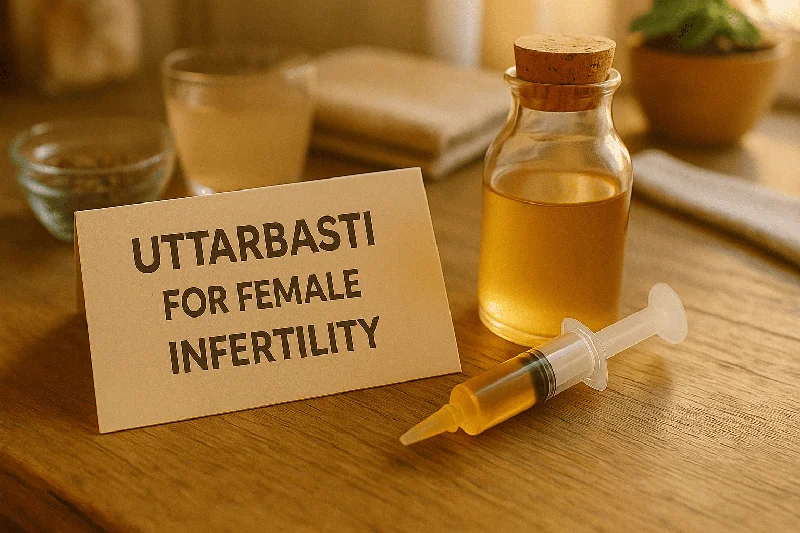
Uttarbasti (also spelled Uttar Basti) is a specialised Panchakarma procedure in Ayurveda that involves the administration of medicated oils, ghee, or herbal decoctions into the urinary bladder through the urethra or into the uterus through the vaginal route. It is considered one of the most effective Ayurvedic interventions for reproductive and urological disorders — from female infertility and tubal blockage to male urethral stricture and prostatitis. Unlike many modern invasive procedures, Uttarbasti works by delivering therapeutic substances directly to the target organ, promoting tissue repair, reducing inflammation, and restoring hormonal balance with minimal side effects.
In this comprehensive guide, we cover everything you need to know: the classical textual references, step-by-step procedure, types, indications for both men and women, success rates, costs, and how Uttarbasti compares to modern medical alternatives. Whether you're a patient exploring options or a practitioner seeking a thorough reference, this article is designed to be the most complete resource available on Uttarbasti.
What Is Uttarbasti? Definition and Classical Origins
Uttarbasti literally translates to "upper enema" — Uttara meaning "upper" or "superior," and Basti meaning "bladder" or "enema." Unlike the more common Niruha and Anuvasana Basti procedures (which involve rectal administration), Uttarbasti delivers medication through the urethral or vaginal route to reach the urinary bladder or uterus directly.
Samhita References: What the Classical Texts Say
One of the biggest gaps in existing online literature is the lack of systematic classical references. Let's fix that.
- Charaka Samhita — Charaka describes Uttarbasti in the Siddhi Sthana (Chapter 12), specifically mentioning its use in Yonivyapad (vaginal/uterine disorders) and Mutraghata (urinary obstruction). He emphasizes that Uttarbasti should be administered after proper Shodhana (purification) for maximum efficacy.
- Charaka also details the specific instruments — a Pushpa Netra (catheter-like device) made of gold, silver, or a combination of metals.
Sushruta Samhita — Sushruta provides perhaps the most detailed surgical perspective on Uttarbasti in Chikitsa Sthana (Chapters 37-38). He describes precise measurements for the catheter (12 Angula length for females, 14 Angula for males) and stresses the importance of graduated dosing — starting with smaller quantities and increasing over successive days. Ashtanga Hridaya — Vagbhata in Sutra Sthana (Chapter 19) consolidates the teachings of both Charaka and Sushruta, adding clarity on contraindications and the specific Ritu Kala (menstrual timing) for administration in females — ideally during the Ritukala period (post-menstrual proliferative phase).
Why It Is Considered Superior Among Basti Procedures
Charaka explicitly states that Uttarbasti is the best treatment for disorders of the Garbhashaya (uterus) and Mutrashaya (urinary bladder) because the medication reaches the target organ without systemic dilution. This direct-action principle is remarkably similar to modern concepts of local drug delivery — a concept Ayurveda recognized thousands of years ago.
Types of Uttarbasti: Classification by Route and Medium
Understanding the types of Uttarbasti is essential for both patients and practitioners, as the choice depends on the condition being treated, the patient's constitution (Prakriti), and the dominant dosha imbalance.
Classification by Route of Administration
| Type | Route | Target Organ | Primary Use |
|---|---|---|---|
| Garbhashaya Gata Uttarbasti | Vaginal/Cervical | Uterus | Female reproductive disorders, infertility, tubal blockage |
| Mutrashaya Gata Uttarbasti | Urethral | Urinary Bladder | Urethral stricture, cystitis, urinary retention (both sexes) |
Classification by Type of Medicinal Medium
| Medium | Sanskrit Term | Properties | Best Suited For |
|---|---|---|---|
| Medicated Oil (Taila) | Sneha Uttarbasti | Vata-pacifying, nourishing, lubricating | Dryness, tissue degeneration, Vata-dominant disorders |
| Medicated Ghee (Ghrita) | Ghrita Uttarbasti | Pitta-pacifying, cooling, rejuvenating | Inflammatory conditions, Pitta-dominant disorders |
| Herbal Decoction (Kashaya) | Niruha Uttarbasti | Cleansing, Kapha-reducing, scraping | Blockages, fibroids, Kapha-dominant disorders |
Dosha-Specific Selection of Medicines
This is an area no competitor has adequately addressed. In Ayurvedic practice, the choice of oil or decoction is not random — it is determined by the patient's Prakriti and Vikrti (current imbalance):
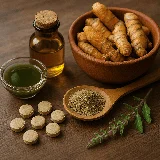
- Vata-Dominant Conditions (e.g., thin endometrium, oligospermia, urethral dryness): Warm, heavy oils like Dashamoola Taila, Bala Taila, or Shatapushpa Taila are preferred. These have Ushna (hot), Guru (heavy), and Snigdha (unctuous) properties.
- Pitta-Dominant Conditions (e.g., inflammatory pelvic disease, burning micturition): Cooling mediums like Shatavari Ghrita, Yashtimadhu Taila, or Chandanadi Taila are selected.
- Kapha-Dominant Conditions (e.g., tubal blockage, fibroids, PCOS with thick mucus): Sharp, penetrating formulations like Kumari Taila (with its Tikshna, Lekhana, and Pramathi properties) or Triphala decoction are used.
A clinical study published in the Journal of Ayurveda and Integrative Medicine analyzed Kumari Taila specifically, documenting its physicochemical parameters — acid value 2.76, iodine value 68.94, saponification value 187.45 — confirming its Vata-Kapha Shamaka (balancing) action and suitability for tubal blockage cases.
Uttarbasti Procedure: Step-by-Step Protocol
The procedure follows the classical three-phase Panchakarma protocol. Precision and aseptic technique are non-negotiable.
Purvakarma (Pre-Procedure Preparation)
- 1.Systemic Preparation (3-7 days before): The patient undergoes Snehana (internal oleation with medicated ghee) and Swedana (sudation/steam therapy) to prepare the body and open the Srotas (channels).
- 2.Local Preparation: On the day of the procedure, the patient is given a cleansing Niruha Basti (decoction enema) followed by an Anuvasana Basti (oil enema) to clear the lower channels.
- 3.Specific Positioning: The patient lies in a supine position (Uttana Shayana) with knees flexed and hips elevated — similar to dorsal lithotomy position used in modern gynaecology.
- 4.Sterilization: All instruments, including the Uttarbasti Netra (catheter), are sterilized. Modern practitioners use autoclave-sterilized disposable catheters (typically 6-8 French gauge for females).
Pradhanakarma (Main Procedure)
For Females (Garbhashaya Gata):
- The vulval area is cleaned with antiseptic solution
- A sterile Uttarbasti catheter is gently introduced through the cervical os into the uterine cavity
- Pre-warmed medicated oil/ghee (typically 30-50ml, as specified by Sushruta's graduated dosing) is slowly instilled using a syringe
- The catheter is withdrawn gently, and the patient remains supine with hips elevated for 15-20 minutes
For Males (Mutrashaya Gata):
- The urethral meatus is cleaned and a lubricant applied
- A sterile catheter (10-14 French gauge) is introduced into the urethra up to the bladder
- Medicated oil (typically 20-40ml) is instilled slowly
- Catheter is removed and the patient remains resting
The procedure typically takes 30-45 minutes including preparation.
Paschatkarma (Post-Procedure Care)
- Rest: The patient should rest for at least 2-3 hours. Heavy physical activity is restricted for 24-48 hours.
- Diet: Light, warm, easily digestible food — Khichdi, warm milk with turmeric, soups. Avoid spicy, heavy, or cold foods.
- Follow-up Sessions: A typical course involves 3-7 consecutive days of treatment, usually timed with the menstrual cycle for female reproductive conditions (starting from Day 5-7 of the cycle).
- Monitoring: Watch for any unusual discharge, excessive pain, or fever — report to the practitioner immediately.
Uttarbasti Instruments
Classical texts describe the Pushpa Netra — a catheter-like hollow tube with a rounded, flower-shaped tip to prevent mucosal injury. Traditional instruments were made of gold, silver, or bronze. Modern Ayurvedic practice has largely transitioned to sterile disposable PVC or silicone catheters, which offer better infection control while maintaining the procedure's principles.
For male urethral procedures, graduated catheter sizes from 10FG to 20FG are used for calibration — progressively increasing the diameter over successive sessions to restore normal urethral caliber in stricture cases.
Uttarbasti for Females: Indications, Benefits, and Success Rate
Uttarbasti Procedure in Female: Key Indications
Uttarbasti is most commonly sought by women for reproductive health issues.
The primary indications include:
- Tubal Blockage (Fallopian Tube Obstruction): This is the single most researched indication. The medicated oils act as mucolytic and anti-inflammatory agents, breaking down adhesions and restoring tubal patency.
- Female Infertility (Vandhyatva): Whether due to anovulation, poor endometrial receptivity, or unexplained infertility.
- PCOS (Polycystic Ovarian Syndrome): Helps regulate menstrual cycles and reduce cyst formation.
- Endometriosis: Anti-inflammatory oils reduce ectopic endometrial tissue growth.
- Pelvic Inflammatory Disease (PID): Reduces chronic inflammation in the reproductive tract.
- Menstrual Irregularities: Dysmenorrhea, oligomenorrhea, amenorrhea.
- Recurrent Miscarriage: Strengthens the uterine lining and improves Garbhashaya Bala (uterine strength).
Can Uttarbasti Cure Fibroids?
- This is one of the most frequently asked questions.
- The honest answer: Uttarbasti can help manage small to moderate fibroids, particularly when combined with oral Ayurvedic medicines and other Panchakarma procedures. The Lekhana (scraping) property of certain oils like Kumari Taila and the Kashaya (decoction) based Uttarbasti can help reduce fibroid size over multiple treatment cycles.
- However, large fibroids (>5cm) or those causing severe symptoms may still require surgical intervention.
- A combined approach — using Uttarbasti to reduce fibroid size before considering surgery — is gaining popularity among integrative practitioners.
Uttar Basti Success Rate
Clinical data on Uttarbasti success rates, while limited compared to modern RCTs, is genuinely encouraging:
- Tubal Blockage: A clinical study using Kumari Taila Uttarbasti with HSG (Hysterosalpingography) diagnostics showed approximately 80% improvement in tubal patency after a full course of treatment.
- Conception Rate: Approximately 40% of patients achieved conception within 2 months of completing Uttarbasti treatment for infertility-related conditions.
- Menstrual Regulation: Over 70% of patients with irregular cycles reported normalized menstruation within 2-3 cycles of treatment.
These numbers should be interpreted carefully — success depends on the severity of the condition, the patient's overall health, adherence to dietary and lifestyle modifications, and the skill of the practitioner.
Uttarbasti Benefits for Women
- Directly nourishes the uterine lining (endometrium)
- Restores hormonal balance through local action on reproductive tissues
- Non-invasive compared to surgical alternatives
- Minimal pain — most patients report mild discomfort rather than actual pain
- No general anesthesia required
- Quick recovery — normal activities can resume within 24-48 hours
- Cost-effective compared to IVF and surgical options
- Can be repeated safely over multiple cycles
Uttarbasti for Male: Beyond Urethral Stricture
Most existing resources only discuss male Uttarbasti in the context of urethral stricture. But the classical texts and emerging clinical experience suggest a much broader scope.
Urethral Stricture (Mutramarga Sankoch)
This remains the most documented male indication.
The procedure involves:
- 1.Diagnostic Assessment: Uroflowmetry (to measure urine flow rate), retrograde urethrogram (RGU), and clinical examination
- 2.Calibration Phase: Starting with a 10FG catheter and progressively increasing to 18-20FG over sessions to dilate the narrowed urethra
- 3.Medication Instillation: Anti-inflammatory and tissue-healing oils (like Jatyadi Taila or Ksheerabala Taila) are instilled to prevent re-scarring
- 4.Maintenance: Follow-up sessions may be needed, especially in cases with significant scar tissue, history of multiple surgeries, urethroplasty, or BXO (Balanitis Xerotica Obliterans)
Male Infertility and Other Urological Conditions
This is a significant gap in the existing literature.
Classical texts clearly describe Uttarbasti use in:
- Oligospermia/Asthenospermia: Medicated oils like Shatavari Ghrita and Ashwagandha Taila instilled into the bladder can improve sperm parameters by reducing local oxidative stress
- Chronic Prostatitis: Anti-inflammatory Uttarbasti helps reduce prostatic congestion and chronic pelvic pain
- Azoospermia (Obstructive type): When ejaculatory duct obstruction is the cause, Uttarbasti may help restore patency — though evidence is still largely anecdotal
- Post-surgical Urethral Adhesions: Preventing re-stenosis after urological surgery
Is Uttarbasti Painful for Men?
Let's be real — urethral catheterization is uncomfortable. Most male patients report a stinging or burning sensation during catheter insertion, but it's generally tolerable without anesthesia. The use of local anesthetic gel (Lidocaine gel) before catheter insertion has become standard practice in modern Ayurvedic hospitals, making the procedure significantly more comfortable.
Uttarbasti vs Modern Medical Procedures: A Comparison
No existing resource provides this comparison, which is surprising given that patients are often choosing between Ayurvedic and conventional treatments.
Here's an honest head-to-head analysis:
| Parameter | Uttarbasti | IUI (Intrauterine Insemination) | Hysteroscopy/Laparoscopy | Balloon Tuboplasty |
|---|---|---|---|---|
| Invasiveness | Minimally invasive | Minimally invasive | Moderately invasive (surgery) | Moderately invasive |
| Anesthesia | None/Local | None | General/Spinal | General |
| Cost per session | ₹2,000–₹6,000 | ₹10,000–₹25,000 | ₹50,000–₹2,00,000 | ₹80,000–₹1,50,000 |
| Hospital Stay | OPD (no admission) | OPD | 1-3 days | 1 day |
| Recovery Time | 24-48 hours | 24 hours | 1-2 weeks | 3-5 days |
| Side Effects | Minimal | Mild cramping | Surgical risks | Re-stenosis risk |
| Repeatability | Safely repeatable | Repeatable | Limited by tissue health | Limited |
| Holistic Benefit | Yes (dosha balancing) | No | No | No |
| Success for Tubal Block | ~80% patency | N/A (different purpose) | 60-80% | 70-85% |
Important Note: This comparison is not to suggest that Uttarbasti replaces modern medical procedures in all cases. Severe pathologies, emergency conditions, and cases unresponsive to conservative treatment absolutely warrant modern surgical or medical intervention. The best outcomes often come from an integrative approach.
Uttarbasti Treatment Cost
Understanding the financial aspect is crucial for patients planning treatment.
How Much Does Uttar Basti Cost?
The cost of Uttarbasti varies based on several factors:
| Factor | Cost Range |
|---|---|
| Single Session | ₹2,000 – ₹6,000 |
| Full Course (5-7 sessions) | ₹10,000 – ₹35,000 |
| With Pre/Post Panchakarma | ₹25,000 – ₹60,000 |
| Premium Hospital/Clinic | Up to ₹80,000 for complete package |
Factors affecting cost include: the city (metro vs. tier-2), the reputation of the hospital or practitioner, the type of medicated oil used (some formulations use expensive herbs like Saffron or Musk), and whether additional Panchakarma procedures are included.
Compared to IVF (₹1,00,000 – ₹3,00,000 per cycle) or laparoscopic surgery (₹50,000 – ₹2,00,000), Uttarbasti is significantly more affordable — often by a factor of 5-10x.
Contraindications, Side Effects, and Precautions
Who Should NOT Get Uttarbasti?
- Active genital or urinary tract infections
- During menstruation (active bleeding phase)
- Pregnancy (confirmed or suspected)
- Sexually transmitted diseases (untreated)
- Excessive uterine bleeding (Raktapradar)
- Cervical or urethral malignancy
- Severe cardiac or respiratory illness
- Post-recent surgery on reproductive or urinary organs (wait at least 6-8 weeks)
Side Effects and Risks — The Honest Picture
Most resources dismiss side effects with a vague "no apparent complications." That's not entirely accurate. While Uttarbasti is generally safe when performed by a trained practitioner, potential side effects include:
- Mild cramping or discomfort during and immediately after the procedure (very common, resolves within hours)
- Light spotting or discharge for 1-2 days post-procedure (common, not concerning)
- Urinary tract infection if aseptic technique is compromised (rare but possible)
- Allergic reaction to the medicated oil — manifesting as itching, swelling, or rash (rare)
- Vasovagal response — dizziness or fainting during catheter insertion (uncommon)
- Uterine perforation — extremely rare, almost exclusively associated with untrained practitioners or incorrect catheter size
The key mitigating factor is practitioner skill and strict aseptic protocol.
Essential Precautions
- Always ensure the practitioner is a qualified BAMS or MD (Ayurveda) with specific Panchakarma training
- Verify that disposable, sterilized instruments are used
- Complete any prescribed diagnostic tests (ultrasound, urine culture, HSG) before starting treatment
- Follow dietary restrictions strictly — avoid cold, heavy, fermented foods during the treatment course
- Abstain from sexual intercourse during the treatment days
- Report any fever, severe pain, or foul-smelling discharge immediately
Comprehensive Guide to Medicated Oils and Decoctions Used in Uttarbasti
No existing online resource provides a structured reference for which formulations to use when.
Here's a practitioner-grade reference table:
| Formulation | Type | Key Properties | Primary Indications |
|---|---|---|---|
| Kumari Taila | Oil | Ushna, Tikshna, Lekhana, Vata-Kapha Shamaka | Tubal blockage, PCOS, fibroids |
| Phala Ghrita | Ghee | Madhura, Sheeta, Balya | Infertility, recurrent miscarriage, endometrial weakness |
| Shatapushpa Taila | Oil | Vata-Kapha Shamaka, Artavapravartaka | Ovulatory disorders, dysmenorrhea |
| Dashamoola Taila | Oil | Vata Shamaka, Shothahara | PID, chronic pelvic pain, post-inflammatory adhesions |
| Yashtimadhu Taila | Oil | Sheeta, Pitta Shamaka, Ropana | Inflammatory conditions, cervicitis, pitta-dominant disorders |
| Shatavari Ghrita | Ghee | Balya, Brimhana, Rasayana | Male and female infertility, tissue nourishment |
| Jatyadi Taila | Oil | Vranaropana, Shothahara | Urethral stricture, post-surgical healing, wound repair |
| Ksheerabala Taila | Oil | Vata Shamaka, Balya, Brimhana | Nerve-related urological conditions, chronic pain |
| Triphala Kashaya | Decoction | Lekhana, Shothahara, Kapha-hara | Kapha-dominant blockages, cleansing before oil-based Uttarbasti |
| Chandanadi Taila | Oil | Sheeta, Mutral, Pitta Shamaka | Burning micturition, cystitis, pitta-dominant urological conditions |
Why Choose Uttarbasti? Real Patient Perspective
Consider the story of Meera (name changed), a 32-year-old woman from Pune who had been trying to conceive for four years. After two failed IUI cycles and a diagnosis of bilateral tubal blockage, she was advised to go for IVF — which she couldn't afford at the time. On a relative's suggestion, she consulted an Ayurvedic practitioner who recommended a course of Uttarbasti with Kumari Taila, combined with oral Phala Ghrita and dietary modifications.
After completing two courses of Uttarbasti (7 sessions each, one month apart), her follow-up HSG showed significant improvement — the right tube was completely patent, and the left showed partial clearing. Four months later, she conceived naturally.
- Stories like Meera's are not uncommon in Ayurvedic clinical practice.
- They don't mean Uttarbasti is a miracle cure — it's not. But for the right patient, with the right indication, performed by a skilled practitioner, the results can be genuinely life-changing.
Frequently Asked Questions (FAQ)
What happens after Uttarbasti?
After the procedure, patients typically rest for 2-3 hours. Mild cramping and light discharge are normal. You'll be advised to eat light food, avoid strenuous activity for 24-48 hours, and abstain from sexual intercourse during the treatment course. Most patients can return to normal routine the next day.
Is Uttarbasti painful?
For females, most patients describe it as "uncomfortable" rather than painful — similar to a Pap smear or IUI procedure. For males, the urethral catheterization can cause a brief stinging sensation, which is significantly reduced with local anesthetic gel. The actual oil instillation is usually painless.
How many days of Uttarbasti treatment are needed?
A standard course is 3-7 consecutive days. For chronic conditions like tubal blockage or urethral stricture, 2-3 courses may be needed with one-month gaps between them. Your practitioner will customize the duration based on your specific condition and response.
What should I eat during Uttarbasti treatment?
Stick to warm, light, easily digestible foods: Khichdi, moong dal soup, rice porridge, warm milk, steamed vegetables. Avoid cold drinks, raw salads, spicy food, fermented items, heavy meats, and alcohol. This dietary protocol (Pathya) supports the treatment's effectiveness.
Can Uttarbasti be done at home?
Absolutely not. Uttarbasti is a clinical procedure that requires sterile instruments, proper positioning, and trained practitioner oversight. Attempting it at home risks serious complications including infection, perforation, and allergic reactions. Always get it done at a registered Ayurvedic hospital or Panchakarma center.
Is Uttarbasti effective for both old and young patients?
The classical texts indicate it can be performed on any adult of reproductive age. For women, it's most commonly done between ages 20-45. For men with urethral stricture, age is less of a limiting factor — patients from 25 to 70+ have been successfully treated. Elderly patients may require gentler formulations and fewer sessions.
Conclusion: Is Uttarbasti Right for You?
Uttarbasti stands as one of Ayurveda's most sophisticated and clinically validated Panchakarma procedures. With documented success rates of up to 80% for tubal patency and 40% conception rates, combined with minimal invasiveness and affordability, it deserves serious consideration — not as an alternative to modern medicine, but as a powerful complement to it.
The key to success lies in three factors: accurate diagnosis, skilled practitioner selection, and patient compliance with the full treatment protocol including diet and lifestyle modifications.
- If you're considering Uttarbasti, start by consulting a qualified Ayurvedic practitioner (BAMS/MD Ayurveda) who has specific experience with this procedure.
- Get the necessary diagnostic tests done first — an ultrasound, relevant blood work, and HSG (for tubal issues) — so that the treatment can be precisely tailored to your condition.
Your journey toward reproductive health may have more options than you realize. Uttarbasti could well be the missing piece.
Scientific Sources
- Managing endometrial calcifications using Kshara Taila and Phalaghrita Uttara Basti: A case report — Mehra P et al., 2023, Journal of Ayurveda and integrative medicine
- Ayurveda management of post TURP urethral stricture: A case report — Sushendra T et al., 2025, Journal of Ayurveda and integrative medicine
आयुर्वेदिक डॉक्टर से एक प्रश्न पूछें और मुफ़्त या सशुल्क मोड में अपनी चिंता की समस्या पर ऑनलाइन परामर्श प्राप्त करें।
2,000 से अधिक अनुभवी डॉक्टर हमारी साइट पर काम करते हैं और आपके प्रश्नों की प्रतीक्षा करते हैं और प्रतिदिन उपयोगकर्ताओं को उनकी स्वास्थ्य समस्याओं को हल करने में मदद करते हैं।
संबंधित आलेख