आयुर्वेदिक डॉक्टर से प्रश्न पूछें और निःशुल्क या भुगतान मोड में अपनी चिंता की समस्या पर ऑनलाइन परामर्श प्राप्त करें। 2,000 से अधिक अनुभवी डॉक्टर हमारी साइट पर काम करते हैं और आपके प्रश्नों का इंतजार करते हैं और उपयोगकर्ताओं को उनकी स्वास्थ्य समस्याओं को हल करने में प्रतिदिन मदद करते हैं।


Body DetoxEar, Nose, and Throat DisordersGeriatrics & RejuvenationImmunodeficiencyInfertility TreatmentNutritionOrthopedic DisordersPediatricsRespiratory DisordersSexually Transmitted Diseases (STDs)Surgery RecoveryUrological DisordersVascular DisordersDental DisordersEndocrinological DisordersGastrointestinal DisordersYoga TherapyGeneral MedicineAllergic DisordersCardio DisordersGynecology and ObstetricsCosmetologySkin and Hair DisordersEye DisordersInfectious DiseasesMental DisordersNeurological DisordersOncologyPanchakarmaSexual Health & DisordersSports Medicine
पर प्रकाशित 02/13/25
(को अपडेट 08/12/26)
2,751
Lakshmanarishtam – Ayurvedic Remedy for Digestive Health and Immunity
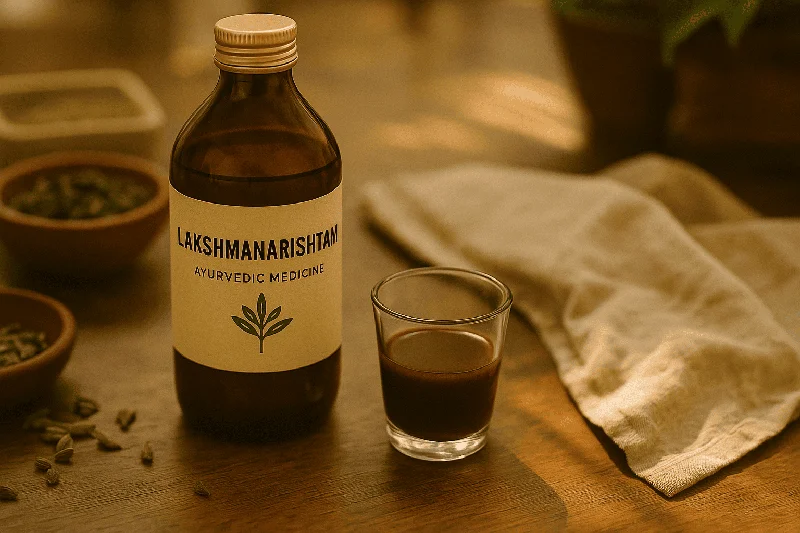
Lakshmanarishtam is a classical Ayurvedic fermented liquid formulation (Arishta) primarily used to support reproductive health in both men and women. It strengthens the uterus, helps manage conditions like menorrhagia and infertility, improves sperm quality, and balances all three doshas — Vata, Pitta, and Kapha. Rooted in centuries-old Ayurvedic texts, this potent herbal tonic remains one of the most trusted preparations for fertility-related concerns across India.
If you've been searching for reliable, in-depth information about this formulation — what it contains, how it works, who should take it, and what to watch out for — you're in the right place. This guide covers everything the typical product pages don't, including contraindications, drug interactions, scientific evidence, and how Lakshmanarishtam compares to similar Ayurvedic medicines.
What Is Lakshmanarishtam?
Lakshmanarishtam (also spelled Laxmanarishta or Lakshmanarishtam) is a polyherbal Ayurvedic preparation belonging to the Arishta category — medicines prepared through natural fermentation (Sandhana Kalpana). The name derives from its key herb, Lakshmana (Ipomoea sepiaria), which has been revered in Ayurveda for its profound effects on the female reproductive system.
Unlike modern tinctures or syrups, Arishtas undergo a controlled fermentation process where herbs are decocted in water and then fermented with jaggery (guda) or sugar as a substrate. This fermentation naturally generates a small percentage of alcohol (typically 5–10%), which serves as both a preservative and a bioenhancer — helping active compounds get absorbed more quickly into the bloodstream.
Classical Reference & Origin
The formulation of Lakshmanarishtam is documented in Sahasrayogam, one of the most important Ayurvedic compilations originating from the Kerala tradition. Some scholars also trace references to similar formulations in the Bhaishajya Ratnavali, a widely recognized pharmacopeia of Ayurvedic medicine.
In classical Ayurvedic texts, Lakshmana herb is associated with Pumsavana Karma — a prenatal Ayurvedic ritual and therapeutic procedure aimed at ensuring healthy conception and supporting pregnancy. This ancient context underscores just how central this herb (and formulations containing it) has been to reproductive medicine in Ayurveda for hundreds of years.
How Arishta Formulations Differ from Other Ayurvedic Medicines
Not all Ayurvedic medicines work the same way.
Here's why the Arishta format matters:
- Faster absorption: The self-generated alcohol acts as a natural vehicle, carrying active phytochemicals across the gut lining more efficiently than powders (Churnas) or tablets.
- Longer shelf life: The fermentation-produced alcohol preserves the formulation naturally — typically 3 to 5 years without refrigeration.
- Enhanced potency: During fermentation, certain inactive compounds undergo biotransformation, becoming pharmacologically active metabolites that weren't present in the raw herbs.
- Better palatability: Compared to raw herbal decoctions (Kashayams), Arishtas have a mildly sweet, slightly tangy taste that most patients find easier to consume regularly.
Key Ingredients of Lakshmanarishtam
The strength of any Ayurvedic formulation lies in its ingredients. Lakshmanarishtam combines a carefully calibrated blend of herbs, each contributing specific therapeutic actions. Below is a detailed breakdown based on the classical Sahasrayogam reference:
| Ingredient | Botanical Name | Part Used | Primary Action |
|---|---|---|---|
| Lakshmana | Ipomoea sepiaria | Whole plant | Uterine tonic, fertility enhancer |
| Musta (Nagarmotha) | Cyperus rotundus | Rhizome | Digestive, anti-inflammatory, regulates menstruation |
| Bala | Sida cordifolia | Root | Strengthens tissues, nourishes reproductive organs |
| Daruharidra | Berberis aristata | Stem | Anti-microbial, supports uterine health |
| Bilva (Vilva) | Aegle marmelos | Root/Fruit | Balances Vata, supports digestion |
| Haridra (Turmeric) | Curcuma longa | Rhizome | Anti-inflammatory, blood purifier |
| Raktachandana (Red Sandalwood) | Pterocarpus santalinus | Heartwood | Cooling, reduces Pitta, supports skin health |
| Chandana (White Sandalwood) | Santalum album | Heartwood | Cooling, calming, reduces burning sensations |
| Dhataki (Fire flame bush) | Woodfordia fruticosa | Flowers | Fermentation initiator, astringent, uterine tonic |
| Guda (Jaggery) | — | — | Fermentation substrate, iron source |
Detailed Herb Profiles
- Lakshmana (Ipomoea sepiaria): The star ingredient.
- In Ayurveda, Lakshmana is classified as a Garbhaprada drug — one that directly promotes conception. It acts as a uterine tonic, improving endometrial receptivity and supporting ovulation. A 2017 review published in the Journal of Ayurveda and Integrative Medicine noted that Ipomoea species contain flavonoids and alkaloids with potential estrogenic activity, which may partly explain the traditional use in female infertility.
Musta (Cyperus rotundus): Often called "the grass that heals," Musta is one of the most important herbs in Ayurveda for menstrual regulation. Research published in Phytotherapy Research (2013) demonstrated significant anti-spasmodic and anti-inflammatory effects, supporting its traditional use in dysmenorrhea and irregular periods. Bala (Sida cordifolia): Translating literally to "strength," Bala is a Rasayana (rejuvenative) herb. It nourishes Rasa and Shukra Dhatus (plasma and reproductive tissues), providing deep-level nourishment to the reproductive system in both sexes. Daruharidra (Berberis aristata): Rich in the alkaloid berberine, this herb has been the subject of numerous studies. A 2020 meta-analysis in Frontiers in Pharmacology confirmed berberine's beneficial effects on polycystic ovary syndrome (PCOS), including improvements in insulin resistance and hormonal balance — directly relevant to fertility. Dhataki (Woodfordia fruticosa): This ingredient serves a dual purpose. Its flowers contain natural yeasts that initiate the fermentation process, and simultaneously contribute astringent and uterine-tonic properties. Without Dhataki, the Arishta simply wouldn't ferment properly.
What Is the Benefit of Lakshmanarishtam?
Lakshmanarishtam offers a wide spectrum of therapeutic benefits, primarily centered around reproductive health, hormonal regulation, and overall vitality. Let's break these down.
Reproductive Health Benefits for Women
This is where Lakshmanarishtam truly shines.
The formulation is traditionally indicated for:
- Infertility (Vandhyatva): By strengthening the uterus, improving endometrial lining quality, and supporting regular ovulation, Lakshmanarishtam creates favorable conditions for conception.
- Menorrhagia (heavy menstrual bleeding): The astringent and uterine-tonic herbs work synergistically to reduce excessive bleeding, contract uterine musculature, and prevent the fatigue and weakness that typically accompany heavy periods.
- Leucorrhoea (white discharge): Anti-microbial ingredients like Daruharidra help manage abnormal vaginal discharge.
- Irregular menstruation: Musta and Lakshmana together help regulate the menstrual cycle by supporting healthy hormonal fluctuation.
- Post-delivery recovery: The Rasayana properties help restore strength and vitality after childbirth.
Benefits for Male Reproductive Health
Though less commonly discussed, Lakshmanarishtam is equally valuable for men.
The formulation:
- Improves sperm count (oligospermia) by nourishing Shukra Dhatu
- Enhances sperm motility and morphology
- Supports healthy testosterone balance through adaptogenic herbs like Bala
- Addresses general debility and loss of vitality that can impair fertility
A small clinical study conducted at a Kerala Ayurveda hospital (published in the Ancient Science of Life, 2015) observed improvements in semen parameters among male subjects who received Lakshmanarishtam as part of a multi-drug protocol over 90 days.
Balancing the Three Doshas
From a classical Ayurvedic perspective, Lakshmanarishtam is a Tridoshahara formulation — it pacifies all three doshas:
- Vata: Bala and Bilva ground excess Vata, reducing anxiety, irregular cycles, and dryness in reproductive tissues.
- Pitta: Chandana, Raktachandana, and Haridra cool excess Pitta, addressing inflammation and burning sensations.
- Kapha: Musta and Daruharidra prevent stagnation and excessive accumulation of Kapha in the reproductive channels.
This tridoshic action makes it suitable for a broad range of constitutions, though Vata-predominant conditions tend to respond most dramatically.
Digestive and Immunity Support
While reproductive health is the primary indication, the fermentation process and herbs like Musta and Bilva also support digestive function. Healthy digestion (strong Agni) is considered the foundation of all tissue formation in Ayurveda — including reproductive tissue. By improving nutrient absorption, Lakshmanarishtam indirectly supports immune function and overall vitality.
How Lakshmanarishtam Works: Mechanism of Action
No competitor page explains how this formulation actually works at a physiological level. Here's what the available evidence and Ayurvedic pharmacology tell us:
- 1.Phytoestrogenic activity: Several ingredients, particularly Lakshmana and Bala, contain plant-based compounds that mimic estrogen at receptor sites. This can support follicular development, improve endometrial thickness, and regulate the menstrual cycle without the risks associated with synthetic hormone therapy.
- 2.Anti-inflammatory cascade: Curcumin from Haridra and berberine from Daruharidra inhibit NF-κB and COX-2 pathways — the same inflammatory markers targeted by conventional anti-inflammatory drugs. Chronic low-grade inflammation is increasingly recognized as a contributor to both male and female infertility.
- 3.Antioxidant protection of gametes: Free radical damage is a major cause of poor sperm quality and oocyte degradation. The flavonoids in Musta, the curcuminoids in Haridra, and the santalols in Chandana collectively provide robust antioxidant defence for reproductive cells.
- 4.Uterine smooth muscle modulation: Astringent herbs like Dhataki and Raktachandana tone uterine smooth muscle, reducing excessive contractions (dysmenorrhea) while preventing atonic bleeding (menorrhagia). This dual regulatory action is difficult to achieve with single-ingredient approaches.
- 5.Hypothalamic-Pituitary-Gonadal (HPG) axis support: Adaptogenic herbs in the formula, particularly Bala, appear to modulate the HPG axis — the hormonal feedback loop governing reproductive function. While direct clinical trials on Lakshmanarishtam's effect on FSH, LH, and prolactin levels are still lacking, individual ingredient studies are promising.
Dosage of Lakshmanarishtam
Getting the dosage right is critical for efficacy and safety. Below are the standard recommendations based on classical texts and current clinical practice.
Adult Dosage
| Parameter | Recommendation |
|---|---|
| Standard dose | 15–25 mL |
| Frequency | Twice daily |
| Timing | After meals |
| Adjuvant (Anupana) | Equal quantity of water |
| Duration of course | 3–6 months (or as advised) |
The medicine should be measured carefully — a standard medicine cup works perfectly. Mix with an equal volume of lukewarm or room-temperature water before drinking.
Children's Dosage
For children (generally above 5 years, under medical guidance only):
- 5–12 years: 5–10 mL twice daily after meals, mixed with equal water
- 12–18 years: 10–15 mL twice daily after meals
Children should never be given Lakshmanarishtam without a qualified Ayurvedic practitioner's prescription, given the naturally generated alcohol content.
How Long Should You Take Lakshmanarishtam?
This is a question none of the leading product pages answer clearly.
Based on clinical practice:
- For menstrual irregularities: Minimum 3 months (approximately 3 full menstrual cycles) to observe meaningful changes.
- For infertility: 3–6 months as part of a comprehensive treatment protocol. Results may take longer depending on underlying causes.
- For menorrhagia: Improvement is often noticed within 1–2 cycles, but continued use for 3 months is recommended for sustained results.
- For male fertility concerns: At least 90 days, since a complete spermatogenesis cycle takes approximately 74 days.
स्वयं दवा न लें और प्रतीक्षा न करें। अभी डॉक्टर से चैट शुरू करें
Side Effects and Contraindications
This is arguably the biggest gap in existing online information. Let's address it honestly.
Potential Side Effects
Lakshmanarishtam is generally well-tolerated when taken at recommended doses.
However, some individuals may experience:
- Mild gastric discomfort or bloating during the first few days, especially if taken on an empty stomach
- Slight warming sensation due to the alcohol content
- Loose stools in rare cases, particularly in Pitta-dominant individuals
- Drowsiness in sensitive individuals, especially if taken in higher-than-recommended doses
Most of these effects are transient and resolve within a few days of continued use.
Contraindications — Who Should NOT Take Lakshmanarishtam
This information is critically important yet missing from virtually every product page online:
- Pregnant women: The uterine-stimulating properties could theoretically increase the risk of contractions. Avoid completely during pregnancy unless explicitly prescribed by a specialist.
- Diabetic patients: Jaggery (guda) is used as the fermentation substrate. While most of the sugars are consumed during fermentation, residual sugar content may affect blood glucose levels. Diabetic patients should consult their physician before use.
- Active liver disease or alcoholism: Even though the alcohol content is low (5–10%), patients with hepatic impairment or a history of alcohol dependence should avoid Arishta preparations.
- Known allergies: Individuals with known hypersensitivity to any of the listed ingredients should avoid this formulation.
- During heavy active bleeding: While Lakshmanarishtam treats menorrhagia over time, do not start it during an active episode of extremely heavy bleeding. Seek medical attention first.
Drug Interactions
Another area completely absent from competitor coverage:
- Blood-thinning medications (Warfarin, Aspirin): Haridra (turmeric) has mild anticoagulant properties. Concurrent use may increase bleeding risk.
- Anti-diabetic drugs: The residual sugar content and potential effects on insulin sensitivity (from berberine in Daruharidra) may alter blood glucose management. Monitor levels closely.
- Immunosuppressants: The immunomodulatory properties may theoretically interfere with immunosuppressive therapy.
- Hormonal contraceptives or HRT: The phytoestrogenic compounds may interact with synthetic hormone preparations.
Always inform your Ayurvedic practitioner about any conventional medicines you are currently taking.
Lakshmanarishtam Manufacturing Process (Sandhana Kalpana)
Understanding how this medicine is made helps you appreciate why quality matters.
Step-by-Step Fermentation Process
- 1.Decoction (Kashaya) preparation: The herbs are coarsely powdered and boiled in water, typically reducing the volume to one-fourth or one-eighth of the original. This concentrates the active constituents.
- 2.Cooling and straining: The decoction is cooled to room temperature and filtered through clean cloth to remove particulate matter.
- 3.Addition of jaggery and Dhataki flowers: Jaggery is dissolved into the decoction, and Dhataki flowers (which carry natural yeasts on their surface) are added. The flowers serve as the fermentation starter — essentially Ayurveda's equivalent of adding yeast.
- 4.Sealing in fermentation vessels: The mixture is transferred into earthen pots or stainless-steel vessels and sealed. Traditionally, the mouth of the vessel is sealed with mud-smeared cloth.
- 5.Fermentation period: The sealed vessels are stored in a cool, dry place for 30–45 days. During this period, the natural yeasts convert sugars into alcohol and carbon dioxide, while simultaneously transforming certain phytochemical compounds into more bioavailable forms.
- 6.Filtration and maturation: After fermentation, the liquid is filtered and stored in clean containers for maturation. Some manufacturers allow additional maturation of 1–2 months to enhance flavour and potency.
Quality Certifications to Look For
When purchasing Lakshmanarishtam, look for these quality markers:
- GMP (Good Manufacturing Practice) certification — mandatory for licensed Ayurvedic manufacturers in India
- AYUSH Ministry license number — confirms the product is manufactured under government regulatory oversight
- ISO certification — optional but indicates higher quality standards
- FSSAI registration — required for products sold as food supplements
Lakshmanarishtam vs Similar Ayurvedic Formulations
Choosing the right medicine for reproductive health can be confusing.
Here's how Lakshmanarishtam compares to other popular options:
| Feature | Lakshmanarishtam | Ashokarishtam | Phala Ghritam |
|---|---|---|---|
| Primary indication | Infertility, menorrhagia | Menorrhagia, menstrual disorders | Infertility, recurrent miscarriage |
| Format | Fermented liquid (Arishta) | Fermented liquid (Arishta) | Medicated ghee (Ghrita) |
| Key herb | Lakshmana | Ashoka bark | Multiple fertility herbs |
| Suitable for men? | Yes | Primarily for women | Yes |
| Dosha action | Tridoshahara | Primarily Pitta-Kapha | Primarily Vata-Pitta |
| Alcohol content | 5–10% (self-generated) | 5–10% (self-generated) | None |
| Diabetic-friendly? | Use with caution | Use with caution | Generally safer |
| Onset of results | 1–3 months | 1–2 months | 2–4 months |
When to choose Lakshmanarishtam over Ashokarishtam: If the primary concern is infertility or conception difficulties (in either partner), Lakshmanarishtam is the better choice. Ashokarishtam is superior specifically for menstrual bleeding disorders and Pitta-related uterine conditions. When to choose Phala Ghritam instead: For patients who cannot tolerate alcohol-based preparations (diabetic, liver-compromised, or those with philosophical objections), Phala Ghritam offers a ghee-based alternative for fertility support.
Differences Between Lakshmanarishtam Brands
Several reputable manufacturers produce Lakshmanarishtam.
Here's a practical comparison:
| Brand | Volume | Approximate Price (INR) | Notable Feature |
|---|---|---|---|
| Vaidyaratnam | 450 mL | ₹135–165 | Most widely available, strict classical formulation |
| Sitaram Ayurveda | 450 mL | ₹130–160 | Detailed ingredient sourcing, Kerala tradition |
| Kottakkal Arya Vaidya Sala | 450 mL | ₹140–170 | Premium brand, extensive quality control |
| Multani (Multani Pharmaceuticals) | 450 mL | ₹90–120 | Budget-friendly, widely available in North India |
All reputable manufacturers follow the same classical formulation from Sahasrayogam. The main differences lie in sourcing quality of herbs, fermentation duration, and overall manufacturing standards. If possible, choose brands with GMP and AYUSH certification.
Diet and Lifestyle Recommendations During Treatment (Pathya-Apathya)
- In Ayurveda, medicine alone is never enough.
- Following appropriate dietary and lifestyle guidelines — known as Pathya-Apathya — significantly enhances treatment outcomes.
Foods to Favor (Pathya)
- Warm, freshly cooked meals — supports Agni (digestive fire)
- Milk, ghee, and almonds — nourishes Shukra Dhatu
- Sesame seeds and dates — excellent for reproductive health
- Green vegetables, especially asparagus (Shatavari in Ayurvedic context)
- Whole grains like rice, wheat, and oats
Foods to Avoid (Apathya)
- Excessive spicy, sour, and fermented foods — aggravates Pitta
- Cold beverages and raw salads — weakens Agni
- Processed foods, refined sugar, and trans fats
- Excessive caffeine and alcohol beyond what's in the medicine itself
- Stale or leftover food (considered Tamasic)
Lifestyle Guidelines
- Maintain a regular sleep schedule (10 PM to 6 AM ideally)
- Practice moderate exercise — yoga, walking, and swimming are excellent
- Avoid excessive physical strain or emotional stress
- Practice stress-reduction techniques like Pranayama and meditation
- Maintain regular sexual activity during the fertile window if trying to conceive
Storage and Shelf Life
- Shelf life: Typically 3–5 years from date of manufacture (check label)
- Storage temperature: Store below 30°C in a cool, dry place away from direct sunlight
- After opening: Close the cap tightly after each use. No refrigeration needed, but keep away from moisture
- Signs of spoilage: If the liquid develops an unusually sour smell, visible mold, or changes color significantly, discontinue use
Frequently Asked Questions (FAQ)
Is Lakshmanarishtam safe to take without a prescription?
While Lakshmanarishtam is available over-the-counter at most Ayurvedic pharmacies, it is best to consult a qualified Ayurvedic doctor before starting. Self-medication may not account for your specific Prakriti (constitution), underlying conditions, or potential drug interactions. A practitioner can also customize the dosage and course duration for your individual needs.
How soon can I expect results from Lakshmanarishtam?
For menstrual irregularities, most women notice improvements within 1–3 menstrual cycles. For fertility-related concerns, expect to commit to at least 3–6 months of consistent use. Individual results vary based on the severity of the condition, adherence to dosage, diet, and lifestyle factors.
Can Lakshmanarishtam be taken during menstruation?
Yes. In fact, many practitioners specifically recommend continuing the medicine during menstruation for menorrhagia management. However, if you experience increased bleeding or discomfort, pause and consult your doctor.
Does Lakshmanarishtam contain alcohol? Is it safe?
- Yes, it contains naturally generated alcohol (approximately 5–10%) produced during the fermentation process.
- This is not added alcohol — it's a byproduct of the traditional Sandhana Kalpana method. The amount per dose (15–25 mL of liquid containing 5–10% alcohol) is very small and generally considered safe for most adults. However, those with liver disease, alcohol dependence, or religious/personal objections to alcohol should discuss alternatives with their practitioner.
What is Ashokarishta used for, and how is it different from Lakshmanarishtam?
- Ashokarishta (or Ashokarishtam) is another fermented Ayurvedic preparation primarily used for menstrual disorders, especially heavy bleeding and painful periods.
- The key difference: Ashokarishta focuses on managing menstrual symptoms, while Lakshmanarishtam focuses more broadly on fertility and conception. They are sometimes prescribed together for comprehensive reproductive health support.
Can men take Lakshmanarishtam?
Absolutely. While often perceived as a "women's medicine," Lakshmanarishtam is equally beneficial for men dealing with low sperm count, poor sperm motility, or general reproductive debility. The Rasayana herbs in the formula nourish male reproductive tissue just as effectively.
Are there any real user experiences or clinical cases?
Formal large-scale clinical trials are limited, which is a gap in the current evidence base. However, smaller observational studies from Ayurvedic teaching hospitals in Kerala — particularly from institutions affiliated with the University of Calicut and Kerala University of Health Sciences — have documented positive outcomes in infertility cases treated with Lakshmanarishtam-containing protocols. Published case reports in journals like Ancient Science of Life and AYU Journal provide some clinical documentation, though more rigorous randomized controlled trials are needed.
Final Thoughts
Lakshmanarishtam remains one of Ayurveda's most valuable formulations for reproductive health — backed by centuries of clinical tradition and increasingly supported by modern pharmacological understanding of its ingredients. Whether you're dealing with menstrual irregularities, struggling with conception, or seeking to improve overall reproductive vitality, this time-tested Arishta deserves serious consideration.
That said, no medicine works in isolation. Combine Lakshmanarishtam with proper dietary guidelines, a balanced lifestyle, and — most importantly — guidance from a qualified Ayurvedic practitioner who can tailor the treatment to your unique constitution and condition.
Disclaimer: This article is for informational purposes only and should not be considered medical advice. Always consult a qualified Ayurvedic physician or healthcare provider before starting any new medication. The information presented here is based on classical Ayurvedic texts, published research, and clinical practice guidelines but does not replace professional medical consultation.
Scientific Sources
- A comparative diuretic evaluation of fruit and root of Gokshura (Tribulus terrestris Linn.) in albino rats — Sudheendran A et al., 2021, Ayu
- Effect of panchakarma and Ayurvedic treatment in postpartum rheumatoid arthritis (amavata): A case study — Deshpande SV et al., 2017, Journal of Ayurveda and integrative medicine
- Experimental evaluation of analgesic, anti-inflammatory and anti-platelet potential of Dashamoola — Parekar RR et al., 2015, Journal of Ayurveda and integrative medicine
- Ayurvedic management of papilledema — Rajagopala M et al., 2015, Ayu
- Lignin nanoparticles from Ayurvedic industry spent materials: Applications in Pickering emulsions for curcumin and vitamin D(3) encapsulation — Abraham B et al., 2024, Food chemistry
- Chinese herbal medicine-derived extracellular vesicles as novel biotherapeutic tools: present and future — Zhang J et al., 2024, Journal of translational medicine
- Efficacy of herbal medicine (cinnamon/fennel/ginger) for primary dysmenorrhea: a systematic review and meta-analysis of randomized controlled trials — Xu Y et al., 2020, The Journal of international medical research
- A critical review of Ginger's (Zingiber officinale) antioxidant, anti-inflammatory, and immunomodulatory activities — Ayustaningwarno F et al., 2024, Frontiers in nutrition
- Ayurvedic Herbal Medicines: A Literature Review of Their Applications in Female Reproductive Health — Patibandla S et al., 2024, Cureus
- Zingiber officinale var. rubrum: Red Ginger's Medicinal Uses — Zhang S et al., 2022, Molecules (Basel, Switzerland)
उपयोगकर्ताओं के प्रश्न
What are the potential side effects of taking Lakshmanarishtam?
Client_e5bddb
28 दिनों पहले
Lakshmanarishtam, primarily used as a uterine tonic, is generally safe when used as directed, but potential side effects include stomach discomfort, increased bleeding, or allergic reactions. This herbal preparation contains approximately 5–10% naturally generated alcohol due to fermentation, which could affect sensitive individuals. If you experience any adverse symptoms or have concerns, consult your doctor. Always discuss with a healthcare professional before starting new supplements, especially if you have underlying health conditions or are on medications, to avoid unwanted interactions.
How long should I take Lakshmanarishtam for effective results?
Client_c197d8
38 दिनों पहले
The duration for taking Lakshmanarishtam may vary based on individual health conditions and should be guided by a healthcare provider, ideally an Ayurvedic physician. In general, it could take several weeks to months to observe significant benefits, particularly for conditions like menorrhagia. Assessing progress with regular follow-up is crucial. Do not start Lakshmanarishtam during active heavy bleeding. Individuals with liver conditions, a history of alcohol dependence, or specific allergies should avoid it. Always consult a healthcare provider before starting any new treatment, especially if pregnant or under medical supervision.
What dietary changes can enhance the effects of Lakshmanarishtam?
Client_2371a6
48 दिनों पहले
To enhance the effects of Lakshmanarishtam, a dietary focus on anti-inflammatory and antioxidant-rich foods can be beneficial. This might include incorporating fatty fish like salmon, leafy greens, berries, nuts, and seeds, which can support the reduction of inflammation and oxidative stress. These foods can augment the herbs' anti-inflammatory properties and foster overall reproductive health. It is also advisable to limit refined sugars and processed foods to maintain stable blood glucose levels. While dietary changes can be supportive, always consult a healthcare provider when using supplements like Lakshmanarishtam, especially if you have underlying health conditions.
Can Lakshmanarishtam improve hormonal balance in women?
Client_c7656c
57 दिनों पहले
Lakshmanarishtam may help improve hormonal balance in women by acting as a uterine tonic and supporting reproductive health. It offers potential benefits for hormonal regulation due to its nourishing effects on plasma and reproductive tissues. While some women might notice improvements in their menstrual cycles or symptoms related to hormonal imbalances over several weeks of consistent use, individual results can vary. Those with blood glucose concerns should be cautious due to its sugar content. It's advisable to consult a healthcare professional for personalized advice, especially if experiencing serious hormonal imbalances or other health conditions.
Is Lakshmanarishtam effective for menstrual cramps and how does it work?
Client_f77f9d
67 दिनों पहले
Yes, Lakshmanarishtam can be helpful for menstrual cramps. Its anti-spasmodic and anti-inflammatory properties make it effective for relieving dysmenorrhea (painful periods). Basically, it works by relaxing uterine muscles and reducing inflammation. Just remember, it's always good to check with a practitioner familiar with your constitution (prakriti) for personalized advice! 😊
Can I use Daruharidra safely during pregnancy or breastfeeding?
Client_e526a1
76 दिनों पहले
It's generally best to be cautious with Daruharidra during pregnancy or breastfeeding. This herb contains berberine, which may not be safe for the baby. It's super important to chat with an Ayurvedic practitioner or healthcare provider before using it. They can give advice that's specific to your body's needs and condition.
What is the history behind Lakshmanarishtam and its traditional uses in Ayurveda?
Client_ae4810
86 दिनों पहले
Lakshmanarishtam is named after Lord Lakshmana from the Ramayana, reflecting its deep roots in Ayurveda. Traditionally, it's used for improving digestion & immunity by clearing toxins, which the texts call "Ama". These actions help boost overall vitality. Historically, its fermentation process combines various herbs, making it a holistic tonic. If you're curious about its uses in modern times, you might want 2 check with an Ayurvedic practitioner!
Can Lakshmanarishtam be used for improving symptoms of irritable bowel syndrome?
Client_e4ec94
95 दिनों पहले
Yes, Lakshmanarishtam could indeed help improve symptoms of IBS. It's pretty good at balancing the Vata dosha, which is often linked with digestion issues. It can help calm inflammation and relieve discomfort in your digestive tract. Just remember, everyone's body responds differently—so just be mindful of how your body reacts!
Can Lakshmanarishtam help with inflammation and what symptoms should I look for?
Client_678e3a
104 दिनों पहले
Yes, Lakshmanarishtam might help with inflammation, as it improves digestion and clears toxins, enhancing the body's natural defenses. You might notice less swelling, pain, and discomfort if it's working for you. Keep an eye out for better digestion or increased energy as signs it’s doing its job. But remember, effects can vary person to person!
Can I use Lakshmanarishtam to boost energy levels and improve gut health?
Client_23ded5
113 दिनों पहले
Yes, you can use Lakshmanarishtam to boost energy levels and improve gut health. It's good for enhancing digestive fire and reducing inflammation. Just remember it's always best to consult with an Ayurvedic practitioner first to make sure it suits your unique Prakriti, ok! Also, be mindful of using high-quality ingredients.
संबंधित आलेख

Gynecology and Obstetrics
What Causes Lower Abdominal Pain in Females: Ayurvedic Diagnosis and Relief
What causes lower abdominal pain in females? Discover Ayurvedic insights into left and right lower belly pain, root causes, and natural ways to restore balance
2,263

Gynecology and Obstetrics
Ashotone: Revolutionary Ayurvedic Formula for Holistic Health
Discover Ashotone, a non-hormonal herbomineral medicine designed for gynecological disorders including heavy menstrual bleeding. Learn about its benefits, usage, and safety.
2,713

Gynecology and Obstetrics
आयुर्वेदिक गर्भनिरोधक गोलियां: एक समग्र जीवनशैली के लिए प्राकृतिक परिवार नियोजन!
प्राकृतिक परिवार नियोजन को आयुर्वेदिक गर्भनिरोधक गोलियों के साथ एक्सप्लोर करें। जानें कि ये हर्बल फॉर्मुलेशन कैसे हार्मोन को संतुलित करते हैं और प्रजनन स्वास्थ्य को सपोर्ट करते हैं।
5,944

Gynecology and Obstetrics
Ashokarishta for PCOS: Ayurvedic Solution for Hormonal Balance and Health
Discover how Ashokarishta, an Ayurvedic tonic, can help manage PCOS by balancing hormones, improving menstrual health, and reducing symptoms associated with the condition.
5,772

Gynecology and Obstetrics
चंद्रकला वटी के फायदे, खुराक, साइड इफेक्ट्स, सामग्री
चंद्रकला वटी के फायदे, खुराक, साइड इफेक्ट्स और सामग्री की खोज
3,338

Gynecology and Obstetrics
Ayurveda for a Healthy Pregnancy
Ayurveda offers a holistic approach to pregnancy, aligning well with natural pregnancy management for a healthy baby.
3,368

Gynecology and Obstetrics
How to Have a Perfect Body Shape for Female at Home
Discover how to get a perfect body shape for females using yoga, home exercises, and Ayurvedic tips. Learn how to shape your body naturally and effectively
9,123

Gynecology and Obstetrics
Which Juice Is Good for Pregnancy? Ayurvedic Guide for Expecting Mothers
Which juice is good for pregnancy? Explore the best juice for pregnant women, safe options for early pregnancy, and Ayurvedic fruit juice tips for healthy growth
10,615
Gynecology and Obstetrics
Cap Cervilon for Cervical Pain: Natural Ayurvedic Relief You Need
Explore Cap Cervilon, its benefits, proper dosage, side effects, and the scientific research supporting its use as an effective contraceptive solution for women's health.
2,692

Gynecology and Obstetrics
Kaharva Pishti Uses – Natural Ayurvedic Remedy for Health Balance
Discover the diverse kaharva pishti uses in Ayurveda for enhancing digestive health, balancing doshas, and promoting overall wellness with this time-tested natural remedy.
2,703
विषय से संबंधित परामर्श
अतिरिक्त दस्तावेज़
© 2024 Ask Ayurveda. सर्वाधिकार सुरक्षित।